




























Remember the infamous “Delhi Bois Locker Room Controversy” from 2020? Screenshots from an Instagram group allegedly showed schoolboys sharing morphed images of girls on social media and engaging in conversations that shocked the entire nation.
In 2024, a teenage influencer from Kerala reportedly died by suicide after facing relentless online harassment after a breakup. In a similar case from a year earlier, 16-year-old Pranshu Yadav from Ujjain allegedly died by suicide after being subjected to online bullying for posting videos of himself wearing a saree and makeup.
Beyond India, the dangers of social media have also made headlines elsewhere. In the UK, 13-year-old Olli Stephens was stabbed to death in 2021, in an attack linked to a dispute that reportedly originated on social media.
These events, mirrored by the harrowing themes explored in the Netflix drama Adolescence, have turned the spotlight on a critical question: What happens when a technology designed to connect, entertain and empower becomes a source of profound harm?
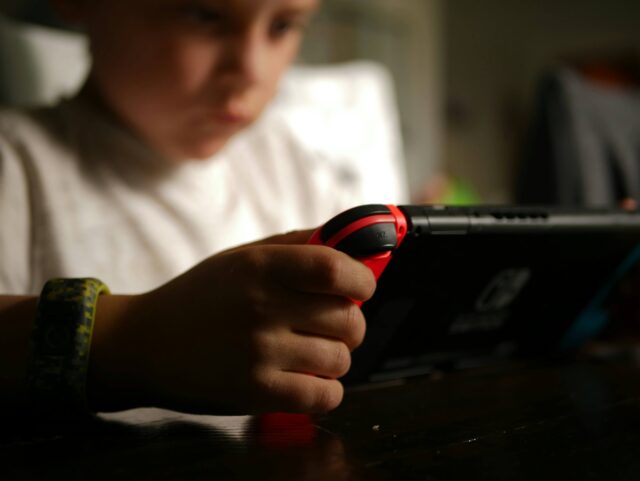
The Social Media Ban Around The World
Across continents, governments are increasingly questioning whether unrestricted access to social media is compatible with children’s safety and well-being.
Rising concerns over mental health issues, cyberbullying, harmful content, addiction to screens and shrinking attention spans have prompted governments across the globe to rethink young people’s access to social media.
In a recent development, the United Kingdom has become the latest country to consider stricter restrictions on social media use among teenagers. Australia was the first country to implement a landmark ban on social media for users under 16 in December 2025.
Countries including France, Spain, Greece, Denmark, Malaysia, Indonesia, and Canada have either introduced restrictions or are exploring similar measures. The UAE has also recently joined this growing list, becoming the first Arab nation to apply restrictions to underage social media use.
However, not everyone is convinced that an outright ban is the answer. In a recent Amnesty International discussion involving youth from multiple countries, participants shared that banning young people from social media is like “treating them like they’re incapable of complexity. Banning is the weakest solution because prohibition isn’t actually banning the danger, it’s banning the opportunity.”
Another participant stressed the “need to have better regulations from governments to prevent hate expressed online from being magnified by algorithms.”
Read more: Australian Teens Are Finding Ways Around The Social Media Ban For Users Under 16 Years Of Age
The Data And The Dilemma
In a nationwide rural household survey, conducted by the Pratham Education Foundation, for the Annual Status of Education Report (ASER) 2024, which reached 6,49,491 children in 17,997 villages across 605 rural districts in India, the data revealed the sheer scale of youth connectivity.
Around 82.2% of children aged 14-16 know how to use a smartphone, whereas a striking 76% of them are reportedly using smartphones for social media, compared to just 57% who use them for educational activities.
According to the National Crimes Research Bureau (NCRB) data, registered cybercrimes against children increased from 232 cases in 2018 to 1,823 cases in 2022. A 2024 NCRB report also states that 9 out of every 10 cybercrimes against children in India involve publishing or transmitting sexually explicit material.
A UNESCO report from 2022 also shares alarming numbers. 1 in 3 children in India reported experiencing cyberbullying, putting the country among the highest globally.
A growing number of parents, educators and experts are questioning whether children are being exposed to social media too early without adequate safeguards.
A 2026 LocalCircles survey found that one in two urban parents said their children aged 9-17 had encountered cyberbullying, online harassment or inappropriate content online.
Educators have also raised concerns about the impact of excessive social media use on children’s emotional well-being, attention spans and anxiety levels.
A 2024 LocalCircles survey found that 66 per cent of urban Indian parents believed their children were addicted to social media, OTT or gaming platforms, while 58 per cent reported observing increased aggression, impatience or lethargy.
Why India Is Avoiding An Outright Ban?
There are practical challenges to imposing a blanket ban in India. Smartphone sharing remains common in many households, making age verification difficult to enforce. The growing integration of social media and video platforms into education may also make an outright ban difficult to implement. Students increasingly rely on them for tutorials, exam preparation, project work and digital learning resources.
Adolescents are often highly adept at navigating digital workarounds. Past instances of app or content bans in India show that users simply migrate to a Virtual Private Network (VPN) and alternative platforms. This might push young users to move to unregulated spaces, posing higher risks.
The scepticism surrounding outright bans is also visible in online discussions. In a Reddit thread on r/IndianTeenagers titled, “Social media ban for teenagers – what just happened?”, one 15-year-old user questioned the proposed restrictions, saying, “Do you really think we won’t be able to get around these restrictions?”
Another user in a discussion titled, “Should India ban social media for kids…” on r/TwentiesIndia, commented, “Hard bans won’t work in India. Kids will just make fake birthdays and use VPNs. It’s better to teach them how to use it instead of pretending they won’t.”
But everyone does not seem to agree. In another Reddit thread on r/Parenting titled, “Teens and social media”, a user who identified as a teacher commented that, “Giving a young teen a social media account is probably one of the single worst things you could do for their mental health and, ironically, their social life.”
The Middle Path
India, however, seems to be taking a somewhat different route. While concerns about the impact of social media on children and teenagers are growing, the country has not announced a nationwide ban. Rather than shutting teenagers completely out of social media, policymakers seem to be exploring a middle path that combines regulations based on age, parental oversight and platform accountability.
Although two southern Indian states have already taken tangible steps in this direction.
Karnataka, in its budget speech 2026-27, has proposed stricter restrictions on social media access for users under 16, while Andhra Pradesh Chief Minister N. Chandrababu Naidu, on March 6, 2026, announced that the state intends to prohibit social media access for children below 13 years of age.
“Definitely, we will make sure that within 90 days those below 13 years of age are not able to use social media,” Naidu said in the State Assembly, adding that a decision on the 13-16 age group would be taken after wider consultations and consensus-building.
Maharashtra is forming a task force to study the issue, while Goa is examining the feasibility of implementing age verification protocols and restricting screen time for minors.
India’s Digital Personal Data Protection Act (DPDP Act) already requires platforms to obtain parental consent before processing the data of minors and restricts targeted advertising towards them.
Reports also suggest that the central government is considering age-based restrictions rather than imposing a blanket ban. Addressing the issue of age-based social media restrictions at the AI Impact Summit on February 17, 2026, Indian IT Minister Ashwani Vaishnaw said, “Right now we are in conversation regarding deepfakes, regarding age-based restrictions, with the various social media platforms,” adding that the government is looking into “the right way” to enact regulation.
Under such a system, younger children could face stricter controls, including time limits and usage caps, while restrictions may gradually ease as teenagers grow older.
The government has also indicated that it wants a wider public discussion before introducing any major measures. The National Human Rights Commission conducted an open house discussion in March 2026 to discuss the benefits, risks, a ban vs regulations and the need for discussions on protecting children from harmful content and over-exposure to social media.
The Indian government wishes to balance the scales by choosing to forge a middle path between a complete ban and unlimited access.
India’s challenge is different from that of many smaller nations. With one of the world’s largest youth populations and a rapidly expanding digital ecosystem, the country must balance child safety with digital inclusion.
A combination of parental control, digital literacy, age-based restrictions and greater platform accountability may offer a more practical solution. An attempt to regulate rather than completely restrict and build a smarter design, rather than steeper walls, may prove to be a more sustainable path.
Image Credits: Google Images
Sources: The Hindu, The Indian Express, India Today
Find the blogger: @diptisadh
This post is tagged under: social media, teenagers, social media ban, social media regulation India, child safety, IT ministry, DPDP Act, age-based restrictions, cyberbullying, cyber crimes, online harassment, Indian government, platform accountability, digital literacy, mental health, shrinking attention spans, anxiety
Disclaimer: We do not own any rights or copyrights to the images used; these images have been sourced from Google. If you require credits or wish to request removal, please contact us via email.
Other Recommendations:
Despite The Ban, Vape Is Still Easily Available To Teenagers, Even In High Schools