



























The 2026 NEET-UG paper leak that led to the cancellation of the exam has triggered a furore and anger among students and parents, unlike anything seen before.
Paper leaks in Indian examinations are not new, as sad as that statement might be, but the recent controversy, which affected over 24 lakh aspirants who sat for the National Eligibility cum Entrance Test (Undergraduate) 2026, has been on another level altogether.
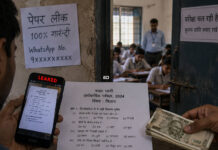
The NEET-UG exam was conducted by India’s National Testing Agency (NTA) on May 3, 2026, only to be cancelled on May 12 due to allegations of a paper leak that began after pre-circulated guess papers were found to overlap significantly with the actual question paper.
The NEET-UG exam is one of the biggest medical entrance exams in India for MBBS, BDS, and allied undergraduate medical courses. Reports emerged on how guess papers or question banks shared on WhatsApp, Telegram and other channels of coaching centres from Sikar, Rajasthan, were very similar to the actual exam questions, with an overlap of up to 120 questions.
Several people have been detained and questioned, with many arrested, including NTA officials, and Pune-based chemistry professor P V Kulkarni and biology professor Manisha Gurunath Mandhare are reported to be the masterminds behind it all.
The investigation, now under the Central Bureau of Investigation (CBI), has gone beyond just those who spread the leaked papers and includes the parents, students and other individuals who bought the papers themselves.
What Could Happen To Parents In The 2026 Paper Leak?
According to a Firstpost report, “the CBI has made it clear that parents who paid bribes will not be treated merely as witnesses, but as active co-conspirators in subverting national security and academic integrity.”
The CBI has been conducting an extended investigation in many regions, from Maharashtra’s Latur and Nanded regions to Sikar in Rajasthan, to apprehend the individuals who bought these leaked papers.
As per reports, eight CBI teams descended on the Vidyut Nagar area of Nanded and questioned families believed to be part of the network. Electronic devices, communication records and financial documents were seized and examined.
One parent, said to have paid Rs 5 lakh for the leaked paper, was questioned by the CBI and has been summoned to their Pune office for a secondary interrogation.
From Sikar, the CBI arrested three individuals linked to a local family, along with one father who paid Rs 10 lakh to obtain one of these ‘guess papers’. The irony here is that the man’s son, even with all this, managed to score just 107 out of 720 on the entrance exam.
As per the CBI, around 150 students have been identified as having links to this racket and are under scrutiny. While the CBI and other official departments have not yet stated what the punishment would be for the parents and students found guilty in this investigation, the Public Examinations (Prevention of Unfair Means) Act, 2024, is believed by some to have some answers.
The legislation was passed in February 2024, right after the 2024 NEET-UG controversy took place. In that instance, too, paper leaks, malpractices, and discrepancies were noticed, which led to a lot of students protesting against the exam.
The Patna Police arrested around 13 people, including four students sitting for the exam, who had allegedly paid Rs 30-50 lakh for the leaked papers. The unusually high number of students who entered the top ranks also triggered protests.
The 2024 NEET controversy is what led to the formation of the Public Examinations (Prevention of Unfair Means) Act, 2024, to restrict malpractice in public examinations. This Act covers examinations conducted by the Union Public Service Commission (UPSC), the Staff Selection Commission (SSC), and the National Testing Agency (NTA), along with central ministries.
Under this Act, any individual resorting to unfair means to clear these examinations could face imprisonment of three to five years and a fine of up to Rs 10 lakh. Organised crime involving paper leaks could attract imprisonment of five to ten years and a fine of at least Rs 1 crore.
The Act also covers service providers who may be involved in distributing examination material through unfair means.
Read More: Issues Hansraj Students Raised That Led To College Authorities Suspending Them
What Actually Happened Previously?
One of the most uncomfortable facts about India’s paper leak epidemic is that for decades, there was no dedicated national legislation to address it. Usually, cases of paper leaks would be handled by the individual state governments and their courts.
In the instances when the case did reach the Supreme Court, the final verdict on handing out the punishment itself was often passed to the regional/state high courts. In 2017, the Karnataka government decided to introduce a bill, amending the Pre-University (PU) chemistry exam scandal in the state, where the government was forced to cancel and reschedule the examinations after question papers were leaked twice in 2016.
The Karnataka Public Examination (Measures for Prevention of Corruption and Unfair Means in Recruitment) Bill, 2023, was also introduced after several cases of malpractice, paper leaks and irregularities in government examinations were exposed.
According to the Bill, “No person shall use unfair means at any public examination; the official in charge to conduct exams should not disclose the question paper before the prescribed time and not leak any information about the examination.”
It added, “Unauthorised persons should not possess the question paper, answer sheet or OMR sheet and are barred from entering the examination centre; no place other than the examination centre shall be used for a public examination.”
The Bill also proposed imprisonment of up to 10 years and fines of up to Rs 10 crore for those involved in paper leaks and exam fraud, along with confiscation of property.
As per the Bill, “Individuals, including examinees, involved in a conspiracy or attempt to use unfair means or violate any provisions of this Act, will be sentenced to a minimum of eight years and a maximum of 12 years of imprisonment, along with a fine ranging from ₹15 lakh to ₹10 crore.
Default in fine payment will lead to an additional imprisonment term of two years.” Crucially, it also covered examinees who used unfair means, proposing criminal prosecution and debarment.
The Turning Point That Was The NEET 2024 Controversy
The 2024 NEET controversy was a turning point, not just for ordinary people, but for our legal systems as well. Among those arrested was a 22-year-old NEET aspirant named Anurag Yadav from Samastipur, Bihar, along with his uncle Sikandar Prasad Yadavendu, an engineer at the Danapur Municipal Council.
In his confession letter, reported by IANS, he wrote, “I returned from Kota and was taken to Amit Anand and Nitish Kumar by my uncle on the night of 04.05.24, where I was given the NEET exam question paper and answer sheet, which I was made to study and memorise overnight.”
Although the CBI investigated, interrogated and arrested some individuals in the case, including parents, it is not exactly clear what happened, or if they were punished in any way, whether through imprisonment or fines. No final convictions with completed sentences have been publicly reported.
Image Credits: Google Images
Sources: The Economic Times, Firstpost, Hindustan Times
Find the blogger: @chirali_08
This post is tagged under: competitive exams india, education system india, exam corruption india, exam paper leak india, examination fraud, government exams india, indian education news, neet controversy, neet ug paper leak, nta controversy, paper leak scam, paper leaks in india, recruitment exam leaks, student issues india, ugc net paper leak
Disclaimer: We do not own any rights or copyrights to the images used; these images have been sourced from Google. If you require credits or wish to request removal, please contact us via email.