





























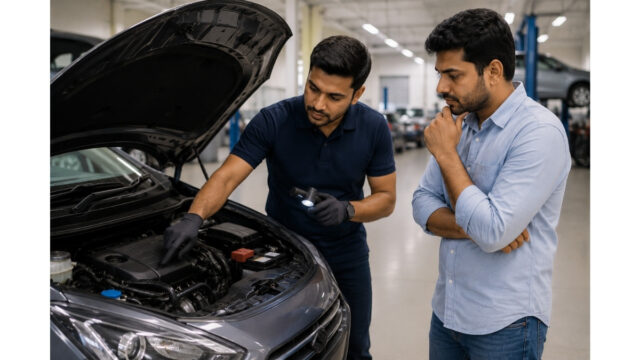
A new vehicle purchase is one which involves many emotions: joy, excitement, and, for first-time car buyers, often nervousness. Seldom does the purchase invoke worry or doubt about the condition of the vehicle, since many people remain unaware that even new vehicles can sometimes come with problems. When the moment to finally take delivery of your new car comes, you are probably focused on the excitement of the moment. But before you sign off on anything, there is one step that can make or break your entire ownership experience: the pre-delivery inspection, or PDI. Most buyers know a PDI should happen. Far fewer understand what separates a good one from a truly great one. That difference is larger than most people think.
What a Standard PDI Covers
A good PDI checks the basics. The inspector walks around the car, looks at the paintwork for obvious scratches, swirls, or minor, easily visible storage wear, tests the headlights and other electricals, checks the AC, and makes sure the infotainment system turns on. He may also check to see if the vehicle’s odometer has clocked any kilometres, since new cars can also be driven for transportation, and sometimes minute damage can occur during these drives as well. This kind of inspection is better than nothing, and it will catch the most visible issues before you drive away.
However, a standard PDI often stops at what is easy to see. It relies on a visual sweep rather than a systematic evaluation. The person doing the inspection may not use any diagnostic equipment, may not check every fluid individually, and may skip mechanical stress tests entirely. The result is a basic assurance that the car looks fine, not a deep confirmation that it is fine.
What Makes a Great PDI Different
A great PDI is structured, documented, and goes well beyond surface-level checks. Here is where the real difference shows up:
- It follows a fixed checklist, not just the inspector’s memory. A structured format covering 100 or more checkpoints ensures nothing is accidentally skipped.
- It includes OBD diagnostics. Plugging an On-Board Diagnostics tool into the car reads hidden error codes from the ECU, sensors, and emission systems that no visual inspection can detect.
- It checks panel gaps and body alignment precisely. Minor misalignments in panels or doors can indicate transit damage or rushed reassembly, something a casual inspection easily misses.
- It verifies battery health, not just whether the car starts. A battery that has been sitting in storage can hold a surface charge but deteriorate quickly in actual use.
- It cross-checks VIN numbers. The chassis number, engine number, and all documents must match each other and the physical car. A mismatch is a serious legal issue.
- It confirms every accessory that was promised. Spare tyre, jack, toolkit, owner’s manual, all items must be physically verified, not assumed to be present.
The Role of Documentation in a Great PDI
One of the clearest markers of a great pre-delivery inspection is a written, itemised report. A good inspection with no paper trail leaves you with nothing to refer back to if a problem surfaces a week later. A great PDI produces a health certificate that captures what was checked, what was found, and the overall condition of the vehicle at the time of delivery.
This report protects you in two ways. First, it gives you something to show the dealer if you need to raise a complaint after delivery. Second, it gives you a clear baseline of your car’s condition on day one, which is useful if you ever plan to sell or insure the vehicle.
Doorstep Versus Dealership Inspections
A good PDI is usually conducted at the dealership, by dealership staff, just before handover. This creates an obvious conflict of interest. The same team that wants to close the sale is also responsible for flagging defects with the car.
A great PDI is conducted by an independent, third-party expert, ideally at your location. When the inspector has no relationship with the seller, the evaluation is unbiased. They are not under pressure to rush the inspection or overlook issues that might delay a sale. Services like the one offered by Cars24 operate precisely on this model, sending trained professionals to inspect the vehicle before delivery without any stake in whether the sale closes.
Catching What Matters Most
Data from large-scale inspections consistently shows that a significant number of new cars have at least one issue that was not disclosed at the dealership. These range from minor cosmetic flaws to paint mismatches that indicate repaired transit damage, to electrical faults that only show up under diagnostic testing.
A great pre-delivery inspection catches all of these. It identifies them before you sign, before you pay the full amount, and while you still have the leverage to ask for rectification, replacement, or compensation. Once you have accepted the car and driven away, that window closes.
Why This Matters More Than You Think
The difference between a good and a great PDI is ultimately the difference between hoping your car is fine and knowing it is. For something as significant as a new car purchase, that distinction is worth every minute and every rupee spent on the right inspection.
A great PDI is not a luxury. It is the final checkpoint between a dealer’s assurance and your own verified confidence.
Read more
Fast-Track Workplace Friendships “Friend-Bombing” Might Be Unhealthy