










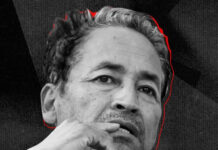


















Activist Sonam Wangchuk’s hunger strike has entered its 20th day now, and while the mainstream media still might not be covering it as much as it should be, social media has certainly picked up the slack there.
However, among the rising concerns around Wangchuk’s health and more and more people urging him to break his fast due to rapidly deteriorating health, a new question has come up after a petition was filed that basically asked the courts to order the government to force-feed him in order to save him physically.
Although the Delhi High Court dismissed the petition, this has led people to question: Is it legal to force-feed someone on a hunger strike if they are endangering their life? Do the authorities have the power to intervene on a person’s body in such a scenario without their consent?
What Is This Hunger Strike?
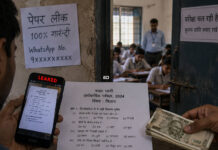
Sonam Wangchuk is a 59-year-old Ladakhi engineer, education reformer, and climate activist. He began an indefinite hunger strike on June 28, 2026, at Jantar Mantar in New Delhi, joining a protest organised by the Cockroach Janta Party (CJP), a youth-led movement pressing the government over repeated leaks and irregularities in national competitive exams, most notably NEET-UG 2026.
The core demand is the resignation of Union Education Minister Dharmendra Pradhan, alongside a broader call for accountability over exam paper leaks that CJP says has contributed to student suicides and ruined years of preparation for young test-takers across the country.
With the hunger strike three weeks in, Wangchuk’s health had visibly deteriorated, with reported weight loss of around 8-8.5 kg, blood pressure falling to 105/61 mmHg (laying down) and 101/65 mmHg (sitting), and mounting concern from supporters, doctors, and opposition politicians alike, several of whom have publicly urged him to end the fast even while backing his underlying cause. Wangchuk has repeatedly refused, insisting the protest continue until the government agrees to a real dialogue.
A PIL To Save The Sonam Wangchuk
In the midst of this, advocate Rakesh Kumar Saini filed a Public Interest Litigation (PIL) on July 15, 2026, with the Delhi High Court seeking intervention from the judiciary to provide medical aid to Sonam Wangchuk and end his hunger strike by any means, even including force-feeding him.
The intention behind the PIL is concern for Wangchuk’s life, as it claims that if the activist continues his hunger strike, then he could lose his life within two days.
As per a Bar and Bench report, “Wangchuk’s health has deteriorated rapidly; he has lost 8.5 kg, and if he continues with his hunger strike, he could end up losing his life in two days. If he passes away, it would be a matter of great shame for the country and the world.”
The PIL also alleges that Wangchuk is being treated like a “hardcore criminal, terrorist, or traitor to the nation” by the government, and they need to provide medical attention to him at the very least, even if that is done forcefully.
As per the plea, “The simple thing to be done is to take him to a government hospital and force feed him the necessary nutrients, vitamins and minerals by way of a liquid diet which are necessary for the human body to survive.”
Read More: Thousands Of Trees To Be Cut In Rishikesh Despite Protests, Environmental Concerns
Is It Legal To Force-Feed Someone To End Their Hunger Strike?
The Delhi High Court’s Division Bench comprising Chief Justice Devendra Kumar Upadhyaya and Justice Tejas Karia dismissed the PIL, stating, “We appreciate the stand taken by the learned Solicitor General and direct that Wangchuk’s medical condition be clinically monitored on a daily basis and whatever medical intervention is required shall be taken.”
The bench further said, “Life of any citizen is precious and all efforts ought to be made by government authorities to save the same.”
The answer to this question is a bit complicated. But if we get down to the very core of it, then according to the Indian law, considering hunger strikes are allowed as a form of peaceful protest, and as long as the person is considered of sound mind and able to make coheerent decisions for themselves, as well as not under police or official custody/detained, then force-feeding someone to end their hunger strike cannot be allowed.
There is no clear statute in India that straightforwardly authorises force-feeding a free, competent citizen engaged in a peaceful protest. The legal hook that’s usually used to justify it is arresting a hunger striker under the charge of attempted suicide and then force-feeding them while in judicial custody. Even this has itself been substantially weakened by more recent Indian law.
Under Article 19(1)(b) of the Constitution, Indian citizens have the full right to assemble peacefully without arms. A hunger strike is just that and is not considered illegal under any law of the Indian legal system.
Activists like Anna Hazare used the method for their anti-corruption protest, while Manipur activist Irom Sharmila also went on a hunger strike indefinitely protesting against the Armed Forces (Special Powers) Act (AFSPA).
But while there is no particular law prohibiting hunger strikes in the country, authorities have used other loopholes to end the fast of activists over the years. One such move was the use of Section 309 of the Indian Penal Code, which criminalised the attempt to commit suicide.
Basically, the hunger strike was labelled by authorities as an individual’s attempt to commit suicide, and Section 309 would then allow them to arrest those people. Once arrested, the individual is seen as in the custody of the State, and thus needs to be taken care of by the State, which in turn would let officials force-feed them, leading to breaking the protester’s fast.
This move was used on Irom Sharmila several times, where authorities would arrest her under Section 309 and then force-feed her through a nasogastric tube.
However, that isn’t always accepted by the courts, as could be seen in a 2021 verdict by the Madras High Court that dismissed a case against a farmer leader who went on a hunger strike. The court stated, “The mere fact that the petitioner has protested by sitting on a hunger strike will not attract the offence under Section 309 IPC… It would not constitute an attempt to commit suicide.”
This law was further changed in 2017 when the Mental Healthcare Act (MHCA) was introduced, which decriminalised suicide and suicidal attempts. Section 115(1) of the MHCA stated: “Notwithstanding anything contained in section 309 of the Indian Penal Code, any person who attempts to commit suicide shall be presumed, unless proved otherwise, to have severe stress and shall not be tried and punished under the said Code.”
The very act of force-feeding an individual is an extremely sensitive and debated topic globally, with many raising the ethical concerns that come with it. Internationally, organisations and experts have taken a clearer stand against it, though.
The World Medical Association, through the Declaration of Malta on Hunger Strikers, states that forcible feeding of a mentally competent hunger striker who has refused nourishment is ethically unacceptable, describing it as a form of inhuman and degrading treatment. The declaration stresses the importance of informed consent and respect for a competent person’s wishes.
Image Credits: Google Images
Sources: The Indian Express, Firstpost, India Today
Find the blogger: @chirali_08
This post is tagged under: cjp, CJP protest, cjp protest delhi, cjp protest jantar mantar, cjp protest news, Dharmendra Pradhan resignation, education accountability, examination irregularities, Jantar Mantar protests, NEET paper leak, sonam wangchuk, Sonam Wangchuk CJP, Sonam Wangchuk hunger strike, sonam wangchuk hunger strike news, Sonam Wangchuk hunger strike reason, sonam wangchuk news, Sonam Wangchuk protest
Disclaimer: We do not own any rights or copyrights to the images used; these images have been sourced from Google. If you require credits or wish to request removal, please contact us via email.
Other Recommendations:
Why Are Authorities Allegedly Photographing People At The CJP/Sonam Wangchuk Hunger Strike?