
























When a robot was asked about India, the only answer it had was “The Taj Mahal.” But is that all that the country is really about, or is it ignorance or western bias that has reduced India to a few well-known words?
What Raised This Question
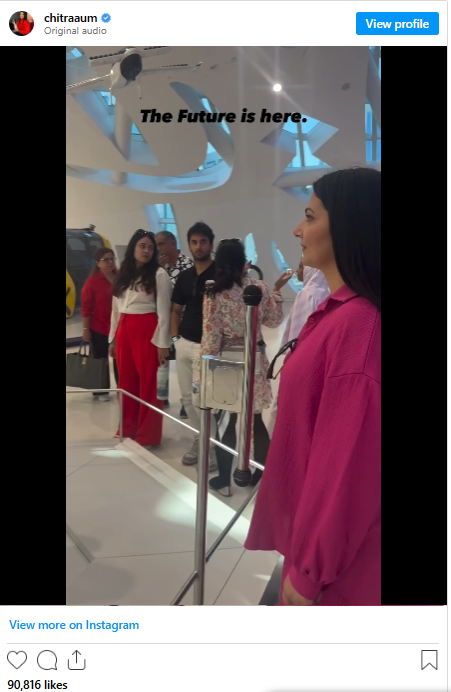
In an interaction with a humanoid robot in Dubai, Indian journalist Chitra Tripathi was seen introducing herself as being “from India” and asking the robot whether it knew anything about the country. The robot replied that it knew about the Taj Mahal.
When asked whether it knew anything apart from the Taj Mahal, such as Kashi or Ayodhya, the robot failed to provide a satisfactory answer. This short, somewhat awkward exchange between the journalist and the robot has reignited a broader discussion in the country: Is India’s identity limited to the Taj Mahal, even after so many years?
This exchange took place in Dubai, at an exhibition where the robot was on display, and has widely ignited debate about India’s identity in the eyes of other countries.
What India Actually Is Today
The Taj Mahal is undeniably precious and has added to the heritage of India for several years and will continue to do so in the years to come. But that alone isn’t what India should be known for globally.
India’s identity extends far beyond just one site. India is home to 44 UNESCO sites, ranking sixth globally in cultural and historical sites across the globe. This includes temples, caves, and other cultural and geological sites that sing praises of India’s rich culture and heritage.
Places like Sanchi Stupa, Hampi, and Kaziranga National Park, among many others, offer a beautiful blend of spirituality and scenic beauty that India is home to. Further, cities like Jaipur, Varanasi, and Khasi are among the most spiritual and cultural sites in the country.
Read More: Is ChatGPT Biased Towards The Rich, The West, And White People?
India’s Technological And Scientific Standing
Additionally, India’s modern global presence includes important achievements in technology, space science, and digital innovation. Further, India ranks as the third largest in the AI ecosystem in the world, after the US and China.
Additionally, at the India AI Impact Summit 2026, Union IT Minister Ashwini Vaishnaw revealed that India is ready to deploy nearly 50,000 GPUs (Graphics Processing Units) within the next six months.
Moreover, the AI Impact Summit 2026 showcased the many ways in which India has advanced in terms of AI and technology. From creating its own AI model, “Sarvam AI”, that can compete with chatbots like ChatGPT and Claude, to being rich in its culture and heritage, India’s identity stretches far beyond just the Taj Mahal.
What This Tells About The World
The robot’s answer may not have been intentionally biased. However, events like this sometimes point towards the ignorance and bias that India has faced globally. Limiting the country’s standing to just one cuisine or monument has been a common occurrence.
This does not shrink India as a country but represents how ignorance often shapes perception. When a nation is repeatedly presented through a narrow lens or a limited choice of words, that limited image begins to dominate global understanding.
The Taj Mahal is a part of India, but it is not the only thing it should be known for. Today, India is far more expansive culturally, spiritually, as well as technologically, and limiting its worth to one monument restricts knowledge of a country that has so much more to show and tell.
Image Credits: Google Images
Sources: The Times of India, The Indian Express, Business Standard
Find the blogger: @shubhangichoudhary_29
This post is tagged under: India, Taj Mahal, Western bias, cultural stereotyping, AI bias, artificial intelligence, India representation, media narrative, global perception of India, Chitra Tripathi, Dubai AI interaction, tech and society, colonial mindset, digital ignorance, Indian identity, AI ethics, tech controversy, cultural reductionism
Disclaimer: We do not own any rights or copyrights to the images used; these images have been sourced from Google. If you require credits or wish to request removal, please contact us via email.
Other Recommendations:
Insider Committee Flags BBC’s Hateful Bias And Dishonest Reporting