






















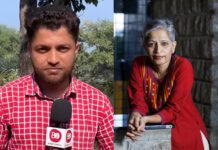


YouTuber Purav Jha has sparked a firestorm with his latest parody video, a sharp critique of the public spat between educator Khan Sir and journalist Anjana Om Kashyap. But beyond the laughs, the video has reignited a larger conversation: are digital creators becoming a more trusted reality check than mainstream news?
Released on June 24, 2026, the video clocked over a million views in just 24 hours. The video stars Jha as Khan sir with his arch-nemesis Kanchana Ji, and it is as satirical as it is funny. The video perfectly captured the loud debates, sensational headlines and theatrical style that have become synonymous with much of India’s television news.
Take a look at the viral video below:
The comments section quickly filled with viewers applauding not just the comedy, but the message behind it. Remarks such as “comedy 99%, reality 100”, “Journalist doing comedy, comedians doing journalism”, “Reel influencer ❌️ real influencer ✅️”, and “Thanks, Purav Jha, for taking such a clear stand instead of choosing a convenient middle ground like many others. Salute to you, man” flooded the video.
The parody landed because it tapped into something deeper than humour. It reflected a growing shift in how Indians are consuming and trusting news.
For decades, television channels shaped public opinion. Today, a smartphone and an Instagram account are often enough for individual creators to reach millions, sometimes enjoying greater credibility among younger audiences than billion-rupee media organisations.
But why are viewers increasingly choosing individuals over institutions?
The trust deficit
India’s biggest television networks like AajTak, Zee News, ABP News, Republic TV, India TV, and NDTV still command enormous audiences and continue to break many of the country’s biggest stories.
But sensationalism, political polarisation and controversies have slowly chipped away at their credibility. The criticism isn’t just directed at one channel, but rather at the entire collective.
To understand this shift, let’s take a look at examples from both mainstream television news and independent digital creators that have shaped the debate around public trust.
Sudhir Chaudhary
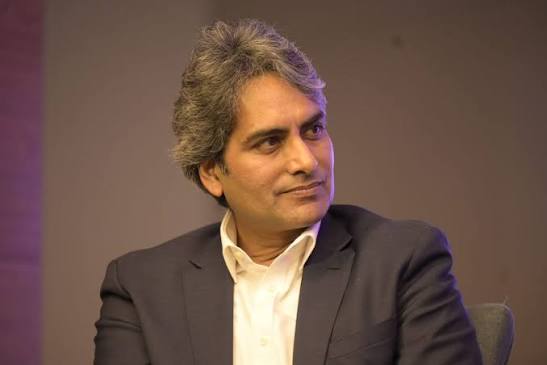
One of the most frequently cited examples in this debate is of Sudhir Chaudhary. Following demonetization, Chaudhary reported on Zee News that the newly introduced Rs 2,000 currency notes contained Nano GPS chips that allowed the government to track them via satellite. The Reserve Bank of India (RBI) publicly debunked this claim, clarifying that no such tracking technology existed in the notes.
In another instance, during his tenure at AajTak, Chaudhary was even booked by Bengaluru police for spreading false claims about a Karnataka government scheme providing financial subsidy only to Muslims, Christians and other religious minorities, leaving Hindus out.
His coverage has repeatedly sparked debate over journalistic standards, with critics accusing him of choosing sensationalism over fact-checking.
Arnab Goswami
Republic TV, led by Arnab Goswami, became the face of hyper-aggressive television journalism during the investigation into actor Sushant Singh Rajput’s death. Night after night, viewers watched emotional debates centred around actor Rhea Chakraborty, allegations of drug use and dramatic confrontations that critics described as “trial by media.” Arnab’s now-viral on-air outburst demanding, “Mujhe drugs do,” has since become meme fodder for sensationalism. Watch the viral video below:
Anjana Om Kashyap
Anjana Om Kashyap faces frequent backlash from the public and fact-checkers for allegedly amplifying false or state-aligned narratives. A video of Kashyap went viral when she was questioned by a university student over the issue of spreading misinformation on national television, drawing widespread attention on social media.
Watch the viral interaction below:
View this post on Instagram
She was also heavily criticised for airing news regarding the death of Bollywood actor Dharmendra, which turned out to be a death hoax.
Navika Kumar
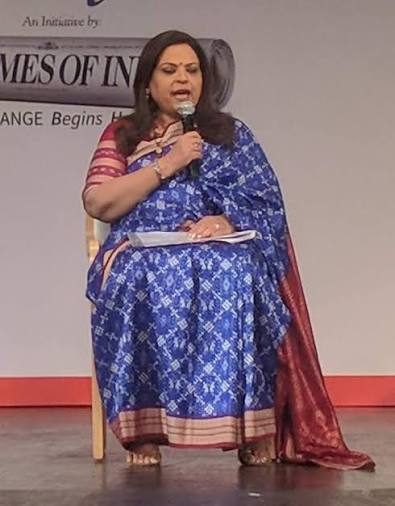
As a primetime anchor, she has repeatedly been at the centre of debates over sensationalism, political bias and the tone of her television news coverage. Kumar faced intense backlash in 2022, when she allowed guests to make derogatory claims about the Muslim community and leaned towards the Hindu petitioner’s claims on the Gyanvapi dispute.
Other Mainstream Channels
Other major broadcasters have also found themselves under scrutiny. Aaj Tak has faced criticism over misleading graphics and premature reporting during high-profile political and communal stories. Times Now and India TV have faced disciplinary action from the News Broadcasting and Digital Standards Authority (NBDSA) for airing Islamophobic or communal segments that lack impartiality. ABP News, too, has often been criticised for its pro-government coverage, bringing the channel under the popular “Godi media” label.
In 2018, a sting operation called Operation 136, by media portal Cobrapost, alleged that several media houses, including ABP, were willing to entertain paid news proposals and promote a specific political agenda.
While reputable organisations still maintain clear editorial standards, the perception that advertisers, political parties or corporate owners shape news coverage has become difficult to shake.
Read more: Stop Watching Mainstream News Channels; They Are Messing You Up!
In 2018, a sting operation called Operation 136, by media portal Cobrapost, alleged that several media houses, including ABP, were willing to entertain paid news proposals and promote a specific political agenda.
While reputable organisations maintain clear editorial standards, the perception that advertisers, political parties or corporate owners shape news coverage has become difficult to shake.
In 2018, a sting operation called Operation 136, by media portal Cobrapost, alleged that several media houses, including ABP, were willing to entertain paid news proposals and promote a specific political agenda.
While reputable organisations maintain clear editorial standards, the perception that advertisers, political parties or corporate owners shape news coverage has become difficult to shake.
The rise of the individual newsroom
This vacuum for trusted news has given rise to a new generation of independent creators. These creators don’t have the backing of big studios or enormous teams. Many simply research stories, record videos with a camera or a smartphone and publish directly to millions of followers.
Sharad Sharma
One such creator is Sharad Sharma. Formerly working at NDTV, he has amassed a following of over 2 million in a year’s time, across different platforms. His on-ground reporting regarding unclean water issues and demolition in Delhi has been highly appreciated.
In this on-ground report, Sharad Sharma visits Delhi’s Madipur area, where residents allege they have been receiving contaminated sewer water for nearly six months.
Amit Khilor
Political commentator Amit Khilor has built a substantial following through concise explainers and commentary on national issues, often presenting complex developments in simple language designed for social media audiences.
In this short explainer, Amit Khilor breaks down the debate surrounding Union Minister Nitin Gadkari’s remarks on ethanol and the controversy surrounding it.
Food Pharmer
Perhaps no creator demonstrates the power of individual journalism better than Food Pharmer, Revant Himatsingka.
Instead of covering politics, he chose India’s packaged food industry. His videos encouraging consumers to read nutrition labels- popularised through campaigns like Label Padhega India- sparked nationwide conversations about food safety and misleading marketing.
When he criticised products sold by Dabur and other brands, legal notices followed, but so did millions of views and widespread public debate. His investigations transformed ingredient labels into prime-time conversations without ever appearing on prime-time television.
In an interview with Trustified, an independent consumer-awareness platform, Food Pharmer (Revant Himatsingka) discusses the legal notices and industry backlash he faced after questioning the marketing claims of packaged food brands.
Vikas Yadav
Creators like Vikas Yadav have taken a different route, using satire and parody to simplify complex news stories into short, engaging videos. Their strength lies in making information understandable without relying on shouting matches or sensational graphics.
In this satirical reel, Vikas Yadav simplifies the issue of dynasty politics and its effect on the common man.
View this post on Instagram
Ajit Anjum
Ajit Anjum has similarly built a substantial independent audience by travelling independently and reporting directly from the field. By covering elections, political developments and on-ground stories across the country, he has effectively transformed into a one-person digital newsroom.
In this on-ground report, Ajit Anjum examines allegations surrounding a land deal involving a senior Uttar Pradesh minister and questions why the issue has received relatively limited attention in sections of the mainstream media.
Kavya Karnatac
Kavya Karnatac is a popular Indian digital content creator with 2.7 million followers on Instagram and 3.25 million subscribers on YouTube. She is known for her ground-level reporting and long-form storytelling focused on social, environmental, and cultural issues across India.
In this video, Kavya explores the struggles of people living in Dharavi, the world’s crowded slum.
Why are audiences choosing creators?
As trust in traditional gatekeepers dwindles, the audience is increasingly turning to independent web publications and digital creators that operate on viewer subscriptions rather than corporate funding.
Viewers often say they appreciate seeing source documents on screen, watching longer explanations instead of panel fights and feeling a direct connection with the person presenting the information.
Unlike television channels backed by large corporate structures, these creators appear accountable only to their audiences. When they make mistakes, many acknowledge and correct them publicly, reinforcing an image of transparency and accessibility that many viewers believe is missing from mainstream television.
Independent doesn’t always mean impartial.
Although even independent creators can be biased, even their content is dependent on audience preferences, platform algorithms and sponsorship models. Many operate without editors, legal teams or formal fact-checking processes.
The difference is less about accuracy and more about perception. Audiences increasingly feel that individuals have fewer institutional pressures than television networks dependent on advertisers, political access and corporate ownership.
Ultimately, credibility depends less on whether news comes from a television studio, an independent newsroom or a YouTube channel and more on whether it is accurate, transparent and allows audiences to make informed judgements.
In this landscape, Purav Jha’s parody isn’t just entertainment; it’s a reflection of a society that is tired of the theatrics and is looking for a new kind of reality check. The battle is no longer over just headlines but over trust itself.
Image Credits: Google Images
Sources: The Quint, Deccan Herald, The Tribune
Find the blogger: @diptisadh
This post is tagged under: news, youtube, purav jha, anjana om kashyap, aajtak, abp news, times now, parody, khan sir, ndtv, republic tv, arnab goswami, sudhir chaudhary, amit khilor, sharad sharma, food pharmer, vikas yadav, mainstream media, independent creators, kavya karnatac, India tv, zee news, fake news
Disclaimer: We do not own any rights or copyrights to the images used; these images have been sourced from Google. If you require credits or wish to request removal, please contact us via email.
Other Recommendations:
The Good, Bad And Ugly Of The So-Called ‘Debates’ On Indian News Channels