

















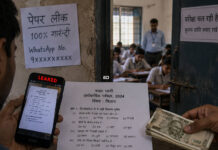











The protests at Jantar Mantar by the NEET students have been going on for almost a month and a half now.
The movement, though, picked up speed when Sonam Wangchuk came on board and went on a hunger strike to support the demands given by Cockroach Janta Party, which included the resignation of Union Education Minister Dharmendra Pradhan, monetary compensation for the students, among others, on June 28, 2026.
It is going to be close to a month since then, and the protest exploded when the hunger strike just seemed to keep on going and hit a tipping point when Wangchuk was forcefully taken by the Delhi Police to a hospital, citing medical concerns.
Since then, students, parents, young and old, males and females, Delhiites and even many from other states have gathered at Delhi’s Jantar Mantar to protest against the ruling government.
At this point, the protest is not simply about the NEET paper leak and what happened there; it is a movement to hold the politicians of this country accountable for their actions. Hundreds of people have collected at the protest site by now, and many more seem to be joining.
However, while some are going to the protest physically, even with the fear of getting beaten, tear-gassed, detained and arrested by the police, some are either unable to or, simply put, scared to put themselves in that situation.
Why Are People Scared Of Going To The Protest?
See, there is a difference between people disbelieving of the cause, and claiming that it is just students being stubborn, that the government did no wrong and the protest is not really needed, and those who genuinely do want to support the cause but cannot be physically present.
Some, especially the elders or those with disability or even those who are not present in Delhi themselves, genuinely cannot be at the protest site. Of course, understood.
Then, some are scared to go themselves, and sure, you can feel that their fears are silly and don’t stand in front of the greater cause. Which is also not entirely wrong in itself.
But at the same time, these fears do have some validity to some extent. One of the fears is the Delhi Police wearing Meta smart glasses that can record people using AI. This level of surveillance is a point of fear for some, who don’t want their face to end up in a database that could then keep track of them and target them much more easily than before.
Then some fear harassment, especially women. Social media videos have shown men using the protest as a way to sneakily sexually harass and assault women, with even the police officers who are trying to control the crowd engaging in such heinous acts.
There are also mental health reasons, such as claustrophobia or panic attacks, fear of one’s family being targeted by the authorities if they are found at a protest, and these go beyond any gender. Both males and females can have these fears. Then, even the fact of being seen as too ‘political’ is enough to invoke anxiety and fear in some.
Again, many of these fears are completely valid and thus understood. But, for the people with common sense and some semblance of national responsibility, there also comes the guilt. The guilt at being so hung up on your fears that you cannot stand up at a time of a national crisis.
But here’s the good news: you don’t have to be at Jantar Mantar to actually help. These are some very real and practical ways you can help instead:
How Can You Still Support The Cause?
Order them a proper meal
News has already been coming out about how people across the nation were using Zomato and Swiggy to send food to the protesters. However, it seems that now that avenue has been closed as well, with social media posts claiming that both platforms are not delivering to those areas.
In light of that, you can use other platforms; some included are Uber, vFast, Porter and such that can deliver meals to the protest site. You can send food, water, tea. The food should also be such that it can be handled easily and doesn’t make too much of a mess.
This might be the last thing to do for now at least, since CJP’s own account had to publicly ask people to stop sending food because the volume had become unmanageable.
Send the unglamorous essentials, not just food
The CJP has reportedly been talking about how they are in need of essentials, like garbage bags, sanitisers, PeeSafe or similar hygiene sprays, sanitary pads, and brooms. This is also because the police have barricaded the area, and protesters are unable to leave the site to get the supplies themselves.
Delhi’s monsoon showers also mean umbrellas, raincoats, plastic tarps, tents and more are genuinely useful and needed.
Design and send posters
If you can’t be there to hold a sign, you can still make one. Well-designed, shareable posters, whether printed and couriered to the site or simply posted online for others to print locally, extend the protest’s visual language beyond what a few hundred hand-painted placards can do alone. This costs you nothing but time and a bit of Canva.
Read More: Indian Gen-Z Aren’t Lazy Or Lack Ambition; It’s Something Else
Start (or contribute to) a legal and medical fund
Drop off medical supplies at a donation point
Basic first-aid material, ORS packets, antiseptic, bandages, eye wash for tear gas exposure, can usually be dropped at whatever collection points the organisers list on a given day.
These points move and change depending on police barricading, so don’t rely on an address from three days ago; check the CJP’s official X and Instagram handles (@Cockroachisback) for the current drop-off location before you head out, and confirm with a volunteer on the ground if you can.
Talk to the people around you, in person
Another thing you can do is talk to the people around you. If one is afraid of leaving a digital footprint, this is a safe bet to avoid it. Start conversations within your own family, bring it up to your locality’s aunties and uncles. Create discussions with colleagues, friends and relatives, especially if they are mocking the protest or even sharing fake news.
Do it respectfully, do it in a fun manner, use memes, use jokes, use analogies that the other person will understand. But just don’t stay quiet.
Stop platforming the people staying silent
A lot of people are doing this already, which is to instantly unfollow any public personality, brand, organisation, or group that enjoys public support, that operates because the public is consuming their product in some way or form, and yet has remained silent up until now.
You can unfollow any celebrity, athlete, brand, corporation, godman, self-help guru or motivational speaker with millions of followers who has had absolutely nothing to say about students losing years of their lives. Who have not said anything against the authorities using unnecessary force on the people who were, until just a few weeks ago, holding a relatively peaceful protest.
You can even post the ‘unfollowing’ on your social media and share the reason why.
Sign the petitions, even quietly
Online petitions calling for accountability, for the release of detained students, or for a transparent investigation into the exam leak let you add your name to the pressure without standing out in a crowd. It might not feel like much, but the numbers are what matter here.
Share Important Social Media Posts
You can furthermore keep sharing and thus amplifying important social media posts. These can include live updates being posted by those at the protest, so the reality of the situation is seen by more people. Other things that can be shared are posts about help, legal advice, updates from the protest site, especially if they are about which areas to avoid, or where the authorities are being especially strict.
View this post on Instagram
Image Credits: Google Images
Sources: Reuters, The Print, Mint
Find the blogger: @chirali_08
This post is tagged under: Indian Gen-Z, Indian Gen-Z protesters, Gen-Z protesters, cjp, CJP protest, cjp protest delhi, cjp protest jantar mantar, cjp protest news, Dharmendra Pradhan resignation, education accountability, Jantar Mantar protests, NEET paper leak, sonam wangchuk, Sonam Wangchuk CJP, Sonam Wangchuk hunger strike, NEET, NEET student, NEET student protest, delhi protests
Disclaimer: We do not own any rights or copyrights to the images used; these images have been sourced from Google. If you require credits or wish to request removal, please contact us via email.
Other Recommendations:
‘Chai Bana, Ch**a Nahin,’ Are Indian Gen-Z The Funniest Protesters In The World?