

























For a platform that markets itself as an “app with a focus on security and speed”, Telegram has spent the last few years attracting an extraordinary amount of controversy.
Founded by Pavel Durov in 2013, Telegram has grown into one of the world’s largest communication platforms. Used by millions of users worldwide, this platform has become a hub for everything from communication to building communities.
However, along with its rapidly growing reach and user base, several instances have also highlighted lapses in the application’s security and safety guidelines and the circulation of harmful content.
The concerns have been serious enough for several countries to temporarily restrict, investigate, or ban the platform altogether.
What Exactly Is The Controversy Surrounding Telegram?
In recent years, Telegram has been accused of enabling cybercrime and scams, spreading misinformation, hosting illegal content, and failing to reduce the number of crimes taking place on the platform.
In fact, in August 2024, Telegram founder Pavel Durov himself was arrested owing to the multiple security threats and illegal activities taking place through the platform. TF1, the French television network, revealed that the cause of this arrest was the platform’s inability to moderate the threats it posed and its unwillingness to cooperate with law enforcement in cases involving child sexual abuse material, drug trafficking, and money laundering.
As per a 2024 study by DarkGram, there were almost 339 channels associated with cybercriminal activities. These channels collectively had more than 23.8 million followers, suggesting a massive network allowing the sharing of compromised files and content.
In addition, almost 28.1 per cent of the shared links contained phishing threats, and about 38 per cent contained malware. Along with this, pirated media and software, hacked credentials, tools that enabled manipulation across social media, and other hacking resources were also found. These findings point towards a threat that the platform has been enabling for years.
Another New York Times analysis featuring about 3.2 million messages on Telegram across 16,000 channels reportedly found that the platform was “inundated with illegal and extremist activity”.
Furthermore, the analysis found that 1,500 channels were operated by supremacists, about a dozen channels enabled the sale of weapons, and about 22 channels were associated with the sale of drugs such as cocaine, heroin, and other harmful substances.
Telegram’s founder later released a statement saying, “Using laws from the pre-smartphone era to charge a CEO with crimes committed by third parties on the platform he manages is a misguided approach.”
Read More: What’s Ok To Share With ChatGPT Or Claude And What’s Not As Per Experts
Why Do Countries Keep Banning Telegram?
Telegram has made it back into the headlines following its ban in India. Following the recommendations of the National Testing Agency (NTA), the Ministry of Electronics and Information Technology issued a ban on Telegram across India until June 22, 2026.
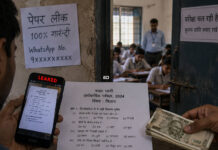
Furthermore, the app was also removed from Google’s Play Store as well as Apple’s App Store to avoid further downloads. This decision was made after the leak of the NEET UG 2026 papers. The leak took place in May earlier this year, with investigations indicating that question papers may have been circulated through several Telegram channels in exchange for money.
Talking about the incident, Abhishek Singh, Director-General of the NTA said, “The government had previously approached Telegram regarding the misuse of two specific features, including making edited timestamps visible in Telegram groups and addressing the issue of lack of stringent naming filters for its groups. However, Telegram did not alter its system then.”
Further, the NTA director said, “After the ban, Telegram founder Pavel Durov said on X that they are making the ‘edited’ label more visible to prevent backdating scams. However, this change is still not visible on the app.” He also questioned, “Why can’t Telegram simply fix its metadata so that timestamp changes are accurately reflected in linked group chats?”
Following its ban in India, Telegram’s founder, Pavel Durov, released yet another public statement criticising the action. Taking to X (formerly Twitter), he said that the ban “punishes 150M+ ordinary users”, further adding that the “leaks just moved to other apps.”
Nisarga Adhikary, a cybersecurity researcher at IIT-Kanpur, also warned, “Telegram is relatively mainstream and at least has identifiable infrastructure, legal points of contact, and a large amount of public activity.”
Furthermore, he added, “If determined actors are forced off it, they do not disappear. They migrate to platforms with stronger anonymity properties… pushing adversaries into darker corners of the ecosystem may simply reduce visibility into it.”
However, this is not the first time a country has banned Telegram. Earlier in 2018, the Russian government imposed a ban on the platform because the app denied Russian security services access to users’ encrypted messages. This ban was, however, lifted in 2020.
In 2026, Russia again blocked the platform after a crackdown on free speech online during its war with Ukraine. Durov, however, said that the app was being forced to become state-controlled and was being targeted for resisting surveillance and political censorship. This ban remains in effect to date.
Additionally, Telegram has remained banned in China since 2015, with concerns tied to the platform’s use by lawyers, activists, and other political organisers. The country’s official newspaper, People’s Daily, criticised the app back in 2015, which led to the application’s restriction in the country.
Among other nations that have banned Telegram are Ukraine and several European countries. Back in 2024, during the Ukraine-Russia conflict, the Ukrainian government banned Telegram after concerns regarding a safety threat were raised. It was alleged that information from Ukraine was being sent back to Russia through the platform, which led to a complete ban on the app.
In Europe, Norway and France also imposed bans on Telegram over concerns related to national security, drug trafficking, sexual abuse, and other cybercrimes.
While Telegram continues to market itself as a secure and private space for users, repeated incidents involving cybercrime, misinformation, illegal content, and security concerns have put it under scrutiny. With multiple bans, investigations, and controversies attached to its name, Telegram remains one of the most debated communication platforms today.
Image Credits: Google Images
Sources: Firstpost, The Indian Express, Reuters
Find the blogger: @shubhangichoudhary_29
This post is tagged under: Telegram, Pavel Durov, Telegram Ban, India Telegram Ban, NEET UG 2026, NEET Paper Leak, Cybercrime, Cybersecurity, Online Safety, Misinformation, Digital Privacy, Messaging Apps, Technology, Social Media, Internet Regulation, Data Security, Russia, Ukraine, China, Tech News
Disclaimer: We do not own any rights or copyrights to the images used; these images have been sourced from Google. If you require credits or wish to request removal, please contact us via email.
Other Recommendations:
Are You Ready To Pay Rs 99 For WhatsApp And Instagram Use? Meta Will Make You