

























There is a rhythm to Indian social media that you can set your watch to. Some outrageous issue happens. Twitter, or X, or whatever we’re calling it this week, catches fire.
Instagram fills with infographic carousels. LinkedIn gets earnest. News anchors perform their nightly theatre of indignation.
Celebrities post a black square or a wordy caption. For approximately 48 hours, it feels like the entire country has woken up. Then, without ceremony or resolution, the feed moves on. The issue doesn’t get solved.
The perpetrators don’t get punished. The law doesn’t change. We just stop caring. And we do it together, in perfect unison, as if outrage itself had an expiry date stamped on the bottom.
This is outrage fatigue, and it is quietly becoming one of the most politically convenient phenomena in modern India.
What Outrage Fatigue Actually Is
Outrage fatigue isn’t laziness. It isn’t apathy. It is what happens when a population is exposed to so many injustices, so rapidly, with so little institutional response, that the emotional cost of staying angry begins to outweigh the perceived reward of doing so.
Although it doesn’t have the proper scientific backing of studies and research, a study by William Brady, an assistant professor of management and organisations at Northwestern University’s Kellogg School of Management, and his colleagues took a look at this phenomenon.
In their paper titled ‘Misinformation exploits outrage to spread online’, Brady believes that overexposure to content meant to create outrage can eventually lead to a feeling of fatigue in the user.
Speaking with Scientific American, Brady further explained what outrage fatigue is, saying, “But if you’re constantly in that state (of outrage), it can lead to conflict and escalation of political disputes. Psychologically, if you’re constantly in that state it can be very exhausting.”
As per a 2017 Psychology Today article by clinical psychologist David J. Ley Ph.D., outrage fatigue “is a related experience, where one experiences exhaustion, cynicism, apathy, and hopelessness, as they try to take on too many social, political, legal, or economic campaigns at once.”
The algorithm makes it worse. Social media platforms are engineered to chase novelty. Engagement spikes on a new controversy, peaks within 24–36 hours, and collapses as the next outrage enters the feed.
The emotional arc of every viral issue now follows almost exactly the same trajectory: discovery, disbelief, mass sharing, peak outrage, performative solidarity, a couple of hot take articles, a few celebrity statements, and then, silence. Not resolution. Not justice. Just silence.
What makes the Indian version of this particularly corrosive is the gap between the scale of online fury and the near-total absence of offline consequence. We are a country that can mobilise millions of tweets and zero systemic change on the same issue, sometimes in the same week.
The Sonam Wangchuk Case
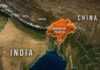
In late 2025, following unrest in Leh, climate activist Sonam Wangchuk was arrested and detained under stringent legal provisions following violent protests in Leh regarding demands for statehood and environmental protections for Ladakh.
Wangchuk and others were arrested on charges of instigating violence after a BJP office was torched and the Ladakh Hill Council vandalised.
His arrest triggered immediate outrage, with widespread concern over the treatment of a peaceful activist and the broader implications for dissent.
Yet, despite his prolonged detention and continued protests by supporters, public attention quickly faded. When he was released in March 2026, the development received limited engagement compared to the initial reaction.
The trajectory of the case highlights a broader pattern: while the movement itself remained ongoing, the outrage surrounding it was temporary. In an attention economy driven by immediacy, even sustained protests struggle to remain visible beyond their most dramatic moments.
The IPL Stampede In Bengaluru
In 2025, a deadly stampede outside Bengaluru’s M Chinnaswamy Stadium during Royal Challengers Bengaluru’s IPL victory celebrations killed 11 people and injured several others.
This led instantly to a lot of outrage with people questioning the organisers over crowd mismanagement, and a demand for accountability from those in power.
But the outrage quickly evolved into something else: frustration without consequence.
While several police officials were suspended, no top political leaders were held directly accountable. This triggered a second wave of anger, one focused not just on the tragedy but on the absence of political responsibility.
Opposition leaders openly accused the government of using officials as scapegoats while those who approved and oversaw the event faced no consequences.
And then, like so many others, the issue faded.
The victims remained. The questions remained. The outrage did not.
Read More: India’s Cleaning Warriors: Common People Cleaning Roads, Rivers, Garbage Piles
The Trans Bill That Most Of India Forgot In A Week
This one is harder to write about because the stakes are the highest, and the silence is the loudest.
India’s parliament passed the Transgender Persons (Protection of Rights) Amendment Bill, 2026, removing the right to self-identification for transgender people, a right that had been enshrined in Indian law since the Supreme Court’s landmark NALSA judgement of 2014.
The bill, introduced on March 13, 2026, cleared both houses of Parliament in under two weeks, replacing the self-identification framework with mandatory medical board certification, a government-appointed panel of doctors who would determine a person’s gender identity for them.
Multiple members of the National Council for Transgender Persons resigned in protest, calling the bill “a step backward for our fundamental rights to self-identification and dignity.”
Trans activists marched in Mumbai, Delhi, Hyderabad, and Bengaluru. Legal challenges were filed. Human rights organisations internationally condemned the law.
Trans activist Akkai Padmashali said, “These politicians are making laws for us when they don’t even have basic concepts of gender, sex, and sexuality. This new bill criminalises us and disrespects our right to exist.”
For a few days, the story was everywhere. Then it wasn’t.
The reason it didn’t resonate with the breadth of national outrage it deserved is uncomfortable to examine directly. The trans community in India is one of the most systematically marginalised groups in the country.
Their struggles, while profound and constitutionally significant, exist at a remove from the daily lives of the majority of social media’s active users.
Outrage, it turns out, is also subject to the same proximity bias as everything else: we feel more for what feels closer to us.
Bollywood stars who had played trans roles, collected awards for them, and profited from trans stories stayed silent. Neither Akshay Kumar, who was possessed by a transgender ghost in Laxmii for box office returns, nor Vijay Sethupathi, who won a National Award for playing a trans woman in Super Deluxe, spoke up.
When the people with the largest platforms, people who literally built careers on trans narratives, choose strategic silence, the message it sends to the general public is clear: this isn’t important enough to risk anything for. And the feed moves on.
Outrage is a beginning, not an end. The work starts when the notifications stop.
Image Credits: Google Images
Sources: BBC, Deccan Herald, Modern Diplomacy
Find the blogger: @chirali_08
This post is tagged under: Issue, viral Issue, outrage, outrage Issue, outrage fatigue, digital, digital media, digital news, news, news world
Disclaimer: We do not own any rights or copyrights to the images used; these images have been sourced from Google. If you require credits or wish to request removal, please contact us via email.
Other Recommendations:
The Government Will Pay You 50 Lakh For Raising A Donkey; Here’s Why