






























Among the animated shorts that have won the Academy Award, there are a few that stand out. They are different because they are sociological or philosophical in nature and seek to enlighten the adult mind as much (or more) as that of children. But because of the general trend of fantastical shorts made to entertain children, such films get overshadowed.Though in the minority, this article is an attempt to balance the scales and illuminate to the readers the other methods of using the animation shorts, supposedly meant only for children, whether to provoke introspection and thought,or simply right an obvious evil.

It must be admitted that from the 1930s to the 1950s the animated shorts were Tom-and-Jerry-like cartoons or fairy-tales meant for the eyes of children. Though some of these winning productions, like Tom and Jerry, are enjoyed by adults and children alike even today, the animated shorts of this era were child-like, comical and provided slapstick entertainment. There was nothing remotely serious, social, philosophic or political about them. In the recent years the shorts made for children at least try to convey a message; for example, in For the Birds (2001), the acceptance of the big, ugly bird into the gang of the little ones seeks to teach children of the importance of tolerance and empathy, and is moralistic. The shorts have evolved, but there have been various political and philosophical shorts that have been around for long too.
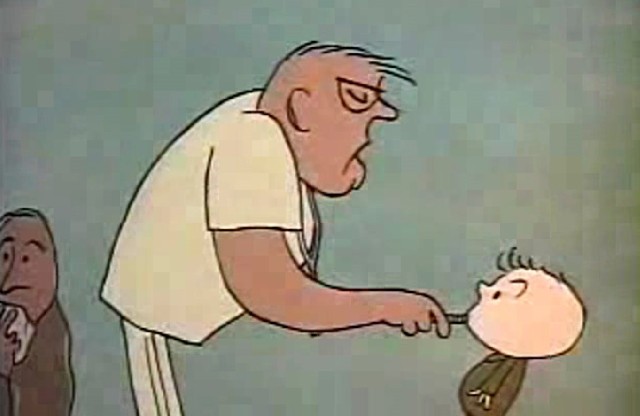 The trend of the early era of animated shorts broke with an overtly political Munro winning the Academy Award in 1960. It was written by Jules Fieffer and is based on his experience in the U.S. Army. It portrays a rebellious four year old child getting accidentlyenlisted into the U.S. Army. Despite shouting out his age, all adults fail to notice his age. Contextually, it was a period of intense opposition tothe U.S. presence in Vietnam, and this short captures brilliantly the absurdity, recklessness, exploitation and delusional thinking that led to the Vietnam wars. It was a first, with anti-Vietnam movies following for decades after. Jules Fieffer explained his choice of using the animated short film as a platform to discuss the issue: “The best way is to go … [is to] feign innocence, and bring the reader along in a quiet way. …so when you see the film, you feel your stomach knot up because of the obvious abuse and ignorance of authority.”
Fieffer used the inherent ‘innocence’ implicit in the animated short genre to provoke and incite anger at the obvious exploitation that occurs regarding the enlisted young men for the war. One is distinctly reminded of William Blake’s Songs of Innocence (1789) which read like simple rhymes for children, but, (for example The Chimney Sweeper), was actually a vehement critique of an poor children’s exploitation in the hands of the church, state and family. He did this by writing of the innocent children’s submission to an exploitative authority in a purposefully non-judgemental manner which rendered them as normative practises. Reading it sparks off immense unease and anger in the reader against the system and its perpetrators, inciting action against them.
Similarly, The Hole (1962) is a discussion on nuclear attacks; Is It Always Right to Be Right? (1970) is about U.S. politics; and Every Child (1979) promotes the work of UNICEF with its message being that every child has a right to have a name and a roof above his or her head.
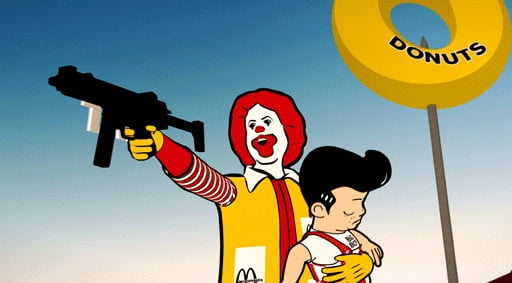
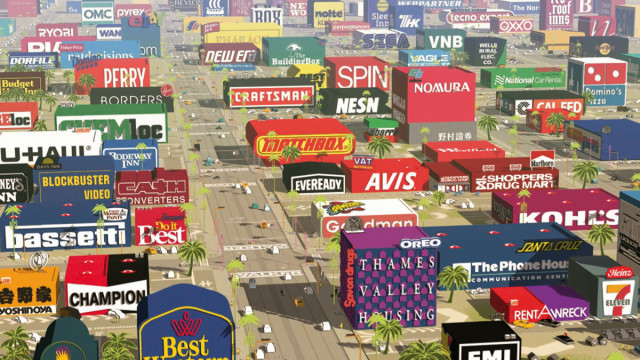 The most relevant short to the people of the capitalist world today is the French film Logorama (2009), in which the city of Los Angeles – the cars, buildings, food, people – are merely logos of brands. The film features around two thousand brands. In it, two police cops chase down the McDonalds clown after he robs a truck. It is shot like a typical Hollywood action film, with guns and helicopters and lots of violence and shooting (and the McDonalds clown is clearly meant to resonate Heath Ledger’s Joker in The Dark Knight Rises). Ultimately an earth-shattering earthquake leads to oil wells erupting and drowning the entire city. The last scene zooms out of the USA to the planets and the galaxy, which are also ridden by brands such as Universal Pictures, MasterCard, Internet Explorer, Milky Way chocolate etc. The movie is a strident exposure (as we completely miss that which is right in front of us) of the penetration of brands into our lives, and shakes our capitalist-ridden sensibilities.
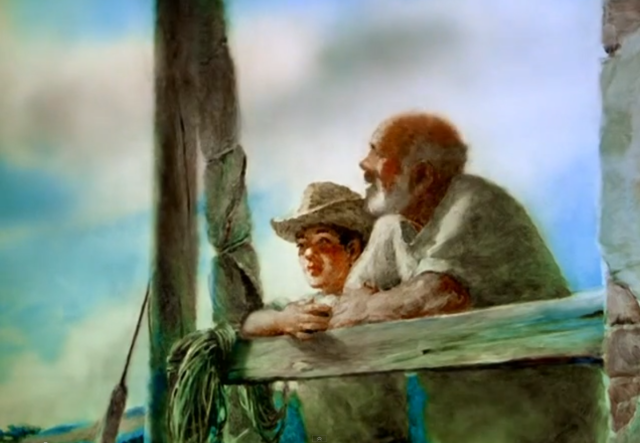
Though less political, there are some shorts that are basically philosophical and introspective, and aesthetically experimental. The Old Man and the Sea (1999) is unique for its theme and animation technique (known as the glass-on-plate technique). It is an adaptation of the novel of the same name by the Nobel Prize winner Ernest Hemingway, and is an elegant and poignant tale of an old fisherman’s struggle to capture a marlin (which he does, but it is eventually eaten by sharks). Like the novel it explores the themes of old age, brotherhood and sacrifice, but the quality of the animation and the narration make it an equally haunting tale for children. Father and Daughter (2000) is about a daughter’s lifetime wait for her father who never returns. La Maisonen Petits Cubes (2008) is about an old man’s psychological and underwater journey into his sunken house, with each room representing a phase of his rich and full life. All three of these movies are melancholic, sombre and moving, psychologically real, and filled with rife imagery, like a painting. They are thought-provoking and an intelligent exploration into the subjective human psyche. Even Ryan (2004), a biographical portrait of a pioneering animator Ryan Larkin, is experimental with its technique, with the visceral reality of the characters visually represented in the form of colourful and vivid tentacles shooting out, and (depending on the emotion) scarring the faces.
The rest of the shorts are memorable and entertaining too, and have evolved. They offer to adults a child-like purview into life that is revealing of the fundamental truths of life (like love, friendship and tolerance), and, like the animation movies, do not fail to move, child-like faith being a precious commodity as it is. But despite their quality and importance to the children of any generation, the other types of political or philosophical shorts deserve to be remembered too, as they show us how a seemingly innocuous platform like animation can also be used powerfully in activism or propagation of various ideas…they are thus important for art itself.
By Ananya Tiwari