




























A show about marital rape premiered on JioHotstar. Within days, the most viral conversation about it wasn’t about the 1 in 6 married Indian women who report sexual violence.
It wasn’t about the fact that marital rape remains legal in this country. It was about a statistic on women’s rights and whether the show was being unfair.
To men.
Welcome to the Chiraiya controversy, which is less a controversy about a show and more a masterclass in how Indian social media processes any story that holds up a mirror to domestic life.
The Chiraiya Backlash
Chiraiya is a recently released web series led by Divya Dutta, Sanjay Mishra, and Prasanna Bisht.
Directed by Shashant Shan, the plot is centred around Kamlesh (Dutta) and Pooja (Bisht), who play sisters-in-law and how their relationship changes when Kamlesh learns that Pooja is experiencing marital abuse.
It raises several topics, including marital rape, patriarchy, bodily autonomy, consent, societal pressure and more.
Now, of course, as with any show or movie that is centred around the very unfortunate but lived reality of Indian women, it instantly had many men up in arms. The thing to notice here is that there is no big bad villain in these stories, but the males in these women’s lives themselves, who are the cause of their suffering.
Most of these male characters are just like any other man; in fact, they emphasise how educated they are, spouting progressive jargon and claiming they believe women and men to be equal.
However, it is when a woman enters their house that all that talk ends up being just that: talk. In the midst of this, several social media posts started to crop up about how the show was making claims about “82 percent of Indian wives face sexual abuse by their husbands.”
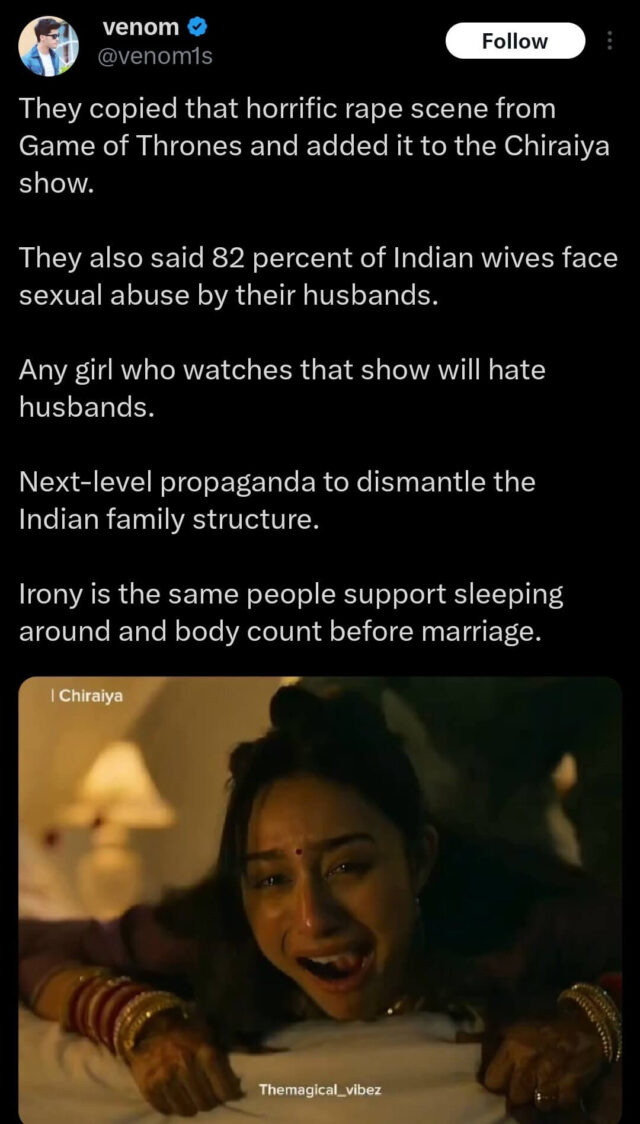
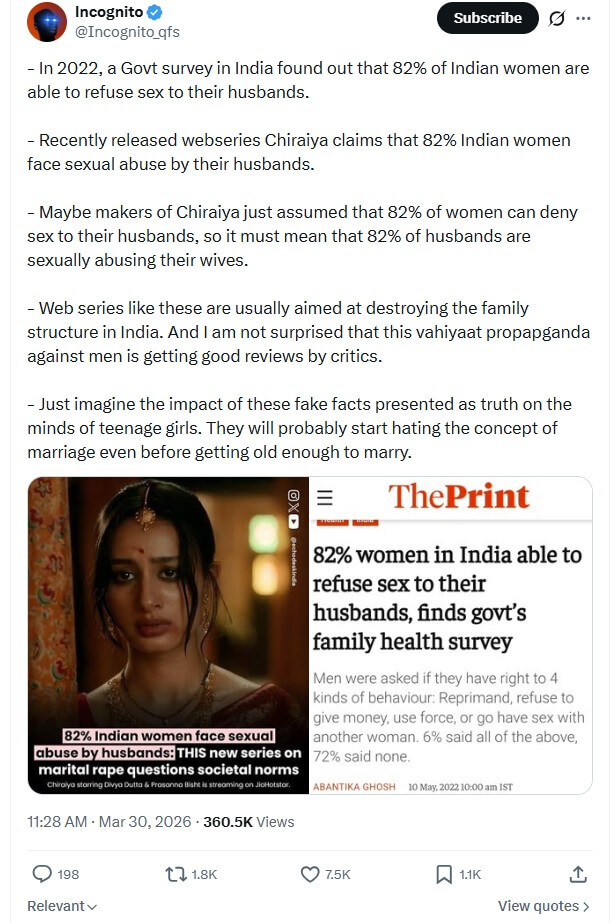
The 82% figure isn’t a fabrication. It is a real data point from the National Family Health Survey (NFHS)-5 (2019-21).
The NFHS Survey stated, “Among married women aged 18-49 who have ever experienced sexual violence, 83 per cent report their current husband and 13 per cent report a former husband as perpetrator.”
In the heat of the debate, however, “82% of perpetrators” was conflated with “82% of the total female married population.”
Read that again slowly, because this is where the entire controversy lives.
The original statistic is about who commits sexual violence against married women. The viral version became how many married women face it. The denominator was quietly dropped. The framing was silently reversed.
And the mutated statistic, “82% of Indian women face marital rape”, spread across X, Instagram comment sections, and YouTube videos as fact, attributed to both NFHS data and the show itself.
This, however, had many netizens, in outrage, clinging to this one number and making some of the nastiest and most concerning posts, mocking the show, the actor, and the general female population, of course.
Many viewers criticised the makers for misrepresentation. Some labelled the series as anti-male propaganda.
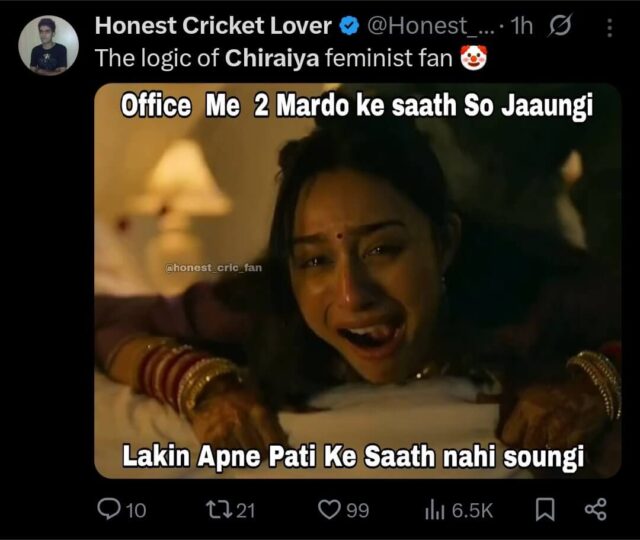
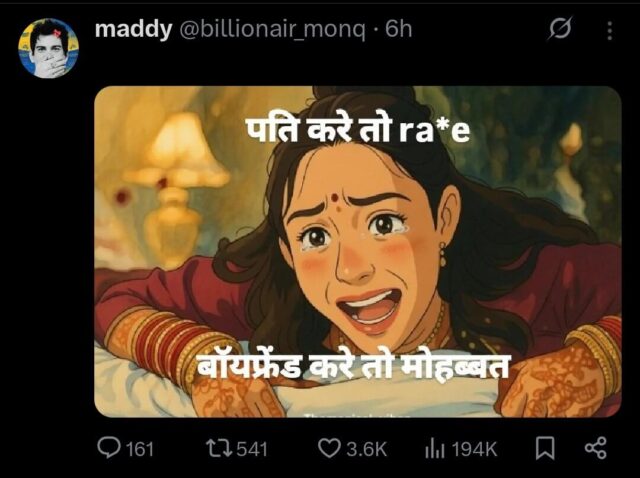
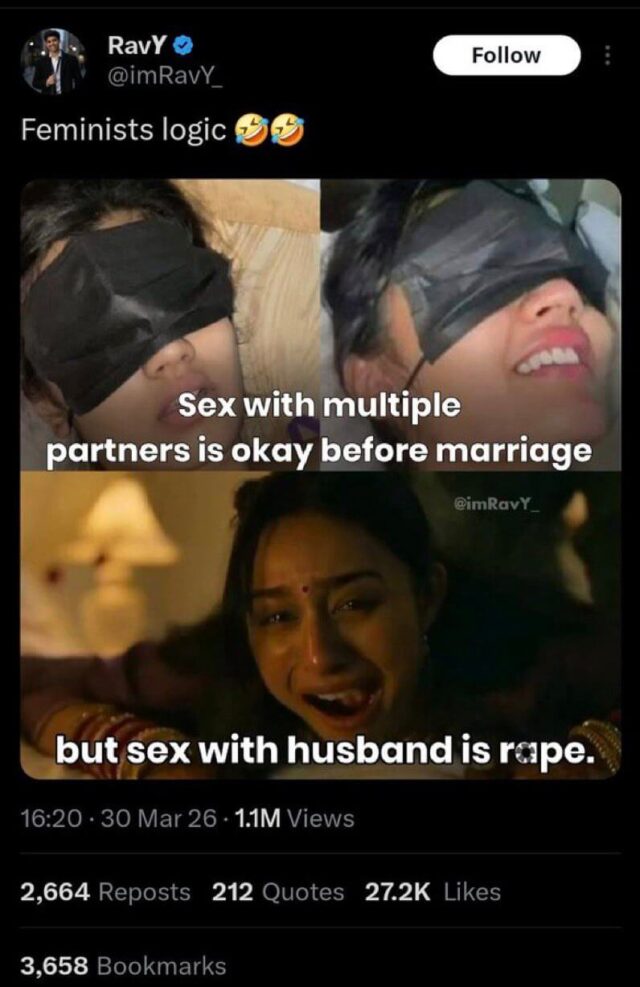
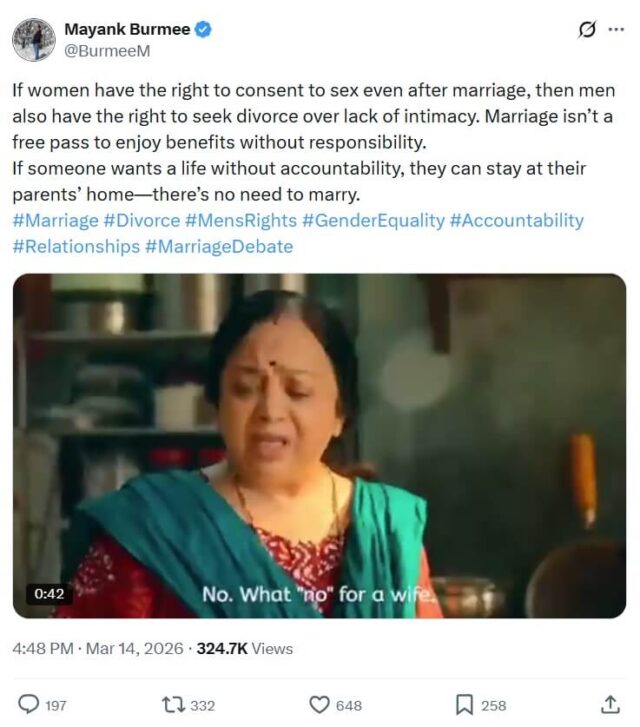
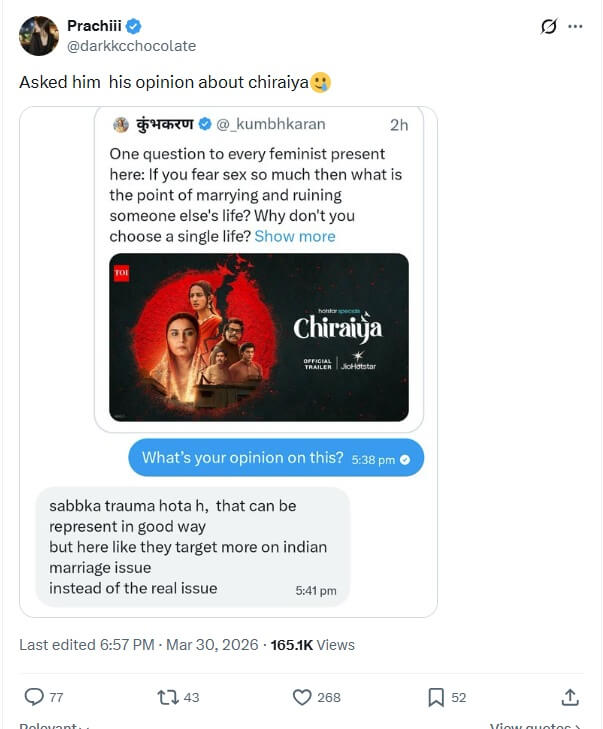
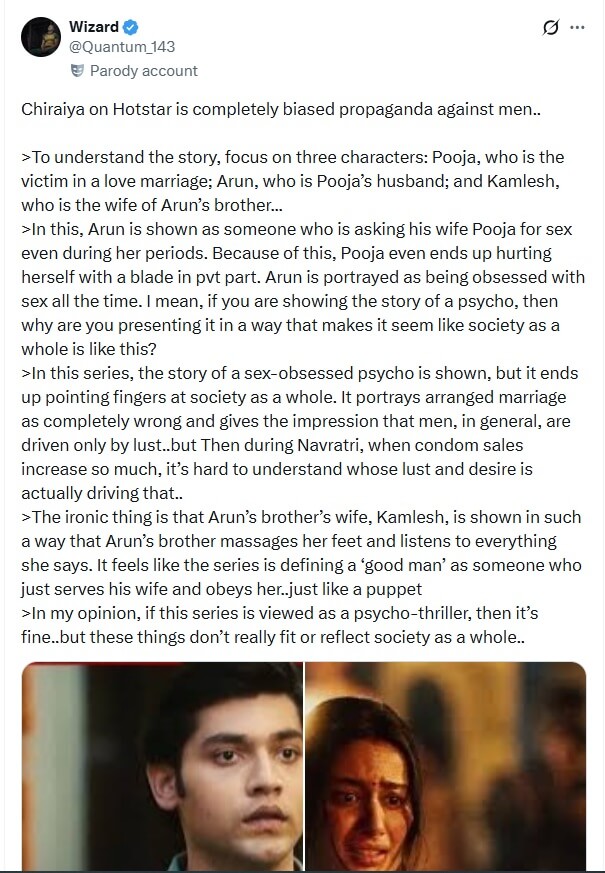
Also, apparently, the only claim made in the show regarding any statistic is limited to “In India, 5.6% of ever-married women report being forced or coerced into sex by their husbands”, which was said to have been taken from the NFHS-5 (2019-21).
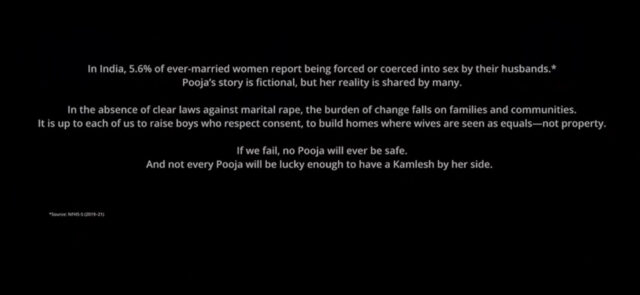
Here’s the thing, though: several people who participated loudly in this outrage admit they never actually saw the statistic displayed on screen.
The controversy built itself on a misreading of data, spread by people who hadn’t watched the show, about a claim the show may not have even made, and it still successfully buried the actual conversation about marital rape for days.
That’s not an accident. That’s a pattern.
Read More: ED Vox Pop: We Ask Gen Z Men If The Movie Mrs. Is Propagating Toxic Feminism?
A Familiar Cycle of Reaction
If you’ve been paying attention for the last five years, you’ve seen this exact sequence before.
In 2020, Thappad was released, a film about a woman who files for divorce after being slapped once by her husband. #BoycottThappad trended on Twitter.

The film went on to be critically acclaimed. The boycott achieved nothing except revealing the worldview of the people calling for it.
In 2025, Mrs released, a Hindi remake of the Malayalam film The Great Indian Kitchen, about a woman slowly suffocated by the institution she married into. SIFF, a men’s rights organisation, labelled it “another example of feminist propaganda being used to demonise men and undermine the family system.”
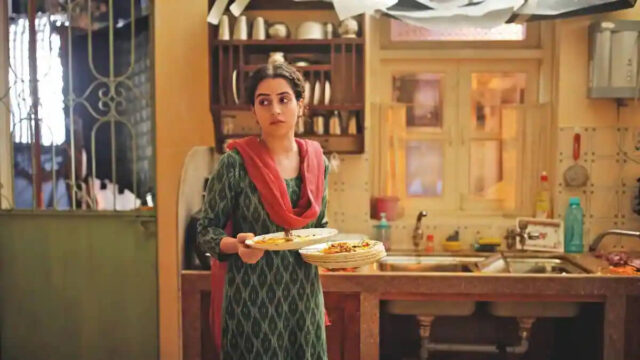
Their most memorable contribution to public discourse: they questioned what stress a woman goes through while chopping vegetables and cooking food on a gas stove, calling it “highly meditative.”
Highly meditative. Decades of unpaid domestic labour. Highly meditative.
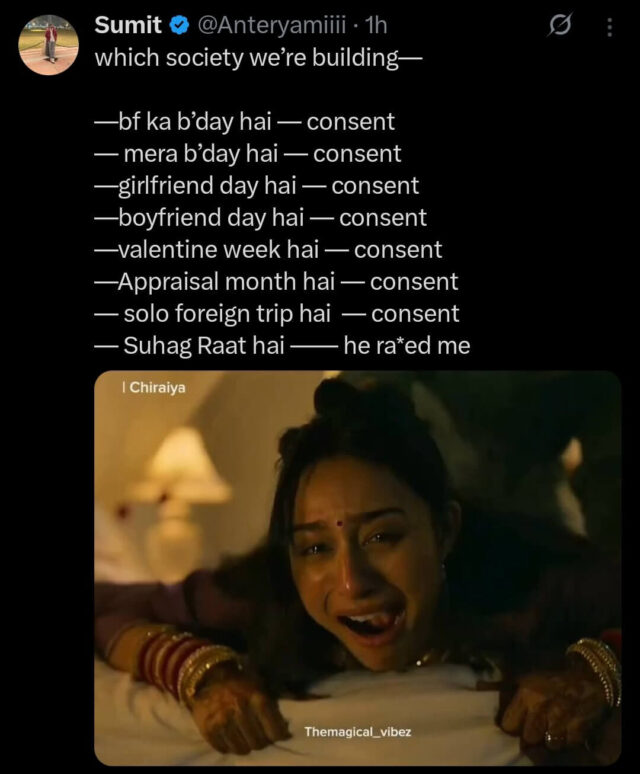
Now in 2026, Chiraiya arrives, and within eleven days of release, men’s rights accounts are celebrating the “massive backlash” and “red-pilling” of millions of men, with posts framing consent as a girlfriend privilege that evaporates the moment sindoor is applied: “Boyfriend = consent, Husband = right.”
The formula is always the same. A film depicts something that happens inside Indian homes. Organisations and anonymous accounts call it propaganda. A data point gets extracted, stripped of context, and spread as proof that the film is lying.
The debate pivots from the subject matter (marital violence, domestic labour, consent) to whether the film is fair to men. And the actual issue gets buried under the meta-conversation about representation.
The Mirror Problem
Here is what the Chiraiya backlash, the Mrs backlash, and the Thappad backlash have in common, stated plainly: they are not really about statistics, propaganda, or fairness.
They are about the specific discomfort of watching something you recognise.
The men who are loudest in calling these films exaggerated are often the same men who grew up watching their mothers eat last. Who have probably never once questioned why “adjusting” is a word applied almost exclusively to wives.
Who believe, somewhere beneath their articulate objections, that what happens between a husband and wife behind closed doors is not a subject for public storytelling.
The fake 82% statistic spread so fast, not because people care about statistical accuracy, but because the same accounts sharing it confidently cite unverified data in every other argument they make. It spread because it offered a technicality. A way to say the show is wrong without having to say what the show is wrong about.
Chiraiya didn’t invent the nightmare it depicts. It just refused to look away from it. And for a certain kind of viewer, that refusal is the most threatening thing a piece of Indian cinema can do.
The question worth sitting with isn’t whether 82% is the right number. It’s why the number was the only thing anyone wanted to talk about.
Image Credits: Google Images
Sources: Firstpost, Hindustan Times, Hindu Business Line
Find the blogger: @chirali_08
This post is tagged under: Chiraiya, Chiraiya series, Chiraiya ott, Chiraiya web series, Chiraiya backlash, mrs, thappad movie, indian women, viral, bollywood, marital rape, marital rape india
Disclaimer: We do not own any rights or copyrights to the images used; these images have been sourced from Google. If you require credits or wish to request removal, please contact us via email.
Other Recommendations:
Bollywood Profits From Trans Culture But Remains Silent On Regressive Bill










[…] Why Do Some Men Get Angry When A Women’s Rights Movie… […]
[…] Why Do Some Men Get Angry When A Women’s Rights Movie… […]
[…] Why Do Some Men Get Angry When A Women’s Rights Movie… […]
[…] Why Do Some Men Get Angry When A Women’s Rights Movie… […]