





























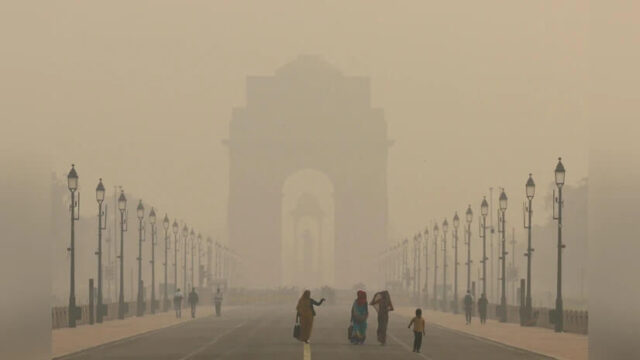
Air pollution in Delhi has been a problem for years now. For years, the air quality of the capital of India has been just deteriorating to worse and worse.
It has gotten to a place where Delhi has gotten a permanent position, and in 2024, a 24-hour AQI reached 491, which is classified as “severe plus” and was one of the worst air quality of the season.
However, the Delhi government, with a 17-point plan, seems to be trying to take some measures that would help address this problem.
What Is The Delhi Govt Planning?
The Delhi government recently announced a 17‑point Winter 2025 Air Pollution Control Action Plan, reviewed by Environment Minister Manjinder Singh Sirsa.
Delhi has long been fighting worsening levels of pollution for quite a while now, especially during the late autumn–winter months.
This has been due to the festival season, particularly that of Diwali, Dussehra, Navratri, post‑Diwali fireworks, crop residue burning in neighbouring states, vehicular emissions, dust from roads and construction, and stagnant atmospheric conditions combine to trap pollutants in the air.
In recent winters, some reports have even temporarily placed Delhi at the top of “world’s most polluted cities,” showing how severe this crisis is.
Sirsa said, “We have taken several steps, including developing EV infrastructure, improving waste management, ensuring pothole-free roadsand installing anti-smog guns on high-rises. We will also conduct trials for artificial rain. We are hopeful these measures will positively impact air quality.”
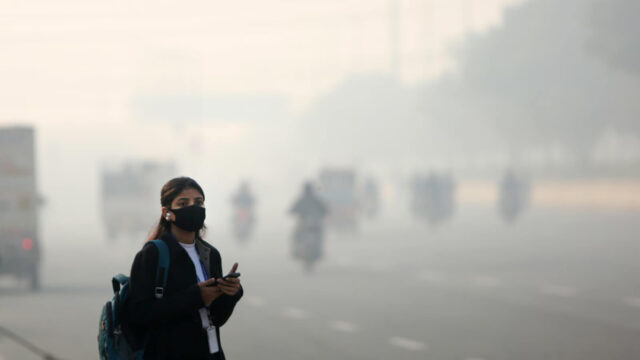
One of the methods that the Delhi government plans to employ is using cloud seeding to wash down particulate matter. Another is that of using water sprinklers round the year, only stopping during the monsoon season.
As per the Air Pollution Mitigation Plan 2025, “Mega deployment of up to 1000 water sprinklers and 140 anti-smog guns across Delhi throughout the year – except monsoon season.”
There will also be “Deployment of up to 200 MRS and other road sweeping and water sprinkling machines coupled with 20 dump vehicles, 70 electric litter pickers and 38 water tankers to fight against dust.”
According to reports, around 219 mist sprayers have been installed in 13 pollution hotspots, and 174 anti‑smog guns are being mounted on high-rise buildings.
Read More: FlippED: Mumbai Rains Vs Delhi Pollution: Which Is The Better Catastrophe: Our Bloggers Fight It Out
Focus on vehicular pollution is another point, where “ANPR Cameras equipped with digital display screens to be installed at Delhi’s border entry points to identify End of Life Vehicles.”
Road checks are also being intensified, with an NDTV report claiming that by August, nearly 5.95 lakh challans had been issued for vehicles lacking valid PUC (Pollution Under Control) certificates.
The plan further includes large-scale plantation drives, around 61 lakh saplings as per a Moneycontrol report, stricter monitoring of construction and demolition waste processing, and dust control in public works.
Anumita Roychowdhury, executive director for research and advocacy at the Centre for Science and Environment, also spoke about where the government needs to be spending its resources.
She said, “Investments must be repurposed to cut emissions from vehicles, industry, waste burning and solid fuels, which dominate in winter. Source apportionment studies show that the contribution of dust reduces in winter, while combustion sources increase. Priority action must reflect this and ensure year-round efforts.”
Activist Bhavreen Kandhari also added that simply relying on cloud seeding, anti-smog guns, or token plantation drives is not enough.
She said, “What the city needs is systemic change: a city built for people, not cars, with safe footpaths, bus priority lanes and clean public transport, instead of endless flyovers; real waste management through segregation and composting, not more waste-to-energy plants choking neighbourhoods; and protection of the Ridge and mature trees, not token plantations.”
She added, “Delhi must enforce strict compliance on vehicles, construction and industry, with zero tolerance for corruption and loopholes. Only by tackling pollution at its source, with uncompromising enforcement, can Delhi move from cosmetic fixes to clean, breathable air.”
Image Credits: Google Images
Sources: Moneycontrol, TOI, NDTV
Find the blogger: @chirali_08
This post is tagged under: Delhi, Delhi air quality, Delhi air, Delhi air pollution, Delhi air quality risk, Delhi worst air pollution, Delhi most polluted
Disclaimer: We do not hold any rights or copyright over any of the images used; these have been taken from Google. In case of credits or removal, the owner may kindly email us.
Other Recommendations:
Fact Check: Is US President Donald Trump Banned From Nobel Peace Awards?