






























ED VoxPop is where we ask people different survey questions and get responses to conduct a sort of poll of our own.
In the last few weeks, the streets of South Asia have turned into stages of anger. In Leh, Ladakh’s youth had been sitting in hunger strikes, demanding statehood and constitutional safeguards.
For weeks, their protest was calm, even silent. But when two strikers collapsed and were hospitalised, silence turned into fury. Crowds stormed BJP offices, set vehicles on fire, clashed with security forces, four people died, and dozens were injured. The valley, once seen as peaceful, burned.
In neighbouring Nepal, Gen Z erupted after the government announced sudden bans on TikTok, Instagram, and Facebook. For a generation that grew up online, this wasn’t just about apps; it felt like their voice was cut off.
Add to it long-simmering anger over corruption, unemployment, and authoritarian governance, and the protests boiled over into arson, vandalism, and violent crackdowns.
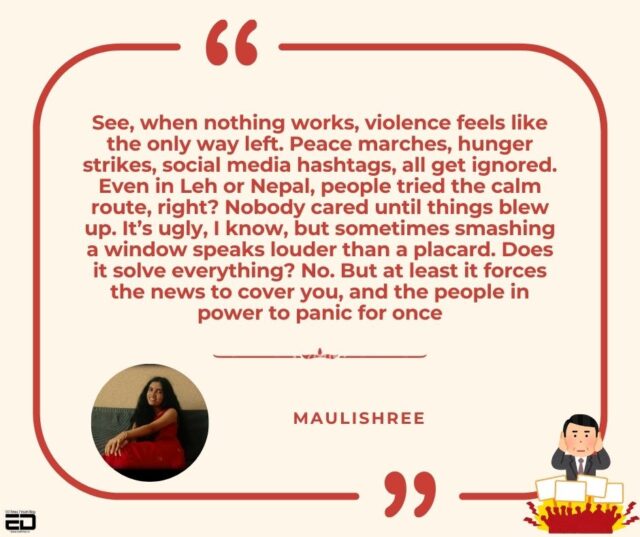
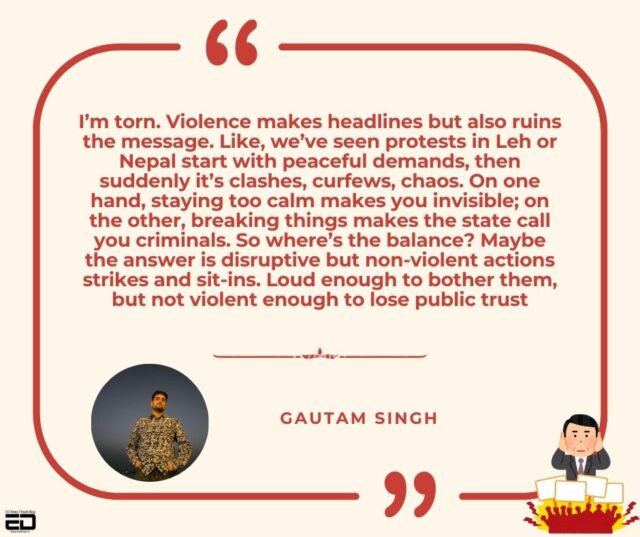
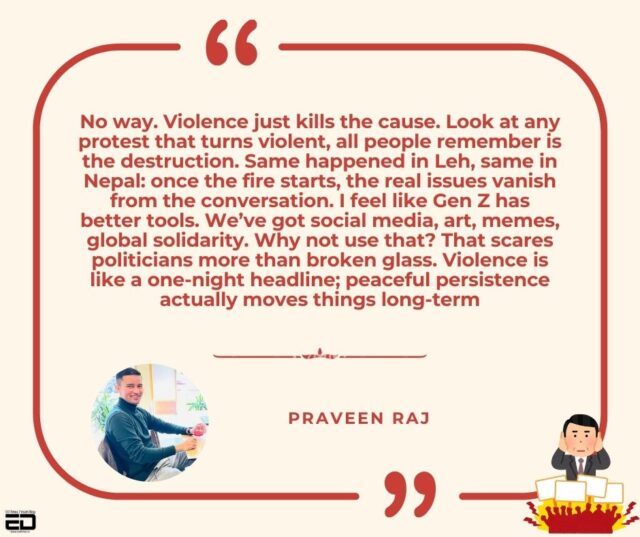
These events force us to confront uncomfortable questions: Is violence simply a desperate megaphone for the unheard? Or does it betray the very causes it claims to fight for? Is it a tool for change, or a trap that swallows movements whole?
To understand this better, we asked Gen Z, a generation both accused of being too “soft” and celebrated as “radical,” what they think.
Also Read: Watch: 6 Protests That Made The Government Bend
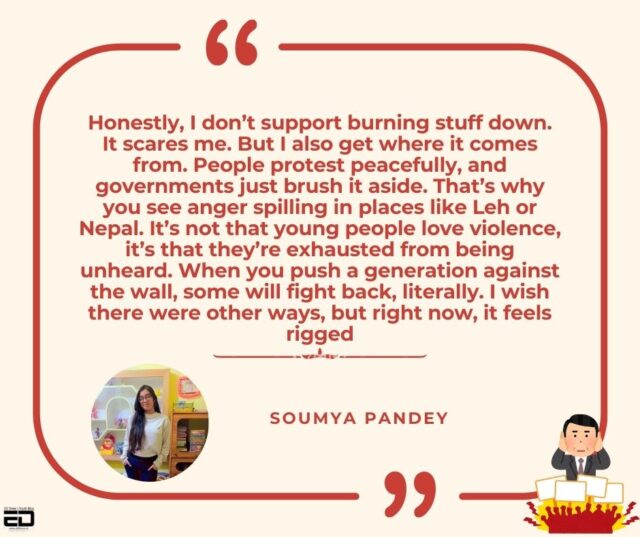
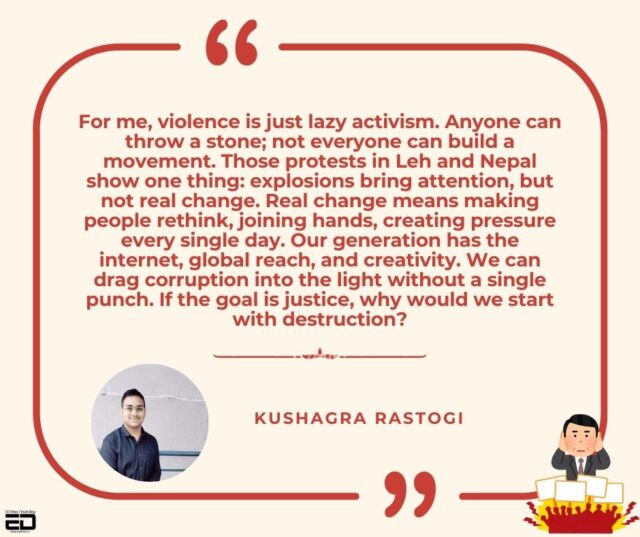
What do we make of these voices? On one side, there’s anger: a belief that power only listens when confronted with flames and shattered glass. On the other hand, there’s fear: the conviction that violence derails a movement and hands the state an easy excuse to repress it further.
Leh and Nepal show both truths. Hunger strikes, peaceful marches, hashtags, all ignored. But when clashes erupted, the conversation shifted away from demands to destruction.
So here’s the critical dilemma: Does violence amplify a cause or erase it? Does it make the powerful tremble, or does it let them tighten their grip? And if peaceful protest is consistently ignored, what realistic alternatives remain?
Gen Z doesn’t agree on the answer, but one thing is clear. They refuse silence. Whether through hunger strikes, hashtags, or hard clashes on the street, their message is simple: listen to us now, before it’s too late.
Images: Google Images
Sources: Contributors’ opinion
Find the blogger: Katyayani Joshi
This post is tagged under: Gen Z Voices, Protest Culture, Leh Protests, Nepal Protests, Youth Uprising, Speak Up Gen Z, South Asia Unrest, Non Violent Resistance, Voices Of Change, Youth For Justice, Fight For Rights, Protest Or Perish, Digital Activism, Social Justice Now, Change Makers, Gen Z Perspective, Power And Protest, Reform Not Riot, Youth Unplugged, Listen To Us
Disclaimer: We do not hold any right, copyright over any of the images used; these have been taken from Google. In case of credits or removal, the owner may kindly email us.
Other Recommendations:
ED VoxPop: Should College Students Take Part In Political Protests?