






























ED VoxPop is where we ask people different survey questions and get responses to conduct a sort of poll of our own.
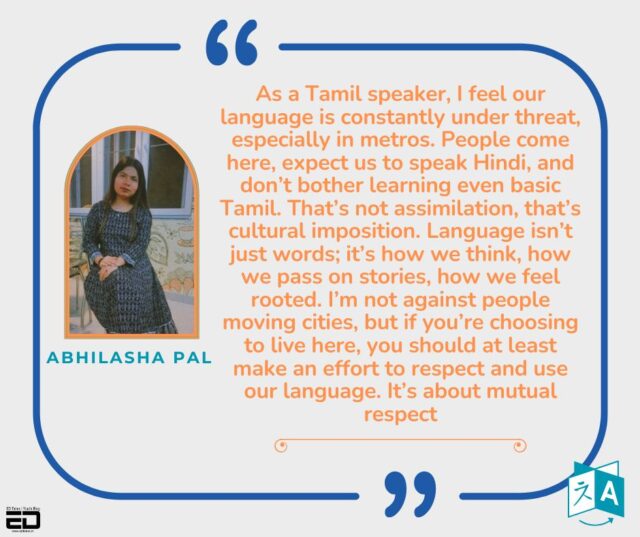
India’s linguistic landscape is deeply diverse, but lately, it’s also becoming deeply divided. While Hindi and English are often seen as “link languages,” especially in urban India, several states are pushing back against their dominance, arguing that this trend sidelines regional identities and marginalises native speakers.
The tension lies in the everyday reality of young Indians: Is knowing Hindi and English enough to get by, or should one learn the local language to truly integrate?
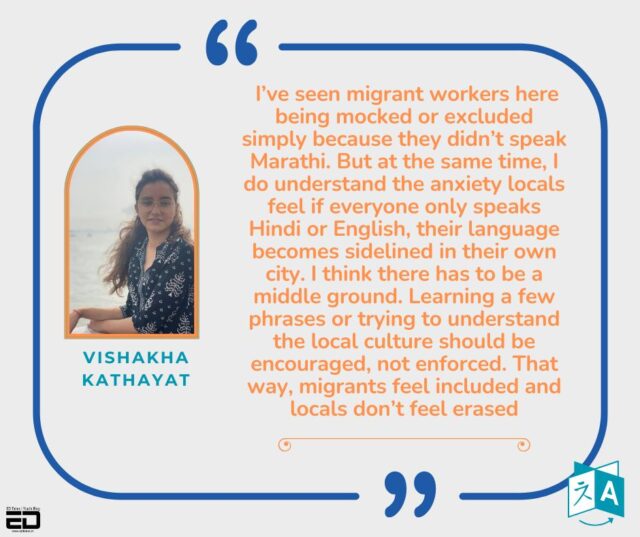
In Maharashtra, the state government’s recent move to make Hindi a compulsory third language from Classes 1 to 5 triggered fierce protests. Critics called it an attempt at linguistic homogenisation, arguing it would undermine Marathi, especially among the next generation.
Under pressure from political parties like the Shiv Sena (UBT) and MNS, the proposal was rolled back, and a fresh language policy panel was formed. The resistance wasn’t just symbolic; it was a statement of cultural defence.
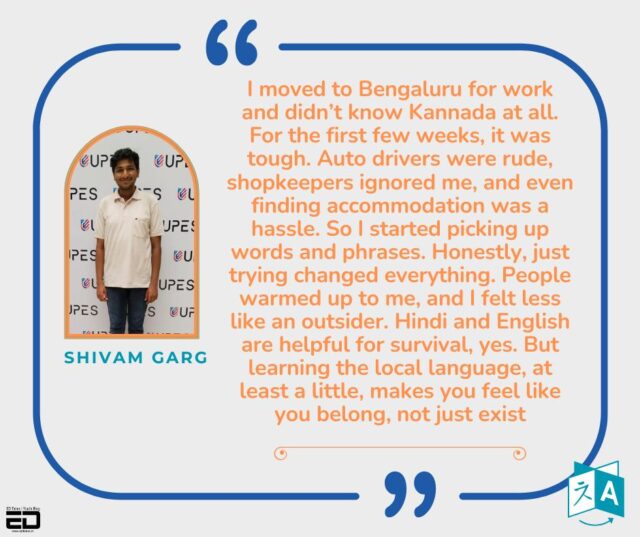
A similar sentiment is simmering in Karnataka, where the push for Kannada pride has intensified. The Karnataka Rakshana Vedike and other pro-Kannada groups have long opposed what they call the “soft imposition” of Hindi, visible in signage, central exams, and migrant behaviour. Their argument? That Hindi-speaking migrants often make no effort to learn Kannada, leading to cultural alienation in their own cities.
In this evolving landscape, where mobility, identity, and politics collide, we asked young Indians: Is Hindi/English enough, or do you really need to learn the local language, and whether the language violence is justified within India?
Also Read: Breakfast Babble: Why I Feel Indian Languages Should Stop Fighting With Each Other
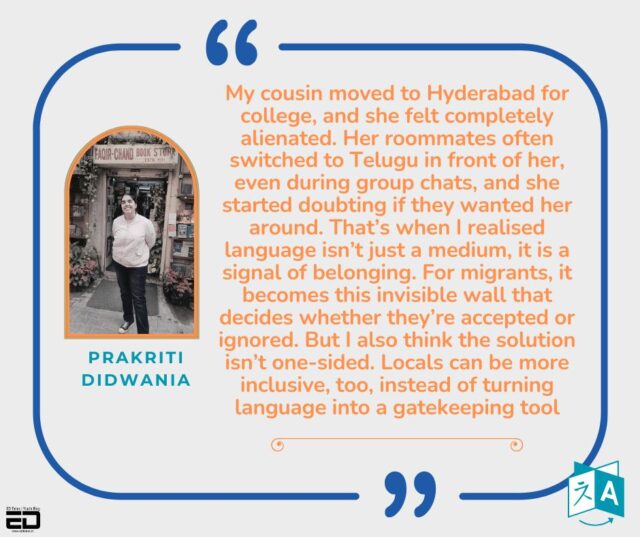
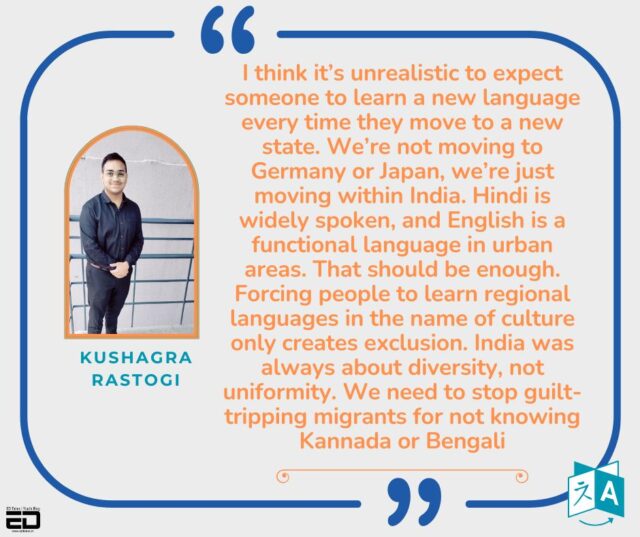
The growing opposition to Hindi across several Indian states isn’t just about a language; it’s about power, identity, and the politics of belonging. As states like Maharashtra and Karnataka resist what they see as cultural dilution, and as migrants face social isolation for not learning local tongues, the fault lines deepen.
For Gen Z, who move across states for work and education, the answer isn’t binary. Survival may come from Hindi and English, but belonging often requires understanding and using the local language.
To preserve India’s pluralism, we must move beyond imposition and toward mutual linguistic respect. Unity shouldn’t mean uniformity.
Sources: Contributors’ Opinion
Find the blogger: Katyayani Joshi
This post is tagged under: language politics, hindi imposition, regional identity, linguistic diversity, indian languages, gen z india, cultural assimilation, migrant struggles, language barrier, local language pride, marathi vs hindi, kannada pride, youth opinion, vox pop india, hindi dominance, save regional languages, india speaks many tongues, unity in diversity, hindi not enough, mother tongue matters, anti hindi imposition, learn local language, language and migration, india language debate
Disclaimer: We do not hold any right or copyright over any of the images used; these have been taken from Google. In case of credits or removal, the owner may kindly email us.