





























In February 2026, a tiny Japanese macaque named Punch captured hearts around the world because of a profoundly emotional moment. Abandoned by his mother at birth and initially rejected by his peers at the Ichikawa City Zoo in Japan, Punch found solace in a plush orangutan from IKEA’s DJUNGELSKOG collection.
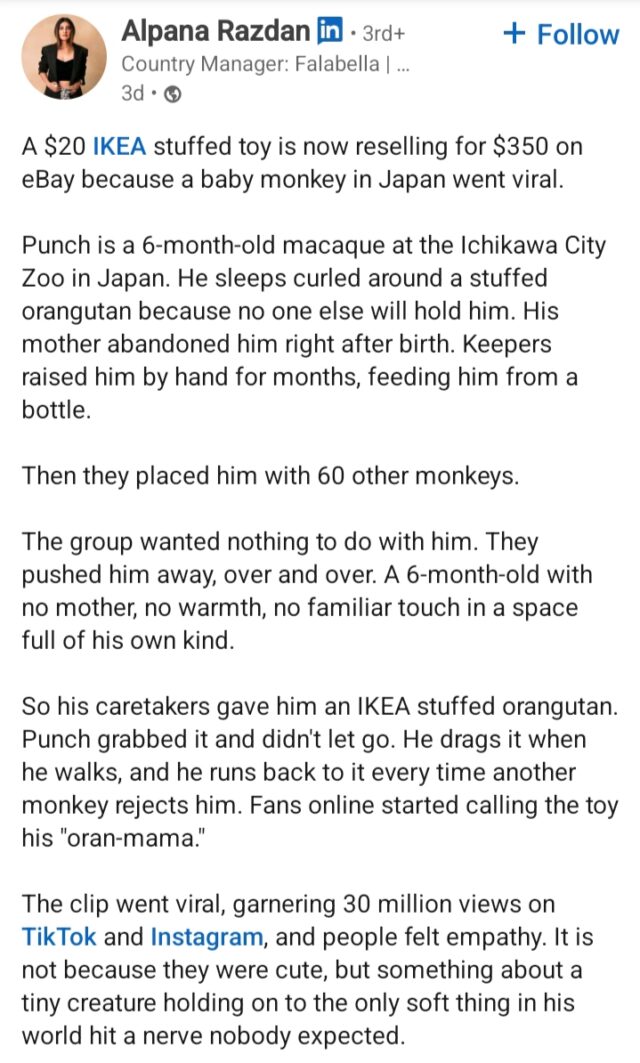
Photographs and videos of him clinging to this soft toy as if it were a surrogate parent spread like wildfire on platforms from TikTok to Instagram, sparking global empathy and transforming a humble $20 toy into an international symbol of comfort and resilience.
Within days of going viral, the toy sold out in IKEA stores across the United States, Japan, South Korea, Singapore, and more, while resale prices on eBay jumped to over ten times its original retail value.
Authentic Emotion Goes Global
Punch was born at the Ichikawa City Zoo in July 2025 and, shortly after birth, was rejected by his mother, a situation that, in primate behaviour, often leads to prolonged stress and social difficulties.
Because baby macaques depend heavily on close physical contact with their mothers to thrive, keepers introduced an IKEA DJUNGELSKOG stuffed orangutan toy to provide comfort.
Videos showed Punch clutching the plush close, dragging it through his enclosure, and snuggling with it during moments of distress. These clips soon drew millions of views across social media, particularly on TikTok, and sparked heartfelt reactions everywhere from celebrity posts to international news.
The hashtag #HangInTherePunch trended as viewers empathised with the little monkey’s struggle for connection.
What makes this moment special is that no brand message was inserted initially; Punch didn’t “endorse” the toy; he needed it. That emotional rawness made the story relatable and shareable, transcending cultural and language barriers in ways no scripted advertisement ever could.
Care Before Commercialisation
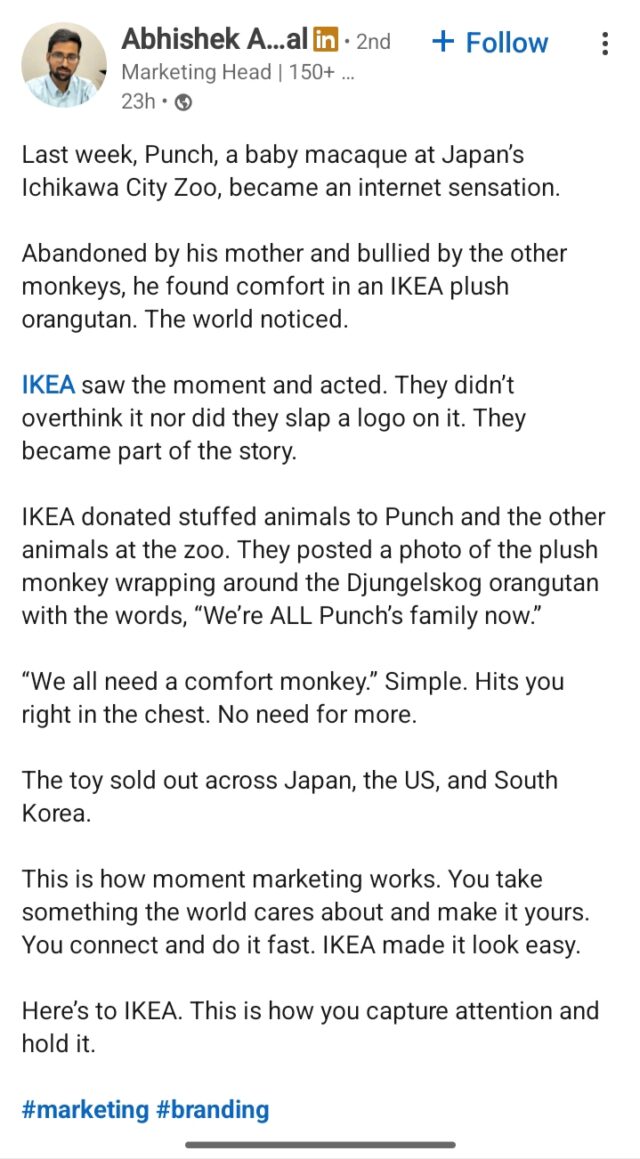
Unlike many brands that might seize an internet moment for aggressive marketing, IKEA’s response was rooted in compassion and support. Leaders at IKEA Japan, including Petra Färe, President and Chief Sustainability Officer, visited the zoo in person and donated additional DJUNGELSKOG toys to ensure Punch always had one to comfort him.
A LinkedIn brand strategist highlighted how this distinction mattered: “Rather than exploit the moment for aggressive sales, IKEA Japan personally donated more plush toys to Punch, a gesture of care, not commerce… That action deepened public goodwill more than any ad campaign could.”
This grounded, empathetic choice reinforced what made the story resonate; it wasn’t a transactional promotion, but a human-led act of kindness. And that authentic response made all the difference in how the public perceived the brand.
The Unplanned Sales Explosion
What followed Punch’s viral moment was something marketers rarely achieve even with million-dollar campaigns: a sudden, organic surge in demand. The IKEA DJUNGELSKOG orangutan plush, originally priced at around ₹1,600–₹1,800, quickly sold out across multiple countries, including Japan, the United States, and Singapore.
This wasn’t driven by advertising pushes or discount strategies, but by an emotional connection people felt after watching Punch cling to the toy.
The numbers tell a compelling story. Resale platforms like eBay saw listings soar to ₹30,000 or more, nearly ten times the original price. In some regions, stores reported complete stock depletion within days.
What makes this extraordinary is that consumers weren’t responding to product features or utility; they were responding to meaning. The toy had transformed from a retail item into a symbol of comfort, vulnerability, and care, proving that emotional narratives can convert into economic value faster than any marketing funnel.
From Virality To Collective Empathy
Punch’s story didn’t just trend; it moved people. Social media platforms became spaces of collective empathy, with millions reacting not as consumers, but as humans witnessing vulnerability.
Comments ranged from simple emotional responses like “this made me cry” to deeper reflections on loneliness, rejection, and healing. The hashtag around Punch became less about a viral moment and more about a shared emotional experience.
Even institutions and public figures joined in. From celebrities expressing emotional reactions to organisations using Punch’s story in awareness campaigns, the narrative expanded far beyond its origin. On LinkedIn, professionals framed the incident as a lesson in human-centric branding.
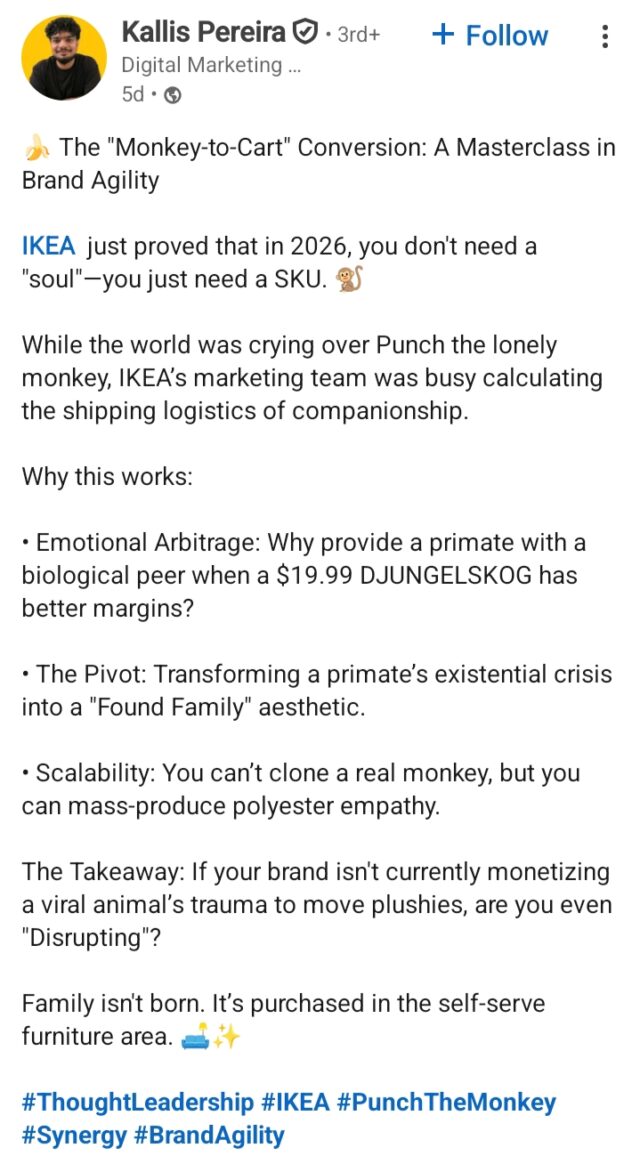
One widely shared post noted: “People didn’t fall in love with the product. They fell in love with the story; the product just came along with it.” This shift from audience to participants shows how powerful emotional storytelling can reshape public engagement entirely.
Also Read: India’s Drone Didis: Bringing Technology To Farming
Why Empathy Outperforms Strategy
Marketing experts and behavioural analysts see the Punch phenomenon as a textbook example of empathy-driven consumer behaviour. Unlike traditional campaigns that push a message outward, this story pulled people inward. The product gained value not because of positioning, but because of context; it became meaningful through association with care, comfort, and survival.
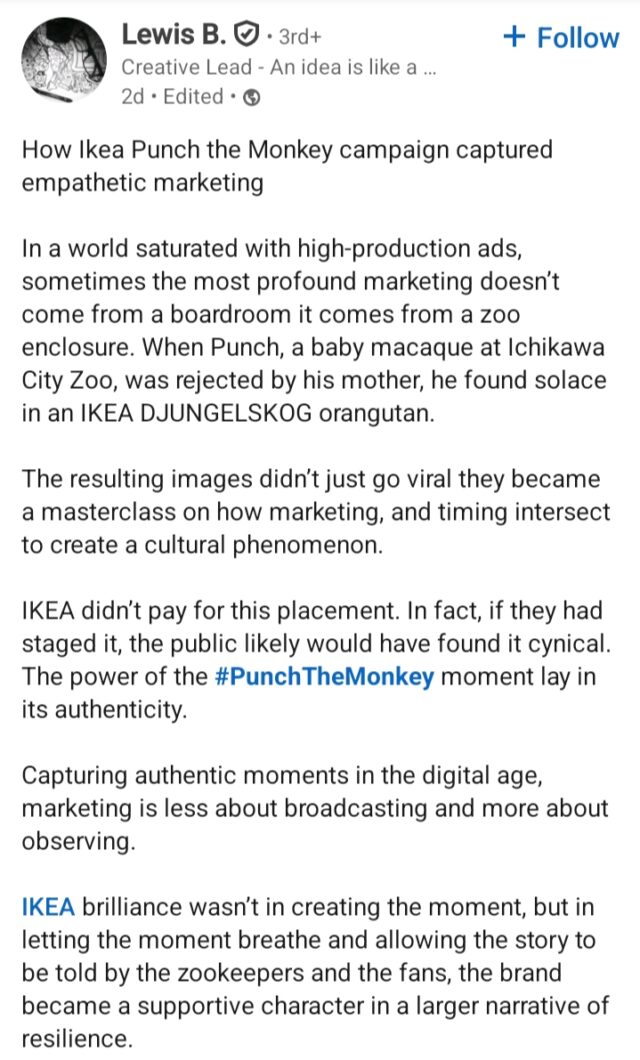
A widely circulated LinkedIn analysis captured this perfectly: “This wasn’t marketing. This was meaning. And meaning is what people remember, share, and pay for.” Experts also point out that emotionally driven narratives tend to have higher recall and stronger brand attachment.
Commercial Success Vs. Compassion
Not everyone applauded the viral wave uncritically. Some animal welfare advocates cautioned against turning Punch’s vulnerability into a spectacle, warning that viral fame can overshadow deeper concerns about animal treatment in captivity.
People for the Ethical Treatment of Animals (PETA) said in a statement, “Zoos are not sanctuaries – they are places where animals are confined, deprived of autonomy, and denied the complex environments and social lives they would have in the wild.”
The group’s Asia director, Jason Baker, said, “What some are calling ‘cute’ is actually a glimpse into the trauma of a young, highly social primate coping with isolation and loss.”
Meanwhile, certain online commentators argued that while IKEA’s donations were generous, the company could also contribute more meaningfully, for instance, by enhancing the zoo’s environment or supporting wildlife care programs. These debates reveal nuance in how emotional stories translate into commercial demand and ethical responsibility.
Yet across the broad response spectrum, one thing stands out: IKEA’s actions were perceived as empathetic rather than opportunistic, and that perception boosted public trust, something many brands struggle to build even with massive advertising budgets.
Why Empathy Will Always Outperform Marketing
The story of Punch and his IKEA plush toy isn’t just a feel-good moment; it’s a case study in how authentic empathy can overshadow traditional marketing techniques. Rather than choreographed ads or celebrity endorsements, an honest emotional moment sparked global attention, drove massive consumer curiosity, and deepened public goodwill toward a brand.
The DJUNGELSKOG’s sudden sell-out and skyrocketing resale prices weren’t the result of careful product placement; they were the result of millions of people connecting emotionally with a little monkey’s need for comfort. IKEA’s choice to respond with grace and support, rather than exploitation, amplified that connection.
In an age where consumers are increasingly savvy and emotionally discerning, empathy is no longer optional; it’s a core component of brand success.
Images: Google Images
Sources: The Times Of India, NDTV, India Today
Find the blogger: Katyayani Joshi
This post is tagged under: empathy marketing, human centric branding, storytelling in marketing, emotional branding, ikea, consumer psychology, brand strategy, viral marketing, social media trends, purpose driven brands, ethical branding, brand trust, marketing lessons, case study marketing, digital storytelling, brand authenticity, customer connection, behavioral marketing, marketing insights, content marketing, brand loyalty, social impact, humane business, marketing strategy, storytelling that sells, linkedin marketing, viral case study, modern marketing, brand perception, emotional intelligence in business
Disclaimer: We do not hold any right or copyright over any of the images used; these have been taken from Google. In case of credits or removal, the owner may kindly email us.