




























The recent controversy with the Prada runway and suddenly seeing these innocent Kolhapuri chappals on the feet of these white models started a big conversation.
We’ve all seen those innocuous chappals, or slippers, somewhere in our homes at some point, at least in varying shades of brown, beige, or even black (for the daring, fashionistas of course), worn by our fathers, grandfathers, uncles, mostly the males of a slightly older generation. Not that the women didn’t wear it, in fact, women had their whole segment in this area.
This centuries-old work of Indian craftsmanship, something that is so intrinsic in our daily lives, to the point where we don’t even notice it at this point, is being splashed on an international scale as if it is the next fur coat? Of course, the fact that the brand did not give any kind of credit to India or Indian craftsmen bothered a lot of people.
What Happened With Prada?
During the recent Prada’s Milan fashion show, unveiling the Men’s Spring/Summer 2026 collection at the Deposito of the Fondazione Prada, the Italian luxury house featured several models not only wearing its new collection but also sandals that looks extremely similar to Kolhapuri chappals, the hand-stitched leather footwear originating from Maharashtra, India.

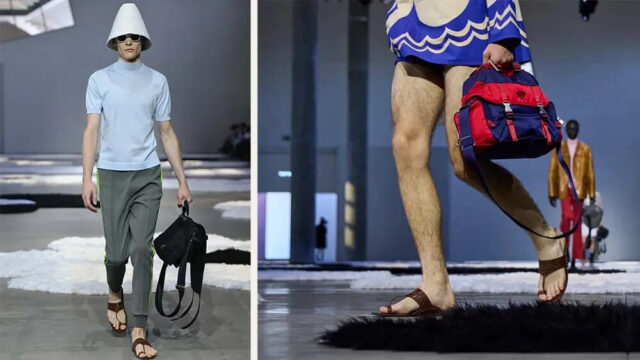
While some initially took pride in this, others were quick to point out that there was no acknowledgement of the chappals or their roots during the show.
According to reports, Prada called them “leather flat sandals” but did not include any credits for Indian artisans, and supposedly priced them at a whopping Rs. 1.16 lakh.
The luxury label, as corroborated by reports and attendees, also gave out a “leather ring” in each official invitation as a token takeaway. Many noticed that these rings looked very similar to the toe ring, which is a signature element of the Kolhapuri chappals.

This led to many users online, calling out international brands who have often done this, taken traditional Indian attire or designs, and then renamed them with Western names.
Some called out the earlier uproar over Scandinavian scarves, which went viral on social media platforms but turned out to be just your basic dupatta, something Indian women have been wearing for centuries.
A user on X/Twitter wrote, “Prada SS26 includes Kolhapuri chappal, which originated from Kolhapur, Maharashtra, India, and is known for its intricate design and craftsmanship. Just like the ‘Scandinavian scarves,’ the Western fashion industry is ripping off Indian fashion again.”
Another user commented, “So after the Scandinavian scarves & a million other Indian things, the world has now blatantly stolen our beloved Kolhapuri chappals. This is the Prada men’s spring collection 2026, & I’m appalled & curious to know what they’d call it. Handcrafted leather thong chappals?”
A third user posted, “These handcrafted chappals—part of Maharashtra’s legacy—sell for ₹300–₹1500 in Kolhapur’s markets. Prada slaps on a logo, calls them ‘leather sandals,’ and erases their cultural roots. It’s not luxury, it’s theft.”
Another user wrote, “This design was stolen from the Chamar community of India, who’ve handcrafted these for generations. No credit. No acknowledgement. Just pure cultural theft dressed in luxury branding.”
Read More: Substandard Vaseline Sold In India Is “Not Even Petroleum Jelly,” Claims LinkedIn Post
History Of Kolhapuri Chappals
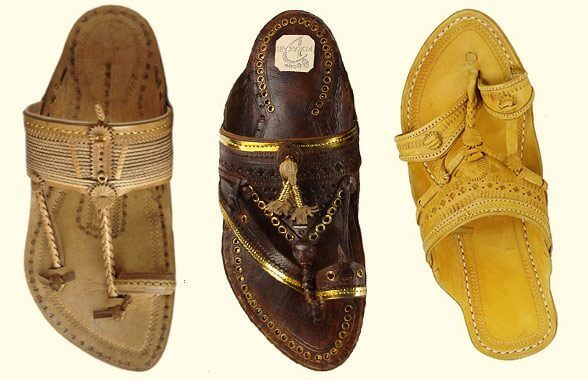
Kolhapuri chappals are not a recent creation. They didn’t even come in the 1900s, which is what many of us would actually consider ancient at this point. The iconic Kolhapuri chappals have existed since the 12th century, as per reports.
The Shahu Maharaj of Kolhapur encouraged the production of Kolhapuri chappals, and under his rule, 29 tanning centres opened. These chappals were also known as Kapashi, Paytaan, Kachkadi, Bakkalnali, and Pukri, named after the villages they were made in. Although initially made from buffalo hide and thread, these days, one can find them made from leather of various sources, including vegan leather as well.
Reports claim that a pair of Kolhapuris can take up to 6 weeks to be made, and the knots and stitches in the straps of these chappals are what really make them uniquely identifiable.
That makes these seemingly unremarkable footwear almost 800 years old at this point. In the early 1900s, these chappals would have been sold for just a few rupees. Yes, they could very well have cost as little as just Rs. 5-10.
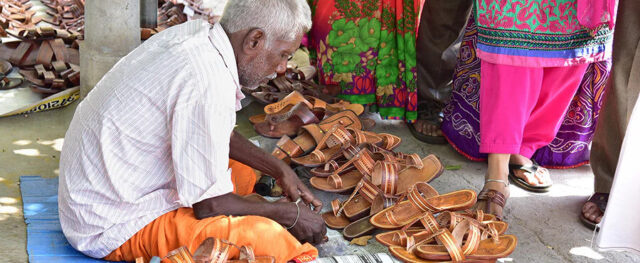
Even now, if you go to the markets or bazaars, not the malls, mind you, but areas like Janpath, Sarojini Market, or other local marketplaces, you can easily get them for just around Rs. 150-200. These would be the basic, totally simple ones, though.
For the traditional Kolhapuri chappals, made from local artisans, the price could be a little higher, ranging from Rs. 900 to above, and if you truly want to pay a premium price, they could cost around Rs. 3,500 as well. This could be due to where one is getting from, the location of the shop, and if the artisans are heavily trained, the intricacy of the design, and more.
LinkedIn user Ayush Shukla astutely made a post about how Indians have often dismissed their own culture, but how Western societies are now using that same culture and putting a heavy price on it, and getting profits over them.
He wrote, “What your grandfather wore in the 1960s for ₹100…is now being sold by Gucci for ₹75,000 bcs of this one reason We sold our own culture (gift-wrapped in shame) stamped with approval from Milan. (I’m not even kidding, this is serious now!) Our Kolhapuri chappals are now walking down Prada’s runway. Khadi is a “luxury” fabric in Gucci’s catalogue. Haldi doodh has been rebranded as “Turmeric Latte” for $8 a cup.
We’ve built it since or maybe before Independence, and now we buy it back, feeling proud? For decades, we’ve treated our own heritage like second-class citizens. Mocked it. Ignored it. Waited for the West to clap, before we even took it seriously. Now, when some influencer calls your dadi’s dupatta a “Scandi scarf,” you wanna act surprised?
We didn’t just lose credit. We lost confidence. Makhana became a “superfood” only when Whole Foods Market put it on a shelf. Chai became “Chai Latte” the moment Starbucks added foam. Our spices. Our weaves. Our wisdom. All needing Western approval to feel worthy. Because we were too damn scared to call our own culture premium.
Too obsessed with importing trends to realise we were the trend. I might sound rude, but India doesn’t lack innovation. India lacks audacity. We keep exporting the gold and importing the packaging. So no, I’m not angry at the West for monetising our heritage. I’m angry at us for waiting this long to do it ourselves. Stop begging for validation. Start building legacy.”
Image Credits: Google Images
Sources: Hindustan Times, The Economic Times, Business Standard
Find the blogger: @chirali_08
This post is tagged under: Prada kolhapuri chappal, Prada, kolhapuri chappal, reverse globalisation, prada milan show, culture theft, prada 2026 runway, Prada kolhapuri chappal news, Prada chappal, Prada kolhapuri, kolhapuri chappal history, kolhapuri chappal origins, kolhapuri chappal india
Disclaimer: We do not hold any rights or copyrights over the images used; these have been sourced from Google. If the owner requires credit or wishes for removal, please kindly email us.
Other Recommendations:
A Popular Korean Artist Plagiarises Pritam; King Of Plagiarism Himself