






















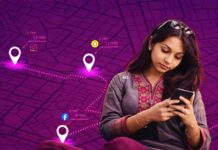







Have any of you been watching TV while also being busy on your phone? Choosing to keep the television on in the background while you go about your day, completing work or chores, barely paying attention to what is happening on screen and taking glances to catch up with the plot.
This whole thing, actually, is a very real phenomenon, called second screen viewing, and was recently the topic of much discussion, especially with the release of the fifth season of the American show Stranger Things. Once upon a time, watching television demanded our full attention.
There was a time when families would gather around a single screen, following plots, news and characters without distraction. Today, that is a far cry as people choose to stay on their phones, scrolling social media, replying to messages or browsing unrelated content while whatever is playing on the TV continues on in the background.
What Is Second Screen Viewing?
Second screen viewing refers to the practice of using a secondary digital device, most commonly a smartphone or tablet, while watching television or streaming content.
It is unclear when or who coined the term, but it is said to have emerged in the recent decade or so itself, as smartphones became widespread, researchers and networks noticed that viewers were increasingly engaging with social media, search engines and messaging apps while watching TV.
The term has entered the mainstream conversation again, recently, after Netflix brought up their microgenre of “casual viewing”, wherein TV shows and movies would be created in such a way that they could be watched as people are doing other things.
An insider from the Australian Netflix team, speaking with The Nightly last November, revealed that the writing room had to ensure they explained everything, as more people were engaging in casual viewing and might miss out on details.
They said, “Viewers are often watching things ambiently as they’re doing other tasks, as they’re doing other chores, as they’re looking at social media. In order to overcome that ambient sense of viewing, we need to be a bit more explicit with what the characters are doing and where we’re at in the story.”
In the 2024 n+1 article, author Will Tavlin also wrote about how, allegedly, Netflix was asking screenwriters to have their protagonists “announce what they’re doing so that viewers who have this program on in the background can follow along”.
What Are Its Reasons?
There are several reasons why people are engaging in second-screen viewing. A 2019 report by Viaero Wireless claims that “71% are using a second device to look up information related to what they’re watching, while 41% are texting, instant messaging, e-mailing, or tweeting about the show they’re viewing.”
A 2022 study called ‘An Exploration of Second-Screen Use by TV Viewers’ by Frankie Karrer also revealed how “83% of American TV watchers use a second device while watching TV, often referred to as second-screen use.”
Those among the younger generations were also found to engage in such viewing more than the older generations. According to the study, “YouGov found that 83% of those 18-34 and 85% of those 35-54 were likely to engage in this behaviour, while 66% of those ages 55+ would.”
A 2021 survey by Digital Turbine, using data from Global Web Index, also claimed that the “majority of respondents (67%) said they use their mobile phone. Laptop PC and desktop PC came in at second and third at 38% and 22% respectively.”
According to other reports, experts believe that the rise of second-screen viewing could be due to the instant gratification people are able to get, in that they can quickly search up anything to give them better context about what they are watching, or a question they might have had.
These second screens can also fill the moments of boredom or rest that come during ad breaks or scenes that are not of any particular interest to the viewer.
The COVID-19 pandemic and resulting lockdown also led to many people watching TV shows or movies as a group through digital platforms.
Names like NetflixWatchParty, TeleParty, WatchParty, and more grew extremely popular during those years, leading to people becoming comfortable using multiple screens while watching TV, and somewhere it is believed that the habit stuck.
Read More: Why Are We Fast Forwarding & Watching Content At 2x Speed?
The Good And Bad Sides Of It
Second screen viewing, on the positive side, can allow viewers to look up background information, fact-check claims, follow live commentary or interact with others during events like sports matches, award shows or political debates.
A March 2025 report from EurekAlert!, the nonprofit news release distribution platform from the American Association for the Advancement of Science (AAAS), even mentioned a study co-authored by Alix Barasch, revealing how using a second screen while watching TV can actually enhance one’s experience and help with their social connections.
The study, published in January 2025 in the journal Psychology & Marketing, found that using a ‘second-screen’, especially texting with friends or scrolling social media, can boost one’s engagement and make them interested in the next episode.
Barasch reportedly said, “When you’re watching alone, that phone can become your bridge to a wider community. It’s not just about multitasking—it’s about deepening the experience by connecting with others in real time.”
Barasch, an associate professor of marketing at the Leeds School of Business, further added that, “It allows us to go through an experience with others, comment on specific things, get other people’s reactions and just feel connected because we are all doing the same thing”, and how “When you’re sharing the experience with friends or family, second-screen use can actually create a disconnect.”
For some, it could also be a comfort noise in the background and allow them to focus better on their tasks, especially for those who live alone
However, research consistently highlights significant downsides. Studies show that second-screen viewing reduces comprehension, recall and learning. Divided attention makes it harder for the brain to retain information in long-term memory.
Constant multitasking can also result in increased stress, anxiety and mental exhaustion, as the brain remains in a state of continuous alertness. Over time, this can reduce enjoyment of entertainment, making it harder to relax or immerse oneself fully in a story.
How To Fall Out Of This Vicious Cycle
With people becoming aware of this second-screen viewing phenomenon, there is an increasing demand for TV shows and movies that are made keeping in mind the plot and do not have heavy amounts of exposition dumps, catering to casual viewers.
The Stranger Things subreddit, a Reddit page dedicated to the show, has had users criticise this, with one user writing, “I just want these exposition dumps to stop!” while another commented, “Absolutely agree and the amount of analogies? Like chill! There are so many more interesting ways to give exposition, rather than literally spelling it out for the audience like we’re six. I blame Netflix.”
Another posted, “Blame Netflix’s second screen policy and prepare for more shows to do this, because consumers have zero attention spans and scroll through TikTok while watching.”
One effective strategy to break the second screen habit is to change the environment, by placing your phone out of reach, turning off notifications or using focus modes during viewing time to avoid automatic checking.
One can also choose single-task activities, such as reading or listening without interruptions, that make one put down their screen, and give their sole attention to whatever they are doing.
This does not mean that one cannot or should not ever engage in casual or second-screen viewing, but it is important to realise when and why it happens so that one can prevent it from becoming compulsive.
Image Credits: Google Images
Sources: Research Gate, Hindustan Times, The Guardian
Find the blogger: @chirali_08
This post is tagged under: TV, second screen viewing, attention span, digital age, phones, phone usage, screen addiction, media, tv shows, movies, netflix, casual viewing, second screen viewing meaning, second screen viewing reasons, second screen viewing affect
Disclaimer: We do not own any rights or copyrights to the images used; these images have been sourced from Google. If you require credits or wish to request removal, please contact us via email.
Other Recommendations:
Is ChatGPT The Wrong Therapist, Only Confirming What You Want To Hear?