

























A war, between three countries, Iran, the US and Israel, is ongoing. Missiles and attacks are happening across them all and between allies. People around the world are scrambling as airspace is being shut down, trying to return home.
However, closer to home, India is currently experiencing one of the largest LPG (Liquefied Petroleum Gas) and oil supply crises in recent history.
This is affecting everyone, including citizens, hotel owners, restaurant owners, cafe owners, college canteens, and more.
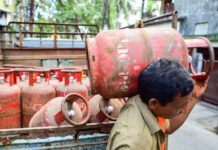
People book their LPG cylinder refill. The app says it’ll take 25 days now, up from 21. At first, it’s no big deal. A week later, it still hasn’t come. People call the distributor. No answer. A neighbour says someone in your colony bought one for Rs. 2,500 cash from a guy on a bike. The official price is Rs. 913.
Somewhere in a parallel scene: a vendor in Old Rajinder Nagar, Delhi, has just raised the price of his samosas from Rs. 15 to Rs. 20. In Kolkata, some outlets of Bawarchi and Bhooter Raja, restaurants your parents have been going to for decades, have shut their doors. In Mumbai, 20% of hotels have temporarily closed.
Pune’s Vaikunth Dham, Maharashtra’s largest crematorium, has switched off all gas-powered furnaces to save fuel for households.
None of this is an accident. All of it traces back to a single narrow strip of water you probably never thought about before this week.
How Strait Of Hormuz Chokepoint Controls Your Kitchen
To understand why this crisis is hitting India so hard, one needs to learn about the Strait of Hormuz, the narrow waterway between the Persian Gulf and the Gulf of Oman, which at its narrowest point is just 33 kilometres wide. It doesn’t sound important.
But it is perhaps the single most strategically critical stretch of ocean on the planet. One-fifth of all crude oil and natural gas traded globally moves through this channel every single day.
For India alone, approximately 90% of our LPG imports pass through it.
On February 28, 2026, the US and Israel began a series of strikes against Iran. Iran responded by blocking the Strait. Commercial shipping through the passage effectively stopped.
India, which imports 60% of its total LPG requirement and depends on the Gulf for the vast majority of that, suddenly had a gaping hole in its energy supply chain. India consumes approximately 31.3 million tonnes of LPG annually.
In January 2026 alone, the country produced 1.158 million tonnes domestically but consumed 2.192 million tonnes, nearly double.
The import shortfall was always being bridged by Gulf supply. That bridge is now, at best, severely damaged.
90% of India’s LPG imports pass through the Strait of Hormuz. When Iran blocked it, 33 crore Indian households felt it within days.
What Is Actually Happening On The Ground
The numbers that have emerged over the past two weeks are startling in their specificity.
Domestic LPG cylinder prices were hiked by Rs. 60 on March 7.
Commercial cylinders, the large 19-kg blue ones used by every restaurant, dhaba, cloud kitchen, and chaat stall, went up by Rs. 114.50 on the same day, following an earlier Rs. 28 hike on March 1. The total commercial LPG price increase in 2026 now stands at Rs. 302.50.
On March 12, the government announced a 20% cap on commercial LPG supply, meaning restaurants and hotels will receive just one-fifth of their normal monthly allocation.
Priority has been given entirely to domestic households, hospitals, and educational institutions. The restaurant industry was told to wait for a committee of oil company executives to review their case.
The black market moved faster than any committee. In Delhi, a domestic cylinder officially priced at Rs. 913 is now selling for Rs. 2,000 to Rs. 2,500 in many parts of the city. Commercial cylinders normally priced at Rs. 1,900 are being sold for Rs. 3,000 in Mumbai. A PG owner in northeast Delhi paid Rs. 6,400 for three cylinders through an unofficial vendor.
In Indirapuram, Ghaziabad, a tea seller said that the gas that cost him Rs. 85 per kilogram now costs Rs. 200.
The street food inflation is already visible. Samosas that were Rs. 15 are now Rs. 20. Tea prices are rising. Restaurant menus are being shortened. The Indane LPG Cylinder Distributors Association of West Bengal said it plainly: “The food industry is on the verge of collapse.”
Read More: What To Expect If The US Attacks Iran
Social media is full of Indians across the country posting about their experiences with this shortage, calling out the government, explaining what is happening, or using humour to get by during this stressful situation.
View this post on Instagram
View this post on Instagram
View this post on Instagram
View this post on Instagram
What The Government Is Doing
The government’s response has been swift in announcement, if not yet in impact.
The Essential Commodities Act was invoked to ensure gas supply continuity. India’s Natural Gas Supply Regulation Order 2026 was issued on March 8, mandating 100% gas supply priority to domestic households.
Refineries have been ordered to increase LPG production — output jumped 15% within 72 hours of the directive.
India has increased its imports from non-Strait-of-Hormuz sources from 55% to 70% of total imports. Alternative supply talks are underway with Algeria, Australia, Canada, and Norway.
The government says it has stocks for 12 to 16 weeks.
Most independent analysts estimate the acute shortage phase will last 4 to 8 weeks, unless the conflict escalates further.
In the meantime, Indians are adapting. Induction cooker sales in Kolkata have risen 20 times in a week. Restaurants in Gurugram are switching from cloud kitchens to electric kitchens. Kolkata restaurant owners are considering coal. Mumbai dabbawallas have reportedly switched to firewood.
India is, as it always does, improvising.
India imports over 80% of its energy. The government has known for years that this dependence on Gulf supply through a single chokepoint is a structural vulnerability. The 2021 National Energy Policy flagged it. Various energy security reports have flagged it. And yet, as of February 2026, 90% of India’s LPG imports were still flowing through a 33-kilometre passage controlled by a country now at war.
This crisis will likely ease in weeks. Alternative suppliers will be found. Domestic production will ramp up. The 20% cap on commercial supply will eventually lift. The restaurants will reopen.
But the question worth sitting with is not “when does the cylinder come back?” It’s “why were we this exposed to begin with, and what are we going to do about it before the next crisis?”
The Strait of Hormuz is 33 kilometres wide. India never thought much about it. It’s thinking about it now, standing in a queue at 5 AM, waiting for a gas cylinder that may not come.
Image Credits: Google Images
Sources: The Hindu, Deccan Herald, TOI
Find the blogger: @chirali_08
This post is tagged under: Iran, Iran war, lpg, lpg shortage, lpg gas, lpg crisis india, lpg cylinder, lpg cylinder price, lpg gas cylinders, lpg news, lpg cylinder shortage, lpg oil crisis, iran war, us iran israel war, world war three, strait of hormuz, oil crisis, oil shortage
Disclaimer: We do not own any rights or copyrights to the images used; these images have been sourced from Google. If you require credits or wish to request removal, please contact us via email.