





























In Indian workplaces of today, where corporate growth and hustle culture dominate narratives, a growing number of professionals are increasingly challenging the status quo, sparking wider debate about what has long been considered “normal” at work.
A LinkedIn user recently listed ten toxic norms that too many Indian workplaces still uphold, from being shamed for leaving on time to casual sexism masquerading as humour.
More than just a list, her post resonated with professionals across sectors and generations who recognise the dissonance between promised “flexibility” and actual expectations.
Combine that with survey data showing rising mental-health concerns, burnout and quiet-quitting, and it’s clear the challenge isn’t just individual: it’s systemic.
What Did The LinkedIn Post Say?
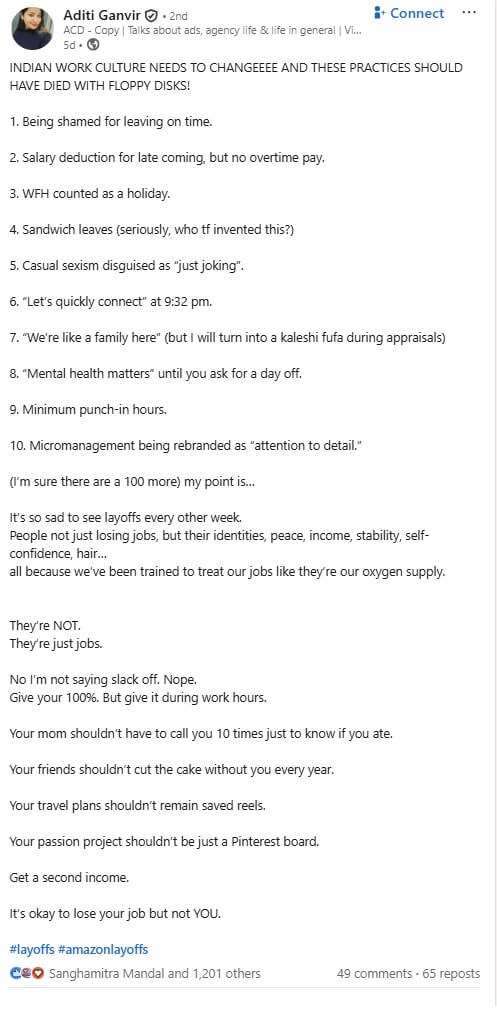
On LinkedIn, Mumbai-based copywriter Aditi Ganvir posted a few days ago about Indian work culture and ten expectations she believes have no place in modern workplaces. Titled “Indian work culture needs to change, and these practices should have died with floppy disks”, her list included:
- “Being shamed for leaving on time.
- Salary deduction for late coming, but no overtime pay.
- WFH counted as a holiday.
- Sandwich leaves (seriously, who tf invented this?)
- Casual sexism disguised as “just joking”.
- “Let’s quickly connect” at 9:32 pm.
- “We’re like a family here” (but I will turn into a kaleshi fufa during appraisals)
- “Mental health matters” until you ask for a day off.
- Minimum punch-in hours.
- Micromanagement being rebranded as “attention to detail.”
Read More: Rich And Old Guilt-Trip Gen Z Into Slogging, But The Rebellion Is Here
She further went on to state how Indian workers have been trained to give unrealistic importance to their jobs, writing, “It’s so sad to see layoffs every other week. People not just losing jobs, but their identities, peace, income, stability, self-confidence, hair… all because we’ve been trained to treat our jobs like they’re our oxygen supply. They’re NOT. They’re just jobs.”
Ganvir added that her point was not to encourage slack, but to emphasise boundaries, writing, “No, I’m not saying slack off. Nope. Give your 100%. But give it during work hours.
Your mom shouldn’t have to call you 10 times just to know if you ate. Your friends shouldn’t cut the cake without you every year. Your travel plans shouldn’t remain saved reels. Your passion project shouldn’t be just a Pinterest board. Get a second income. It’s okay to lose your job but not YOU.”
The Toxic Indian Work Culture
Ganvir’s list may seem specific, but this is not the first time that criticism of the Indian work culture has been expressed. Over the years, several studies and real-world incidents have shed light on how widespread the nature of such problems really is.
A March 2025 Blind survey of 1,450 verified IT professionals in India found 72% of the participants worked over 48 hours per week (a time that has been legally mandated by the Indian Labour Laws), while 25% frequently worked over 70 hours weekly.
Further, 83% of those professionals reported experiencing some type of burnout, and 68% admitted that they felt obligated to respond to work messages outside office hours.
In October 2023, ITC’s Feel Good with Fiama Mental Wellbeing Survey revealed 87% of Indians consider work-life balance a top priority in combating a toxic work culture, and 31% feel that workplace pressure is one of the main concerns for mental health issues.
Image Credits: Google Images
Sources: India Today, Financial Express, The Economic Times
Find the blogger: @chirali_08
This post is tagged under: Indian Workplaces, Indian Workplaces toxic, toxic work culture, work culture, toxic work culture india, indian corporate culture, indian startups, indian work ethics, mental health at work, work culture india, workplace transparency
Disclaimer: We do not hold any rights or copyright over any of the images used; these have been taken from Google. In case of credits or removal, the owner may kindly email us.
Other Recommendations:
After 30k Interviews, CEO Tells Which Kind Of Employees Are Successful And Happy