























In a world where oversharing has become the default, where meals get photographed before they’re eaten, where milestones go straight to Stories, where even grief gets a caption, there are people who stand out simply by doing nothing at all on social media. And that deliberate stillness, psychology suggests, is more meaningful than it first appears.
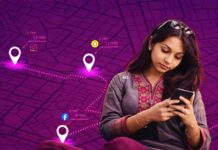
You know the type. They’re on your followers list. They watch every Story. They’ve read every post you’ve ever published. They know about your trip to Bali, your new job, and your Thursday brunch.
But scroll through their own profiles? Almost nothing.
No selfies. No hot takes. No “feeling blessed” captions. Just… silence.
So who are they? Why do they do it? And is there something the rest of us could learn from them?
The Scale of the Silence: You Are Not the Majority If You Post
Here’s a number that might reframe everything: according to research from Northeastern University, up to 90% of social media users are “lurkers,” people who consume content without liking, commenting, sharing, or posting publicly.
Ninety percent.
That means the people posting, the influencers, the over-sharers, the daily selfie-posters, are a tiny, vocal minority. And yet, almost all of our cultural conversation about social media behaviour, the studies, the think pieces, the moral panics, focuses almost entirely on them.
The vast majority of users have been quietly, collectively dismissed as background noise.
As data scientist Anees Baqir, who led the Northeastern study, pointed out: the content people consume still influences their choices, even if they never publicly engage with it.
In other words, lurkers aren’t disengaged; they’re just engaging differently. They’ve found a way to access the information stream without wading into the performance.
The performance. That word keeps appearing in the psychological literature on this subject. And it is, for many experts, the central key to understanding why so many people choose silence.
The first and most important misconception about people who don’t post is that they are somehow broken, avoidant, or socially deficient. Psychology says the opposite is often true.
As Lachlan Brown, a writer and editor with a background in psychology and behavioural science, has observed, “Psychologists argue that this preference isn’t just about being shy or antisocial. It often reflects deeper traits, values, and coping strategies.”
Lachlan Brown, speaking with VegOut magazine, also said, “While most people use social media as an outlet — to express, react, or broadcast, silent scrollers use it as a mirror. They’re more interested in understanding than being understood. Psychologists describe this as an introspective orientation, a tendency to observe one’s inner thoughts and the behavior of others before taking action.
For them, social media isn’t about validation or self-promotion. It’s a tool for reflection. They scroll not to compete, but to quietly study human nature: how people present themselves, what topics trigger emotion, how trends reveal collective values and fears.”
For a significant portion of silent scrollers, the silence is not a choice freely made, it is a shield.
Brown, commenting on this, said, “Social media can be intimidating, especially for people who fear being judged, misunderstood, or ignored. The online world amplifies the pressure to say the ‘right’ thing, look perfect, and avoid backlash. So instead of engaging, they retreat. They scroll silently, consuming rather than creating.
Psychologists call this social comparison fatigue. Even if they don’t consciously compare, repeated exposure to others’ curated lives can trigger self-doubt. Maybe they start to think: ‘Everyone else seems happier than me.’ ‘What if no one likes what I post?’ ‘What’s the point of commenting? No one cares.'”
There is also the phrase ‘selective vulnerability,’ which is used in psychology, meaning the ability to open up only to those who have earned trust, not to anyone who happens to be watching.
Brown explains this as “Private individuals instinctively understand that not everyone deserves front-row seats to their life. This isn’t secrecy, it’s discernment.
They share their personal life with people who truly care, people who don’t gossip, people who handle information with maturity, people who are emotionally safe. This trait protects them from drama, manipulation, and emotional exposure.”
As Brown articulates it: “Many people don’t realise how posting affects their experience of life. When you document everything, you subtly shift from living the moment to performing it. The private individual sees this clearly. They know that pulling out a phone can sometimes remove them from the beauty, rawness, or intimacy of a moment. These people understand something profound: the best memories are lived, not posted. Instead of thinking, ‘This would make a great story,’ they think, ‘This is a moment I want to fully feel.'”
Read More: An App Called Are You Dead? Has Gone Viral In China For All The Right Reasons
The Mental Health Evidence: What the Science Actually Shows
The psychological literature on the mental health effects of social media abstinence is increasingly clear.
A study published in JAMA Network Open found that even a one-week reduction in social media use led to a 16% decrease in anxiety and a 24% decrease in depression among young adults after just three weeks.
Research cited across multiple psychology publications notes that intentional non-participation, choosing not to post while still browsing selectively, offers sustained versions of these benefits.
As one analysis summarised: “Lurking isn’t laziness. It’s a choice to consume without performing, to observe without being observed, and to stay informed without handing your mental energy over to an algorithm that profits from your participation. In a world that rewards noise, choosing silence is one of the most deliberate things you can do.”
Katherine (Schreiber) Cullen, MFA, LCSW, a licensed clinical social worker, identified the mechanism through which active posting drives unhappiness: “The more we passively scroll through social media, the more unhappy we become as we use it.”
Active posting, which invites comparison and evaluation, compounds this further.
And the clinical psychologist Rob Whitley, PhD, draws a precise distinction that matters: “Passive use refers to the practice of quietly observing other people’s social media profiles and pictures, sometimes known as ‘Facebook stalking.'”
But, as the broader psychological literature makes clear, this is not the same as purposeful, intentional non-participation.
What This Means for Those of Us Who Do Post
If you are someone who posts regularly, this article is not an indictment. Social media sharing can be genuinely connective, joyful, and even therapeutic.
But the research on social media silence offers a question worth sitting with: Why are you posting?
Is it because you have something meaningful to say? Or because the silence felt uncomfortable? Is it because you want to connect? Or because you need to be seen?
One analysis put this question with rare directness: “How many of those posts were shared because someone genuinely had something meaningful to express, and how many were posted simply to avoid the discomfort of silence?”
Turkle’s elegant formulation of the problem: “We’re lonely, but we’re afraid of intimacy. And so from social networks to sociable robots, we’re designing technologies that will give us the illusion of companionship without the demands of friendship.”
The people who choose silence on social media have — consciously or not — declined that trade. They would rather have the demands of friendship than the illusion of it.
Image Credits: Google Images
Sources: The Economic Times, Mint, Cottonwood Psychology
Find the blogger: @chirali_08
This post is tagged under: social media, social media posting, social media silence, social media no posting, psychology, social media psychology, social media behaviour, social media usage, social media lurker, social media lurking, social media lurking reason
Disclaimer: We do not own any rights or copyrights to the images used; these images have been sourced from Google. If you require credits or wish to request removal, please contact us via email.
Other Recommendations:
Moltbook: AI Only Social Media Platform Where Humans Aren’t Liked, Can Only Observe