


















The BBC no longer deserves the benefit of the doubt. What was once projected as the gold standard of global journalism now stands exposed as a repeated offender, shielded not by integrity but by legacy. This is not a story of one bad documentary, one careless edit, or one rogue producer.
It is the story of an institution that has normalised ethical shortcuts, diluted accountability, and repeatedly crossed red lines while continuing to market itself as the world’s most trusted broadcaster. From misleading edits of political speeches to documentaries that obscure militant affiliations, the BBC’s failures are not accidental; they are patterned, systemic, and deeply unethical.
The recent Israel–Hamas coverage has merely torn the veil off a problem long ignored. Regulatory reprimands, internal leaks, pulled documentaries, forced apologies, and executive resignations together paint a damning picture: a publicly funded broadcaster that lectures the world on journalistic values while violating them at home.
When misinformation is not corrected promptly, when omissions conveniently align with ideological narratives, and when editorial power is exercised without transparency, the result is not journalism. It is institutional propaganda by negligence. For an organisation that claims moral authority, the BBC’s standards have fallen not gradually, but catastrophically.
The Leak That Exposed A Culture Of Complacency
A former external adviser’s letter, widely published by The Daily Telegraph, set the crisis in motion. The dossier, reportedly thousands of words long, catalogued case after case where editorial standards had not merely slipped but were allegedly defended or minimised by executives.
On 6 November 2025, The Telegraph published a leaked internal letter from Michael Prescott, a former adviser to the BBC’s Editorial Guidelines and Standards Board, which detailed what he described as recurring editorial failures. Specific programmes, dates, and problematic editorial choices were named.
Prescott’s memo claimed the BBC “raced to air” claims about Israel without adequate checks and flagged repeated editorial failures across multiple beats. The publication of that memo forced uncomfortable scrutiny on a broadcaster that had long leaned on its “impartiality” brand.
Prescott warned that the BBC had developed “a pattern of editorial failure that cannot be explained away as isolated mistakes”. He also criticised the organisation for “racing to air politically sensitive claims without sufficient verification”, according to The Telegraph’s reporting. The memo further questioned why internal safeguards failed, asking why “serious editorial concerns were repeatedly raised but not acted upon.”
These were not abstract complaints. The memo compiled concrete examples, including failures in coverage of Gaza and the controversial use of contributors with political ties, and questioned why internal review mechanisms failed to stop them.
The Telegraph accompanied its reporting with a short video summary showing excerpts from the memo and a timeline of the incidents it flagged. What this leak provided was a clear, dated audit trail: programme names, incident dates, and internal complaints.
https://www.instagram.com/reel/DQoodZYDd5p/?igsh=MTdmNXA5MGRpMTdpZQ==
Leaks of this nature are rare for the BBC. Their very existence signals not just errors, but internal frustration with how those errors were handled. That internal implosion is the backdrop to why audiences and politicians began describing the problem as systemic rather than incidental.
The Gaza Documentary
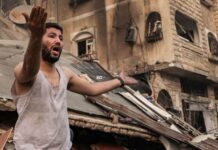
Between 18 and 21 February 2025, the BBC removed the documentary Gaza: How to Survive a Warzone from iPlayer after questions were raised about the 13-year-old narrator’s family background and what disclosures were made on screen. The narrator was the son of a senior Hamas official, a fact not disclosed to viewers.
Ofcom concluded that the programme had “materially misled audiences” and constituted a “serious breach of the Broadcasting Code”. The Telegraph reported that the omission denied viewers “crucial context necessary to assess the credibility of the narrative.”
Investigations revealed multiple editorial failures. Hoyo Films, the production company, reportedly paid the child’s family a modest sum for the contribution, and internal BBC reviews acknowledged “significant and damaging mistakes” in due diligence.
The Telegraph published investigative footage and production paperwork highlighting these omissions. Its video juxtaposed the broadcast footage with background material uncovered during reporting, making clear what was excluded and why that exclusion was material to audience understanding.
There is a difference between honest error and systematic omission that benefits one side’s narrative. The Telegraph’s reporting documented patterns of translation choices that softened or altered meaning.
Reported examples included a fleeing Gaza woman’s words, translated literally as “the Jews invaded our area”, rendered in BBC subtitles as “the Israeli army invaded our area.” A Gaza boy’s statement, “the Jews came, they destroyed us, Hamas and the Jews”, was softened to “the Israelis destroyed everything, and so did Hamas.” Phrases referring to “jihad” were translated as neutral terms such as “battle” or “resistance”, removing the religious or ideological framing.
Statements such as “he was engaging in resistance and jihad against the Jews” were rendered as “he was fighting and resisting Israeli forces”, altering both scope and meaning.
In another instance, a Palestinian prisoner’s Arabic testimony describing abuse by captors was mistranslated in BBC social media clips in a way that suggested praise for Hamas. After intervention by the Respond Crisis Translation, the BBC corrected the clip.
Watchdogs and multiple outlets flagged repeated cases where “Yahud” or “Yahudi”, Arabic for “Jews”, was translated as “Israelis” or “Israeli forces”, replacing a religious or ethnic reference with a political one.
Why does this matter? Modern news consumption is viral and decontextualised. Documentary clips and emotive interviews circulate globally without nuance. Vetting failures at the source are magnified into global misinformation that is difficult to reverse. When errors occur at the BBC’s scale, the impact is systemic.
These omissions and translation choices pointed to a pattern of editorial framing that skewed narratives and amplified contested perspectives. This was not merely careless reporting, but a sequence of vetting failures that transformed a documentary into a vehicle for misinformation.
The Trump Clip Controversy And Ethical Editing
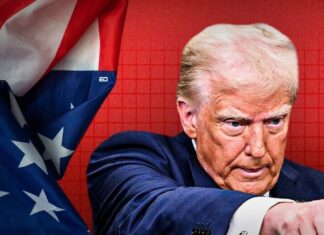
A separate but related controversy erupted over a Panorama episode that edited former US President Donald Trump’s 6 January speech. The programme spliced together two remarks, one where Trump said “we’re going to walk down to the Capitol” and another where he said “we fight like hell”, delivered roughly 54 minutes apart. The edit created the impression of a continuous exhortation to violence.
In reality, Trump had also urged supporters to act “peacefully” and “cheer on” lawmakers. Investigations, first reported by The Telegraph, showed that the programme juxtaposed remarks from different points in the speech.
The BBC acknowledged an “error of judgment”, issued a personal apology to Trump in November 2025, and the matter became the subject of high-profile litigation. In December 2025, Reuters reported that Trump had filed a defamation suit seeking substantial damages.
The Telegraph’s timestamped video demonstrated how the edit altered the narrative, freezing frames and displaying timestamps to allow independent verification.
https://www.instagram.com/reel/DQmur-jEwnc/?igsh=ZGxrMTF4bWFhaDI4
Editing choices that materially change meaning are not minor mistakes. They are ethical red lines in journalism.
Also Read: BBC Gets Labelled As Government Funded By Twitter
Resignations, Apologies, And Lawsuits
As these controversies accumulated, the institution began to pay a price. Two senior BBC executives, including the director general and the head of news, resigned. The corporation issued a personal apology to Trump, admitting that the edit “did not meet the standards audiences have a right to expect.”
Trump’s legal team accused the BBC of producing content that was “fundamentally misleading and defamatory.” Ofcom’s sanctions over the Gaza documentary required public correction.
This sequence reflects a governance crisis. Editorial standards failed at multiple levels, from the newsroom to board oversight. A public broadcaster funded by mandatory licence fees cannot survive sustained perceptions of partiality without structural reform.
Double Standards And The Ethical Vacuum
Defenders of the BBC cite the complexity of reporting conflict zones and point to production companies as responsible for some failures. But the pattern of selective translation, inadequate vetting, and editorial choices that altered meaning cannot be dismissed as complexity.
The core failure is procedural: weak cross-checks, insufficient editorial challenge, and a culture where speed and framing outweigh verification. This creates a double standard, where some errors are swiftly addressed while others are rationalised as “context.”
Call it what it is: low editorial standards disguised as nuance. A public broadcaster must enforce rigorous and transparent processes for sourcing, translation, contributor vetting, and oversight.
Without this, impartiality becomes performative. The remedy is straightforward: independent audits, published reviews, and corrections given the same prominence as the original reporting. Anything less is damage control.
Accountability, Repair, And The Path Forward
The BBC’s recent crises serve as a warning to legacy media institutions. Reputation is not endlessly renewable. Evidence compiled by The Telegraph, Ofcom, and others documents specific failures that misled audiences, amplified contested narratives, and eroded trust.
These were not isolated missteps, but failures of process, transparency, and judgment. If the BBC is to regain credibility, it must go beyond apologies. Independent audits, binding editorial reforms, transparent disclosure of affiliations, and meaningful governance change are essential.
Until then, criticism will persist. Britain’s oldest broadcaster must stop confusing narrative power with moral licence. The public deserves journalism that illuminates rather than distorts, and that responsibility begins with enforceable editorial standards.
Images: Google Images
Sources: The Telegraph, The Indian Express, The Hindu
Find the blogger: Katyayani Joshi
This post is tagged under: media ethics, journalism accountability, bbc controversy, media bias, unethical journalism, propaganda in media, misinformation, disinformation, editorial standards, press freedom, media criticism, public broadcasting, conflict reporting, israel hamas coverage, newsroom ethics, accountability journalism, global media, truth in journalism, watchdog journalism, media transparency
Disclaimer: We do not hold any right, copyright over any of the images used, these have been taken from Google. In case of credits or removal, the owner may kindly mail us.
Other Recommendations
‘Hindu Temple On Razed Mosque…,’ British MP Slams BBC For ‘Biased’ Ram Mandir Coverage