




























Neuroscience and Business Marketing in India’s wellness landscape
Over the past decade, I have observed a fascinating paradox in India’s wellness landscape.
Patients come to yoga and Ayurveda seeking relief from diabetes, stress, and chronic illness. They understand the science. Yet so many struggle to sustain their practice. They know what is good for them, but something holds them back.
This paradox led me to neuroscience mapping.
In my view, neuroscience mapping is not about reading minds or manipulating consumers. It is about understanding the ancient circuitry that governs human behaviour—circuits that evolved long before conscious thought.
The human brain makes decisions through three layers:
- The neocortex (the thinker) processes logic
- The limbic system (the feeler) drives emotions
- The primal brain (the decider) makes choices—and it does not understand words
This is where most wellness marketing in India fails. We bombard potential clients with facts about doshas and chakras. But the primal brain does not process words. It processes fear, desire, belonging, and survival.
Neuromarketing in India: The Current Picture
Globally, neuromarketing is growing at nearly 9% annually, reaching $3.56 billion by 2032 . Yet in India, it remains largely untapped by most marketing companies .
This is surprising because India’s advertising industry is worth $14.2 billion . Digital-first brands are beginning to experiment with neuroscience-backed approaches. Nielsen notes that “as the Indian advertising landscape becomes increasingly competitive, neuromarketing tools play a vital role in helping brands create more emotionally resonant campaigns” .
However, barriers remain. 78% of Indian consumers worry about data privacy . Cost is another factor—fMRI machines cost around $5 million, though scalable alternatives like AI-powered facial coding are becoming accessible .
What Neuromarketing Reveals About Consumer Behavior
Neuromarketing combines consumer behavior research with neurology . By observing brainwaves, eye movements, and skin responses, it reveals how consumers’ brains react to marketing at a subconscious level—before conscious thought kicks in .
Research has identified four key constructs that explain consumer buying behavior: Attention, Social influence, Technology, and Emotions . A recent study validated these constructs among Indian consumers, confirming they reliably explain buying patterns in India
The 2.6-Second Decision Window
The most compelling finding? Consumers make decisions in approximately 2.6 seconds . Within this brief window, the brain processes sensory inputs, retrieves memories, evaluates emotional significance, and generates a response. Traditional metrics like click-through rates capture none of this—they record the outcome but reveal nothing about the journey.
Beyond Traditional Metrics
Traditional metrics like click-through rates fail to capture emotional impact . In India, where 75% of consumers switch between online and offline touchpoints, linear attribution models are inadequate .
The payoff for using neuromarketing metrics is significant. Brands using multi-channel marketing with neuroscience insights see 30% higher ROI in India .
Indian Brands Already Using Neuromarketing
Indian companies are already seeing results:
- Marico (Saffola) used eye-tracking for its “Heart ka Bharosa” campaign, achieving 20% higher ad recall and 17% lift in purchase intent
- Nestlé India implemented visual attention metrics and recorded 30% higher engagement and 25% higher click-through rates on YouTube
- Dabur observed a 42% lift in brand affinity after implicit testing of its “Real Fruit Power” campaign
- Tata Tea’s “Jaago Re” used EEG to measure subconscious empathy, resulting in 38% higher brand awareness and 10% market share gain
- Airtel reported 50% higher brand recall after measuring instinctive responses to its “Harf Ek Friend Zaroori Hai” campaign
My Approach: Meta-Analysis and Factorial Experiments
In my research, I combine two powerful methods:
Meta-analysis allows me to synthesize findings across dozens of studies, revealing patterns no single experiment could uncover. Through this, I study how the Indian brain responds to wellness messaging across different demographics.
Factorial experiments help me understand how multiple components interact. A yoga protocol that works for one patient may fail for another depending on diet or stress levels. A marketing message that resonates in Mumbai may fall flat in rural Karnataka. Factorial experiments reveal these interactions systematically.
Key Insights About Indian Wellness Consumers
My ongoing research reveals several patterns:
- The Primal Brain Decides First
The primal brain activates before rational thought. Most wellness marketing speaks to the rational brain while ignoring this primal decider. - Emotional Engagement Predicts Behavior
Campaigns generating genuine emotional responses consistently outperform information-heavy ones. This aligns with Indian brands like Amul, which has built decades of loyalty through humor and cultural relevance. - The Quick Fix Trap
Indian consumers increasingly choose wellness shortcuts—detox teas, cleansing powders, quick-reset kits. Research shows this reflects “compensatory beliefs”: the idea that one unhealthy action can be cancelled by a planned healthy action later . Effective marketing must acknowledge this pattern while guiding consumers toward sustainable practices. - Values Alignment Drives Engagement
When messages align with core values—authenticity, natural living, tradition—reward circuits activate powerfully. Kantar’s 2024 report found a 17% rise in interest in Ayurveda . Indian consumers want traditional wisdom packaged in modern, accessible formats.
Implications for Wellness Marketing in India
Three pillars for the future:
- Evidence-Based Storytelling
Translate research into stories that resonate with the primal brain—real patient journeys, before/after narratives, emotional depth. - Neuroscience-Informed Design
Lead with powerful visuals (the brain processes images 60,000x faster than text). Simplify messaging. Reduce cognitive load. - Methodological Rigor
Embrace factorial experiments to understand what truly works in India’s diverse, multi-cultural market.
The Road Ahead
India’s wellness economy is booming. Yet as one psychologist warns: “Fast wellness becomes emotionally addictive because it reduces anxiety temporarily. Small hacks create the illusion of control” .
The challenge is to honor this psychological reality while guiding consumers toward deeper practices. This requires not just technological sophistication, but cultural sensitivity and ethical responsibility.
As one observer notes: “In a market as diverse as India, the success of neuromarketing hinges not on sophistication but on the ethical finesse with which it is deployed” .
A Personal Note
Let me close by introducing myself.
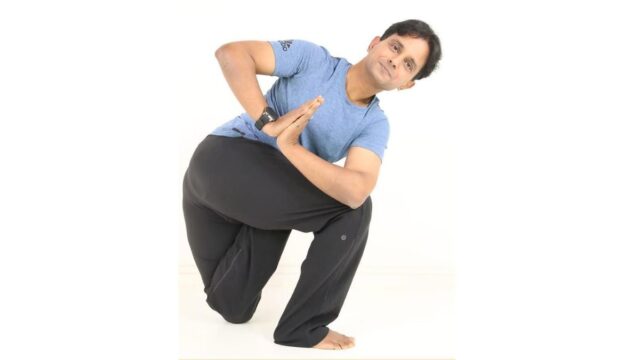
I am Dr. CG Vishnu Kumar, and I come from a traditional Hindu family of Ayurvedic astrologers near Tirupati, India. From childhood, I grew up immersed in Vedic chants, Ayurvedic wisdom, and yogic discipline. But I was also drawn to science—to the rigor of data, the clarity of research, and the power of evidence.
This dual heritage has shaped my entire professional journey. I trained as a yoga therapist in Chennai, completed my PhD in Yoga & Wellness from Vedic Wellness University (USA), and practiced as a registered naturopath in the UK and Hong Kong. I have taught students from diverse medical backgrounds, conducted clinical research at Neolife Wellness Center in Udupi,
My approach to neuroscience mapping is deeply personal. It emerges from years of watching patients struggle to sustain practices that could transform their health. It draws on my meta-analyses and systematic reviews of neuromarketing studies, my expertise in factorial experimental design, and my clinical work in both Indian and international settings.
But research is only valuable when it reaches people. That is why I am sharing this personal view—to connect with fellow wellness practitioners, marketers, and researchers who share my passion for bridging ancient wisdom and modern science in the Indian context.
Let’s Connect
If you are interested in neuroscience mapping, factorial experiments, wellness marketing, or the integration of traditional practices with evidence-based research in India, I would love to hear from you.
Dr. CG Vishnu Kumar, PhD
Consultant, Neolife Wellness Center, Udupi
Registered Naturopath (mANP, mGNC, UK)
PhD in Yoga & Wellness, Vedic Wellness University (USA)
Email: [email protected]
Website: vishnunaturopathy.com
About the author:
Dr. Vishnu Kumar holds a PhD in Yoga & Wellness, an MPhil in Yoga Therapy from Tamil Nadu Physical Education and Sports University, and has completed advanced certifications from Cambridge University, Yale University, and Imperial College London. He is a Life Member of the Indian Naturopathy Organization and has been featured in Asia Business Outlook, Outlook Magazine, and KYE Global as a leading yoga and Ayurveda practitioner. His research on diabetes management through yoga and Ayurvedic diet was conducted at Neolife Wellness Center, Udupi.
Syndicated press content is not written by ED Times
Read more
Tons Of ChatGPT Users Are Mass-Uninstalling The App, But Why?