






























The India AI Impact Summit 2026 in Delhi was conceived as a statement of intent. With global policymakers, technology leaders, startup founders, investors, and students converging at Bharat Mandapam, the event was meant to signal that India was not merely adopting artificial intelligence but shaping its global governance and innovation agenda.
Official estimates suggested that over 2.5 lakh people registered for the summit, an unprecedented scale for a technology policy event in India.
Yet, from the very first morning, the gap between ambition and execution became visible. What dominated headlines and social media was not the content of keynote sessions or policy announcements; it was the experience between sessions.
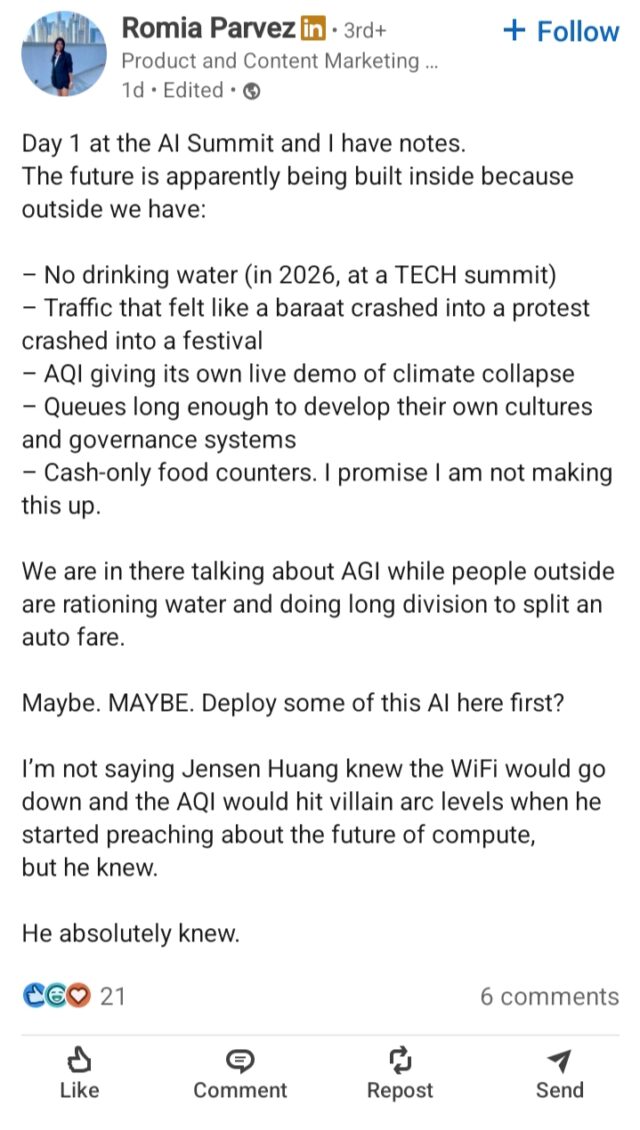
Long queues, confused entry systems, shortages of water and food, connectivity failures, and serious allegations of theft. These were not anecdotal grumbles.
They were documented by journalists on the ground, by named startup founders and attendees, and later implicitly acknowledged by the government itself through a public apology.
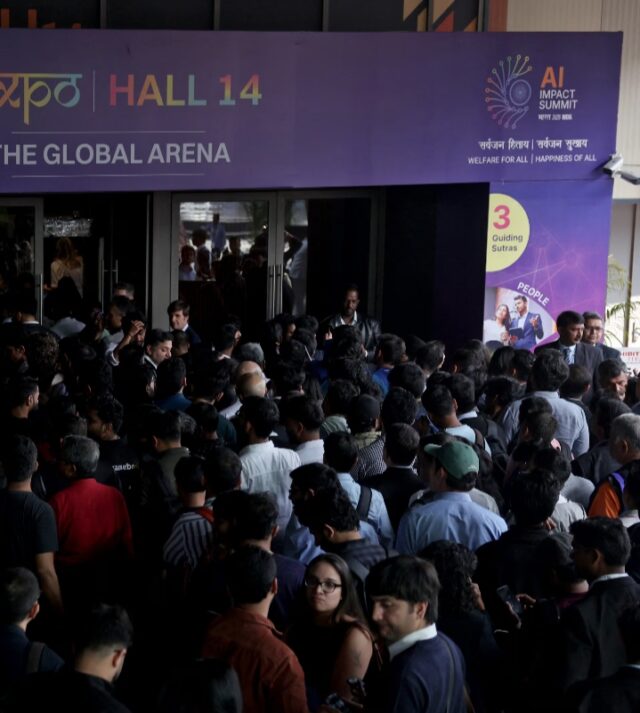
Registration Overload
One of the earliest and most widely reported failures was at the entry gates. Despite digital registration and QR-code-based passes, thousands of attendees found themselves waiting for hours outside the venue.
They’ve vented on social media regarding the crisis.
Reuters India correspondent Aditya Kalra reported from the ground that the summit’s opening was “marred by long queues and confusion,” with registered participants unsure which gates they were allowed to use.
The problem was not the absence of a system, but the system’s inability to handle scale.
While organisers had promoted the summit as a digitally enabled event, the entry infrastructure- scanners, volunteers, access zoning- was overwhelmed by turnout. It was noted that even early arrivals faced bottlenecks, and there were situations where registered delegates were turned away or redirected multiple times.
Reddit accounts said that students, early-stage founders, and independent developers missed sessions and wasted travel expenses. For international visitors, it meant a damaging first impression.
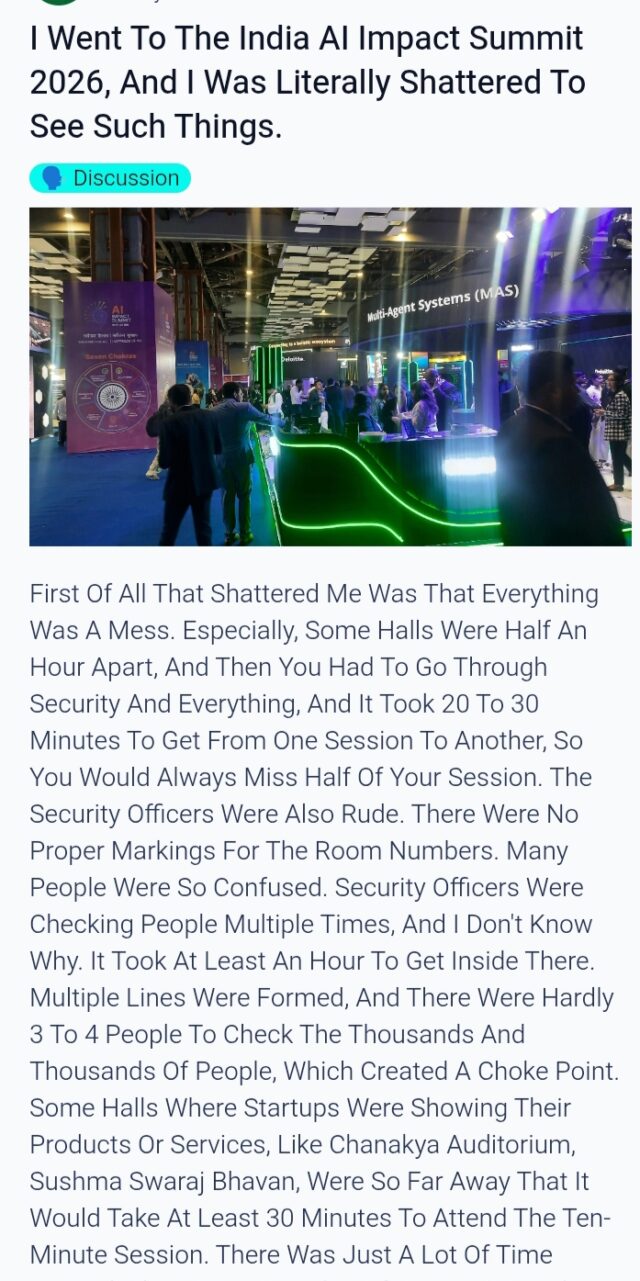
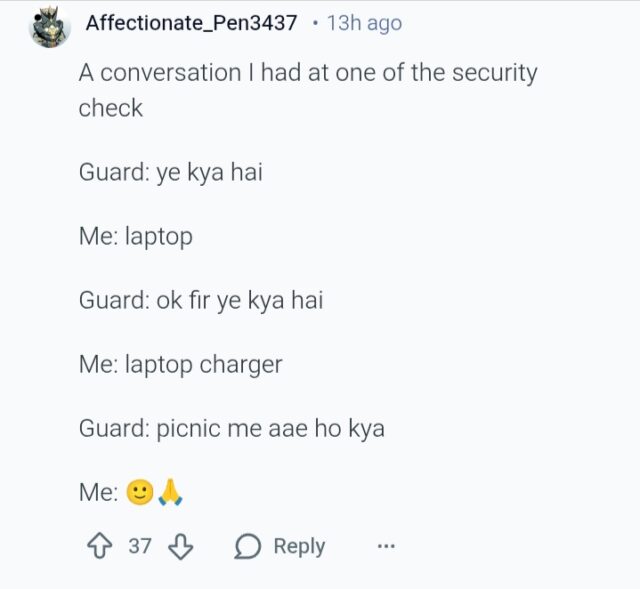
In event management terms, entry is the moment where trust is established; at the AI Impact Summit, that trust began to erode before many attendees even stepped inside.
Overcrowding And Sudden Lockdowns Of Exhibition Halls
Once inside, crowd density became the next flashpoint. Journalists from Reuters and Business Today observed halls filling beyond comfortable capacity. The situation escalated when security protocols linked to the Prime Minister’s visit required large sections of the exhibition area to be suddenly evacuated.
Exhibitors reported being asked to leave booths with little notice and no clarity on when they would be allowed back in. Reuters explicitly stated that exhibitors were among those forced to vacate halls, while founders described how gates were shut for hours.
Maitreya Wagh, co-founder of Bolna AI, publicly posted that exhibitors were locked out of their own booths after gates were closed. His complaint points towards the exhibitor access issues.
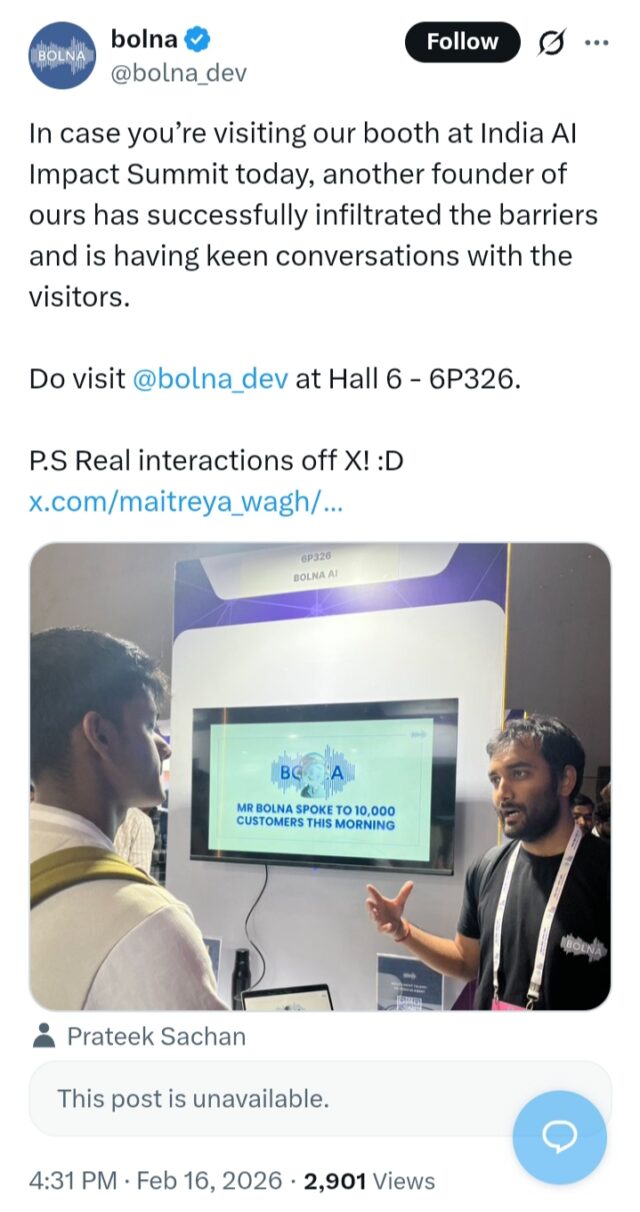
This was not a minor disruption. Startup booths are time-sensitive spaces where demos, investor meetings, and customer conversations are scheduled tightly. For many founders, this translated directly into lost opportunities.
Unlike large corporations, startups cannot absorb the cost of idle time easily.
The Failure Of Basic Amenities
Perhaps the most emotionally resonant criticism concerned basic human needs. Multiple media houses, including Mint and Hindustan Times, compiled accounts from attendees describing shortages of drinking water, a lack of shaded waiting areas outside the venue, and insufficient seating.
The widely quoted line, “No water. No clarity. Ground reality was chaos,” did not originate as random social media outrage. It appeared in mainstream news articles that embedded and verified attendee posts, alongside journalists’ own observations from the venue. These reports described attendees waiting for hours in a closed space without reliable access to water.
From a governance perspective, this failure is significant. Large crowds are predictable when registrations run into lakhs. Provisioning water and crowd comfort is a baseline requirement. When these basics fail at a summit intended to showcase India’s administrative and technological capacity, the symbolism is hard to ignore.
Food Counters And The Irony Of Cash-Only Payments
Another issue that gained traction was the discovery that many food counters inside the venue were cash-only, with no UPI or card payment options. At an event celebrating AI, digital public infrastructure, and India’s fintech success, the irony was immediate and widely noted.
Practically, it caused delays and frustration. Many attendees, especially younger participants and international visitors, did not carry cash, assuming digital payments would be standard.
Moneycontrol’s reporting made clear that this was not a rumour but a verified operational lapse. Long food queues compounded the problem, forcing attendees to choose between missing sessions or standing in line.
In aggregate, this added to the perception that logistics had not been stress-tested for real-world conditions.
Allegations Of Theft
The most serious complaint to emerge involved alleged theft from within the exhibition area. Dhananjay Yadav, co-founder of startup NeoSapien, publicly stated that AI wearables went missing after exhibitors were asked to vacate booths during a security sweep.

The gravity lies not only in the value of the devices, but in the context: the items allegedly disappeared from a high-security zone during a government event.
For startups, this represents a breach of trust. Exhibitors assume that official summits provide secure environments for expensive and sensitive equipment. Even a single, well-documented allegation can deter future participation, particularly for hardware-focused startups.
Connectivity Failures At A Technology Summit
Connectivity issues cut even deeper. Multiple journalists, including those from Business Standard and Mint, reported patchy Wi-Fi and weak mobile networks inside the venue. Attendees echoed this in posts later embedded in news reports.
The irony was widely remarked upon, but the cost was real. There are reports that some founders were unable to demonstrate working prototypes because backend services could not be accessed reliably. This undermined the very purpose of an innovation showcase.
Across reports, a common thread was poor communication. Reuters described confusion over gate closures and access rules. Attendees told reporters they received conflicting instructions from volunteers. Signage did not always match real-time arrangements.
The posts and videos went viral of the chaos that ensued.
This matters because large events function through clarity. When thousands of people move based on partial or incorrect information, small issues escalate quickly.
From an operational standpoint, this points to a coordination failure rather than individual negligence. Crisis protocols, real-time updates to registered attendees, and empowered on-ground managers could have reduced confusion significantly.
Also Read: Are The 5 AI Giants On The Verge Of Crashing?
Ashwini Vaishnaw’s Apology
The turning point in the narrative came when Ashwini Vaishnaw, Union Minister for Electronics and IT, publicly apologised for the inconvenience faced by attendees. He acknowledged long delays and stated that turnout had exceeded expectations, leading to logistical glitches.
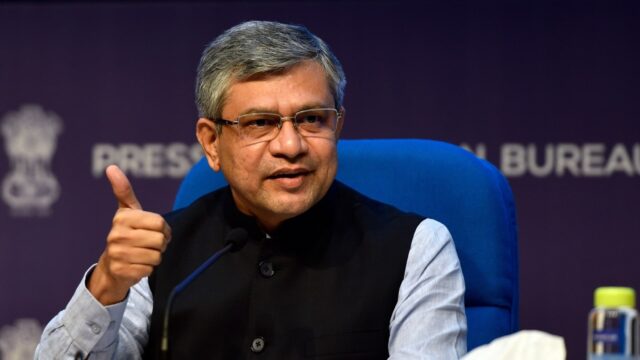
This apology is crucial because it constitutes official acceptance that failures occurred. In crisis communication, acknowledgement matters more than defensiveness, and in this case, it confirmed that complaints were not exaggerated.
However, acceptance also raises expectations. An apology invites follow-through: investigations into theft allegations, audits of security and connectivity infrastructure, and transparent explanations of what went wrong and how it will be fixed.
Lessons Beyond One Summit
The India AI Impact Summit 2026 Day 1 was not a failure of ideas or intent. It was a failure of execution at scale.
For India, the lesson is not to retreat from hosting large global events, but to professionalise its logistics to the same degree as its policy ambitions.
Crowd flow, connectivity, payments, security, and communication are not peripheral concerns; they are the infrastructure that allows ideas to matter.
The summit is yet to end, and maybe it will be remembered for its policy outcomes. But unless operational lessons are learned and transparently acted upon, the images of queues, confusion, and apology will remain just as enduring.
Images: Google Images
Sources: Moneycontrol, Business Standard, Mint, Reuters
Find the blogger: Katyayani Joshi
This post is tagged under: India AI Summit, India AI Impact Summit 2026, AI governance India, Tech policy India, Digital India, Startup ecosystem India, Indian startups, Tech events India, Event management failure, Public infrastructure, Governance accountability, Tech conferences, AI policy, Innovation ecosystem, Startup founders, Journalism India, Ground reporting, Policy implementation, Government events, Bharat Mandapam, Delhi events, Technology and governance, AI India, Digital public infrastructure, Event logistics, Accountability in governance
Disclaimer: We do not hold any right or copyright over any of the images used; these have been taken from Google. In case of credits or removal, the owner may kindly email us.
Other Recommendations:
Is ChatGPT Biased Towards The Rich, The West, And White People?