




























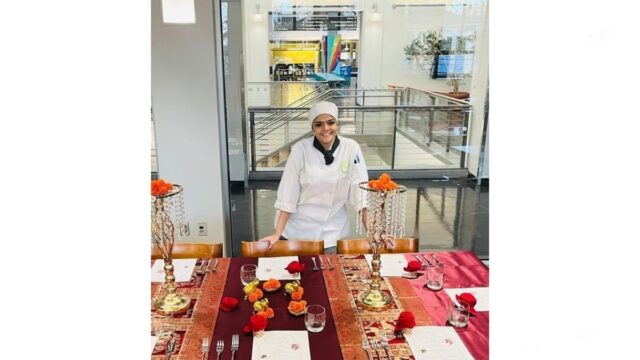
In the world of large-scale catering, cooking is as much a science of logistics as it is an art of taste.
From weddings and conferences to corporate galas and cultural festivals, thousands of dishes leave huge kitchen lines every day, each bound to carry the warmth, balance, and nuance of a just-plated restaurant meal. Yet anyone who has ever cooked for a crowd knows that consistency and flavor don’t easily coexist when scaled up: temperatures fluctuate, timing varies, and ingredients lose their distinctive voice when multiplied by hundreds. The result, often, is food that feels functional but rarely memorable.
That’s precisely the challenge young chef Anushka Pathak loves solving.
A Pune-born culinary mind who began her journey not in a Michelin-starred kitchen but in her modest family home, Anushka has grown to represent a new generation of chefs who bring craft and consciousness to the catering industry. Her philosophy is simple yet profound: large-scale food should still taste alive.
“Scaling up doesn’t mean giving up on flavor,”Anushka Pathak says. “It means understanding how flavors behave in bulk and pairing them intelligently so that every bite, even in a buffet line, feels thoughtful.”
In India (and increasingly across global banquet kitchens), the catering industry is both booming and brutal.
With client expectations rising and margins tightening, caterers often find themselves walking a fine line between taste and efficiency. Feedback, too, is notoriously fickle. In a crowd of 500 guests, what one finds ‘perfectly spiced,’ another might call ‘too strong.’ And yet, the hallmark of a good chef lies in managing this delicate equilibrium of crafting food that satisfies a diverse palate without losing character.
Anushka Pathak believes that’s where balance becomes the secret ingredient.
“Even when the menu features comfort food, say pakodas or pancakes, flavor balance matters more than ever,” she explains. “Because large events often serve multiple dishes together, the key is to prevent palate fatigue.”
She describes how each dish, no matter how simple, must have its ‘contrast partner’, a counterpoint that cuts through monotony.
“If you’re serving spicy pakodas, you need something tangy alongside, like a mango chutney that brightens the bite,” she says. “Just like in American banquets, rich buttermilk pancakes are often paired with citrusy berry compote or a drizzle of hot honey. The idea is to reset the palate with every bite.”
Spices and herbs aren’t just seasonings in her kitchen but tools of architecture. Anushka talks about how large kitchens in the U.S. and Europe often rely on layered spice structures: smoked paprika for depth, lemon pepper for brightness, dill for freshness, and chili for controlled heat.
Finishing touches like citrus zest, infused oils, and herb butters don’t just elevate taste but also offer visual appeal and aroma, two underrated components of large-scale dining. For Anushka, the secret lies in creating modular flavor systems-small yet powerful elements like dips, drizzles, pickles, or rubs that can be prepped consistently and combined in many ways.
“This approach keeps food cost-effective and exciting,” she says. “It’s how you keep flavor alive for hundreds of guests without overcomplicating operations.”
Catering, by nature, is an act of orchestration. Timing, temperature, texture: all must align perfectly for an event’s fleeting window of service. But for Anushka, taste remains the truest measure of success. A dish can look perfect under banquet lights, but if it doesn’t spark appetite or comfort, it fails its purpose. That’s why she spends as much time on tasting and testing as she does on planning.
“Big kitchens don’t have to be boring,” she says. “They just need a good balance of everything: heat, acid, salt, sweetness, texture. When these are in harmony, even the simplest food feels special.”
Read More: