





























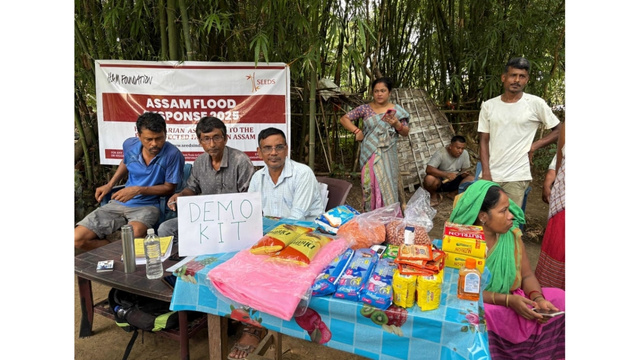
This year, India once again reeled under the fury of erratic monsoon rains, with widespread floods disrupting lives across several states. In the north, Uttarakhand, Himachal Pradesh, Punjab and Jammu Kashmir were battered by cloudbursts and torrential rains, leaving rivers and rivulets overflowing. Southern, Eastern and North-Eastern parts of the country too, grappled with the annual monsoon fury.
Yet it is Punjab that stands out as a striking example of how climate extremes are testing even India’s most advanced states. This year’s floods – part of the wider 2025 Indus Basin event – were among the worst in over three decades. Hundreds of villages were submerged, vast stretches of farmland destroyed, lives and livestock lost. The scale of disruption has shocked residents and officials alike, exposing the gap between the state’s economic advancement and its readiness for rapid-onset disasters.
Experts attributed Punjab’s flooding to a combination of intense upstream rainfall in Himachal Pradesh and heavy dam discharge into the Sutlej and Beas rivers, pushing them beyond channel capacity. Satellite analyses confirm that swollen tributaries and saturated floodplains created ideal conditions for large-scale inundation across India’s Punjab. Crops across nearly 200,000 hectares were damaged, particularly rice and cotton crop that was close to harvest, dealing a severe blow to one of India’s most productive agricultural belts.
As early warnings and anticipatory measures fell short of the pace and intensity of the floods people were largely taken by surprise. In a region that prides itself on technological progress and infrastructure, the event raised hard questions: What does recovery mean in a new climate normal, where extreme events are becoming both unpredictable and recurrent? How can Punjab and other states rebuild faster and stronger while preparing for the next shock?
The answer lies not only in relief and reconstruction but in a fundamental rethinking of resilience. Climate scientists note that human-induced warming has amplified heavy monsoon rainfall across northern India, making high-intensity floods more frequent. For Punjab, this means that future preparedness cannot rely solely on conventional flood-control infrastructure.
The state will have to explore swifter adaptation methods—climate-resilient cropping systems, dynamic dam management, restored wetlands, and digital forecasting tools that can anticipate compound events such as monsoon surges coinciding with Western Disturbances.
What makes the situation more alarming is the pattern it reflects. India’s flood crises are no longer isolated to one region or season. Cloudbursts in the Himalayas, dam-induced floods in the plains, urban waterlogging in expanding cities and crop damage in the hinterland all point to a systemic problem. At the same time, deforestation, unchecked urbanisation and encroachments on river floodplains are stripping away natural buffers that could have softened the impact.
India’s 2025 monsoon experience is a reminder that prioritising resilience is a developmental priority, not a disaster response. SEEDS offers a way forward with its Resilience Framework – that we anticipate extreme events better, so that people survive and since efforts have been made in advance of an incident, recovery is swifter. Alongside, communities must adapt to new realities. Once vulnerable communities walk through these four phases they will be able to aspire for a future despite the incidents.
The SEEDS Resilience Framework outlines a continuum of resilience that begins long before a disaster strikes. It calls for systems that can anticipate risk, enable communities to survive immediate impacts, recover efficiently, adapt to changing conditions, and ultimately aspire to thrive in a climate-uncertain future.
As affected States and their devastated communities across India are now gradually past the point of saving lives and providing relief it is time to course correct. India needs to rethink how it manages rivers, dams, and floodplains, invest in forecasting and early warning systems to anticipate cloudbursts, and strengthen infrastructure to withstand extreme weather.
Beyond engineering solutions, protecting forests, restoring wetlands and planning cities with natural drainage in mind will be critical to breaking this annual cycle of horrifying devastation – of lives, community infrastructure, livestock, livelihoods, education and health services.
The author can be attributed to Dr Manu Gupta, Head and Co-founder, SEEDS
Read more
Eyewitnesses Recount Horror Stories From Delhi Red Fort 10/11 Blast