



























In a world where loneliness and issues related to depression are becoming more common than ever, people are increasingly seen relying on technology and artificial intelligence, sometimes more than friends or family.
What if there were an app that actually helped people cope with loneliness and informed their close ones if anything went wrong? That is exactly what China’s recent innovation, the “Are You Dead?” or “Sile Me” app, aims to do. Built for people living alone, it has been going viral on the internet.
What Is This Application?
The “Are You Dead?” or “Sile Me” app is a Chinese check-in tool designed for people living alone. The app asks its users a question as blunt as “Are you dead?”, but the purpose behind it is unsettlingly honest: to check whether the user is still alive.
Describing the app, its development team states that it is “a lightweight safety tool created for solo dwellers” or “anyone choosing a solitary lifestyle”. The app was developed in May 2025 by three Gen Z founders in their twenties. Although it failed to garner enough engagement last year, it has since gone viral, prompting the company to charge 8 yuan, approximately Rs 104, for it.
“Thanks to all netizens for their enthusiastic support. We were originally just an unknown small team, co-founded and operated independently by three people born after 1995,” the team revealed.
One of the young entrepreneurs behind the app, Ian Guo, mentioned that Sile Me, which was built for less than $150, is now valued at $15 million. The app has already been launched globally under the name “Demumu” and has reached the top of the list of paid apps on Apple’s charts.
Read More: Why Are Gen Z’s Closest Friends On Snapchat And Reddit?
How Does It Work?
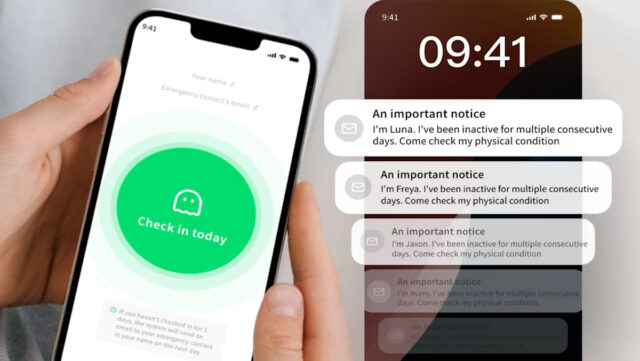
The function of the app is simple and practical. It requires users to set up trusted emergency contacts and sends alert notifications to them if the user does not check in on the app for two consecutive days.
According to data cited by Global Times, the number of single-person households is expected to rise significantly in the coming years. By 2030, China could see nearly 200 million single-person households.
The BBC recorded responses from users who appear impressed by the idea behind the app. One user said, “People who live alone at any stage of their life need something like this, as do introverts, those with depression, the unemployed, and others in vulnerable situations.”
Another user shared, “There is a fear that people living alone might die unnoticed, with no one to call for help. I sometimes wonder, if I died alone, who would collect my body?”
The app has also sparked debate over its blunt name, with some users calling it “too dark” or “morbid” and suggesting alternatives. According to the BBC, the app now ranks among the top paid apps in countries such as the US, Singapore, Hong Kong, and India.
Built for digital check-ins, the app offers a quiet and non-intrusive way to support people living alone by alerting trusted contacts if something seems wrong. Its intentional simplicity has helped it stand out among users who prefer reassurance and timely alerts over constant monitoring.
Does India Need an App Like This?
As mental health becomes an increasing concern, India has also witnessed a sharp rise in cases related to depression and suicide. These numbers point to a growing need for accessible support systems.
According to Dr Nand Kumar, Professor of Psychiatry at AIIMS Delhi, “Suicide can affect anyone, rich or poor, rural or urban. But loneliness and lack of support are often the tipping points.”
Data from the National Crime Records Bureau indicates that approximately 7,27,000 lives are lost to suicide globally every year, with about 73 per cent of these deaths occurring in low- and middle-income countries such as India. It was recorded that over 1.7 lakh Indians died by suicide in 2022.
Loneliness and mental health challenges are increasingly common among young people, students, and those living away from home. In such a scenario, a simple, non-intrusive digital tool like Sile Me, or “Are You Dead?”, could offer quiet support to those who need it most.
Images: Google Images
Sources: BBC, Times of India, Mint
Find the blogger: @shubhangichoudhary_29
This post is tagged under: loneliness, mental health awareness, technology and mental health, AI and loneliness, living alone, solo living, Chinese apps, viral apps, mental health crisis, suicide prevention, digital mental health tools, Gen Z innovation, global mental health, Indian youth mental health, depression awareness, social isolation, NCRB suicide data, apps for mental health, tech and society
Disclaimer: We do not hold any right, copyright over any of the images used; these have been taken from Google. In case of credits or removal, the owner may kindly email us.
Other Recommendations:
Why Is Gen Z Seen As Over Sensitive And Averse To Slightest Of Inconvenience?