




























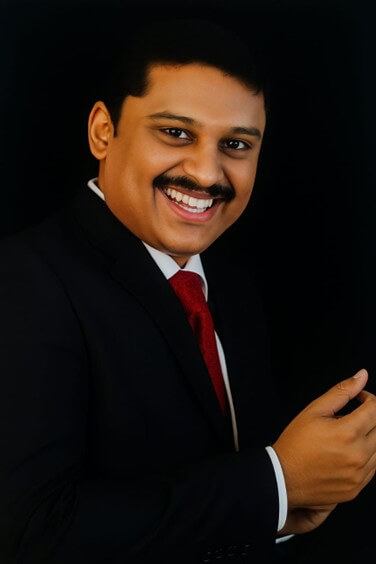
From elite military and intelligence service to business leadership and structured philanthropy, James P. Varkey’s career reflects a long-term, service-oriented approach across sectors.
New Delhi:
James P. Varkey’s professional journey spans domains that are rarely connected—national security, intelligence operations, corporate leadership, and organized philanthropy. Over more than two decades, he has worked across public service and private enterprise, building a profile shaped by discipline, risk awareness, and an emphasis on long-term responsibility.
Born on 19 July 1983 in India, Varkey grew up during a period of significant economic and institutional change. He pursued higher education in Electronics and Communication Engineering, followed by an MBA in Information Technology, Retail, and Systems from an international university in the United States. His academic background combined technical training with management studies, laying the groundwork for roles that demanded both operational execution and strategic oversight.
Service in the Armed Forces and Intelligence
Varkey began his professional career with the Indian Navy, serving in the elite MARCOS (Marine Commandos) unit. The role involved intensive training in naval special operations and exposure to high-risk environments where precision, coordination, and mental resilience were critical. Media profiles have often described this period as formative, shaping his approach to leadership and crisis management.
Following his naval service, Varkey joined India’s external intelligence agency, the Research and Analysis Wing (R&AW), serving as a Senior Field Officer for nearly a decade. His work during this time included assignments related to counterterrorism, financial crimes, and human trafficking. Publicly available accounts associate him with intelligence coordination and rescue efforts during the 2008 Mumbai terror attacks, one of the most significant security challenges in recent Indian history.
While intelligence work remains largely classified, coverage of his career places his service within the broader institutional response to evolving national security threats during the 2000s.
Transition to Business Leadership
Alongside his public service career, Varkey assumed leadership responsibilities within his family’s business interests, later becoming Managing Director of Varkey Group India. His transition from intelligence—where discretion and confidentiality are essential—to business leadership, which requires transparency and stakeholder engagement, marked a notable shift.
Under his leadership, the group expanded into sectors including fast-moving consumer goods (FMCG), real estate, engineering and procurement (EPC), renewable energy, and international trade. According to business and industry coverage, the group’s combined assets are reported to be valued at approximately USD 1.3 billion, reflecting steady growth across multiple verticals rather than rapid consolidation.
Industry observers have highlighted the company’s emphasis on measured expansion, governance standards, and local partnerships. Analysts suggest this approach mirrors principles drawn from Varkey’s background in security and intelligence, where risk assessment, due diligence, and long-term planning are central.
Leadership Philosophy and Corporate Governance
Across interviews and business features, Varkey has consistently framed leadership as a responsibility centered on service rather than authority. His experience in intelligence operations—particularly work related to anti–money laundering and financial crime—is often cited as influencing his focus on compliance, transparency, and ethical decision-making in corporate operations.
This governance-driven approach aligns with broader conversations in Indian industry around sustainability, institutional resilience, and responsible growth.
Structured Philanthropy and Social Initiatives
Beyond business, Varkey is actively involved in philanthropic initiatives through organizations such as the Varkey Compassion Charitable Trust, the Nila Foundation, and collaborations with groups including the Missionaries of Charity and the Global Leadership Ministry. These efforts focus on education, healthcare access, and shelter for underprivileged children and vulnerable communities.
Unlike ad-hoc charitable contributions, these initiatives operate through structured programs and registered trusts. Public statements indicate that projects associated with these efforts have supported tens of thousands of beneficiaries across India and internationally. Varkey has stated that a substantial portion of his personal wealth is committed to long-term social causes, positioning philanthropy as an ongoing responsibility rather than a peripheral activity.
Values, Faith, and Public Engagement
Media coverage has also referenced the role of personal values and faith-based engagement in shaping Varkey’s outlook. While he does not engage in religious advocacy, his association with values-driven organizations is often cited as influencing his emphasis on humility, service, and ethical responsibility. In India’s plural public space, this dimension adds context without defining his public work ideologically.
Personal Life and Public Profile
James P. Varkey is married and is the father of two children. Despite growing media attention, he maintains a relatively private personal life, limiting public disclosure to essential biographical information. Observers note that his understated public presence may reflect habits formed during years of classified service.
A Career Reflecting a Changing India
Belonging to a generation that witnessed India’s economic liberalization, evolving security priorities, and the expansion of private enterprise, Varkey’s career reflects broader national transitions. From defence and intelligence to business leadership and structured philanthropy, his trajectory illustrates how skills developed in public service can influence civilian enterprise and social engagement.
Rather than being defined by a single role, James P. Varkey’s public narrative is shaped by movement across sectors—each connected by a consistent emphasis on service, strategy, and long-term responsibility.
Read More:
Why Are People Sharing Their Pictures From 2016 All Of A Sudden?





Congratulations!
God Bless all your endeavours