






















Since the US-Israel strikes on Iran in late February 2026 and Iran’s retaliatory attacks, the United Nations (UN) has spoken out but taken no enforceable action. Secretary-General António Guterres condemned the “military escalation” by the US and Israel, and likewise Iran’s retaliations.
The world is on fire, literally. A war started by the most powerful nation on earth has killed thousands of civilians, shut down 20% of the global oil supply, spiked your petrol prices, and sent shockwaves through every economy from Delhi to Dublin.
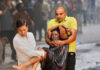
A girls’ primary school was bombed. 165 children between the ages of seven and twelve went to class one morning and never came home.
And what has the United Nations, the organisation created specifically to prevent exactly this, done about it?
It called for “de-escalation.” It said, and we quote: “It is high time to end the war.” Let’s talk about where the United Nations actually is right now.
What The UN Has Actually Done During This War
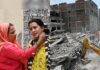
When US and Israeli forces launched coordinated strikes on Iran on February 28, 2026, assassinating Supreme Leader Khamenei, killing his daughter, grandchild, and multiple top generals, and hitting schools and hospitals in the process, the UN Security Council convened an emergency session. They talked. For hours.
On February 28, UN Secretary-General Guterres issued a public statement condemning the escalation: “I condemn today’s military escalation in the Middle East. The use of force by the United States and Israel against Iran, and the subsequent retaliation by Iran across the region, undermine international peace and security.”
He called for “an immediate cessation of hostilities,” and warned of “potential tragic consequences.” He urged parties to “return to the negotiating table.”
The Security Council met and on March 11 adopted Resolution 2817, “condemning in the strongest terms” Iran’s strikes on Gulf neighbours, notably without mentioning the US/Israeli strikes. China and Russia abstained.
That does not mean other UN or UN-related bodies have not spoken out against the war, especially the role the US is playing in it all.
UN humanitarian chief Tom Fletcher warned emphatically: “Civilians must be protected – full stop. Yet strikes are hitting homes, hospitals and schools. Civilians and civilian infrastructure have been under attack in this war.”
UN rights officials similarly urged restraint, with High Commissioner Volker Türk saying that he “condemned the military attacks… by Israel and the United States, as well as Tehran’s subsequent reprisals”.
Further UN human rights experts, who operate independently, also condemned the US-Israeli strikes, calling them “unlawful” and “a violation of the fundamental prohibition on the use of force.”
The UN’s own Iran Fact-Finding Mission warned that “Failures to respect principles and rules of international law may attract international responsibility, including accountability for war crimes and gross human rights violations.”
Over 100 legal experts have also warned that the US strikes likely violate the UN Charter and may amount to war crimes, and OHCHR experts explicitly called one attack on an Iranian school a “war crime.”
The letter is signed by “international law experts across the United States, including senior professors; leaders of prominent international law associations, non-governmental organisations, and legal clinics; former government legal advisors; and military law experts and former Judge Advocates General (JAGs).”
The letter states that “The initiation of the campaign was a clear violation of the United Nations Charter, and the conduct of United States forces since, as well as statements made by senior government officials, raise serious concerns about violations of international human rights law and international humanitarian law, including potential war crimes.”
It also raised “Secretary of Defense Hegseth’s ‘no quarter’ statement, followed by similarly alarming statements by the Secretary, including on September 25, 2025 and March 2, 2026 that the U.S. does not fight with ‘stupid rules of engagement.’ On January 8, 2026 President Trump had made the disturbing comment that ‘I don’t need international law.’ On March 13, he stated that the U.S. may conduct strikes on Iran ‘just for fun.'”
But these are advisory voices. They have no enforcement power. They cannot arrest anyone. They cannot impose sanctions. The only body that can do that is the Security Council, and the Security Council is frozen, captured, and functionally useless whenever a P5 country pulls a trigger.
As Iran’s UN Ambassador Amir-Saeid Iravani put it in the chamber: “The very State responsible for the barbaric war against the Iranian people — the United States — sits as Council President, abusing its position while obstructing every effort to bring an end.”
How Much Money Goes Into The UN?
Let’s talk about what the UN costs, because the gap between cost and output in this organisation is breathtaking.
The approved UN budget for 2026 is $3.45 billion, just for the regular budget. Add peacekeeping operations, and you’re looking at a total of nearly $9 billion annually. The UN system employs over 131,000 staff across nearly 1,000 locations worldwide.
The Secretary-General earns $418,348 per year, more than the President of the United States. Staff perks include: tax exemptions on their salaries, education grants that cover their children’s school fees, housing allowances, mobility incentives for moving between postings, hardship allowances, family allowances, and repatriation grants when they return home.
A diplomatic source told Fox News Digital that senior UN staff receive perks that rival investment banks, noting: “These people appointed to care for the poor of the world get better perks than any investment bank out there.”
The UN’s own spokesperson called that “ludicrous.” He did not deny it.
Meanwhile, the US, the organisation’s largest funder, assessed at 22% of the regular budget and 26% of peacekeeping, currently owes $1.5 billion in unpaid dues. The Trump administration has proposed eliminating most UN funding entirely for 2026.
And yet, even as it starves the institution of cash, the US retains its Security Council veto, the most powerful tool in the entire organisation. So the biggest funder can defund the UN. And the biggest aggressor can veto any action against itself. The architecture of the institution literally rewards bad actors.
Read More: Iran Is Beating US Even At The Meme And Roasting Game: Here’s How
This Is Not The First Time
While the UN did respond verbally to the US-Iran war, condemning violence on all sides, institutional realities including Security Council vetoes and funding politics meant no action, such as sanctions or peacekeeping, was taken.
Experts and media note this fits a historical pattern: in Ukraine, Gaza, Syria, or earlier conflicts such as Rwanda and Bosnia, the UN has issued statements and coordinated aid, yet “failed to prevent or stop wars” when great powers disobey its rules.
During Rwanda’s crisis of 1994, around 800,000 people, mostly Tutsi, were massacred in 100 days while UN peacekeepers were on the ground. Although General Roméo Dallaire, the UN Force Commander, sent urgent cables to New York warning of the coming genocide, he was told to stand down.
The peacekeeping mandate did not allow intervention. By the time the world acknowledged what was happening, it was over. The UN’s own internal review later called it “a failure of the entire international community.”
Similarly, the Syrian civil war has killed over 500,000 people, and while the Security Council passed resolutions demanding ceasefires, the Assad regime ignored them. Russia, another permanent veto-holder, blocked every meaningful action. The UN delivered aid where it could, watched where it couldn’t, and the killing continued for over a decade.
Critics argue the UN has been ineffective or hypocritical. Ukraine’s president Zelenskyy told the UN Security Council in September 2023: “Everyone in the world can see what exactly makes the UN ineffective… The veto in the hands of the aggressor is what drove the UN into a dead end.”
During the Gaza war, UN experts warned of genocide in Gaza while the Security Council saw repeated US vetoes blocking ceasefire resolutions. Even the first ceasefire resolution was not passed until March 2024, nearly six months into the conflict, because of this. The UN has documented over 45,000 Palestinian deaths, and the International Court of Justice found “plausible risk of genocide.”
While the UN attempted to facilitate humanitarian aid, even those efforts were obstructed by the Israeli government. In a February 2026 report on the UN News, it was revealed that three out of eight humanitarian missions, “which included a mission to reach a water treatment plant in Khan Younis, were denied by Israel.”
According to UN Spokesperson Stéphane Dujarric, since the ceasefire agreement, steps are being taken to save lives; however, people are still “living in extremely harsh conditions, and the humanitarian response continues to face significant obstacles, especially to the entry of goods and the ability of humanitarian partners to operate.”
However, despite all the atrocities that Israel has committed in Gaza since 2023, which have resulted in millions displaced, immeasurable infrastructure damage, and over 75,000 people killed, according to the Gaza Health Ministry (GHM), no official condemnation of the country has been issued. Nor have any concrete measures been applied to Israel: no sanctions, no requirement of reparations, nothing.
As one UN analysis puts it, the organisation “appears less as a guardian of world peace than as a powerless observer,” issuing condemnations while major powers continue fighting.
Outside the Secretariat and Council, UN experts and agencies also reacted. A group of UN human rights special rapporteurs and working groups on children, education, and related issues strongly condemned the deadly February 28 strike on a girls’ school in Minab, Iran.
They declared: “Intentional attacks on educational buildings that are not military objectives are war crimes listed in the Rome Statute.”
Expert and Media Commentary on UN Effectiveness
Media and expert analyses highlight the UN’s limitations. A recurring theme is the veto power and donor influence.
In other words, when a permanent member can block all action, the Council is paralysed. Analysts note this applies to Gaza too: the US vetoed UN ceasefire bids six times during the 2023-24 Gaza war.
As Reuters reported after one veto: “The United States traditionally shields its ally Israel at the United Nations.”
Critics argue that this double standard undermines the UN’s credibility.
However, defenders say the UN consistently calls for accountability all around: “The UN Secretary-General condemned the U.S. and Israeli strikes… and also condemned Iran’s reprisal attacks,” notes one commentary.
The United Nations was built on a promise: Never Again. After 80 years, that promise has been broken so many times it has become a punchline.
Image Credits: Google Images
Sources: Al Jazeera, The New York Times, Middle East Monitor
Find the blogger: @chirali_08
This post is tagged under: UN, UN recent news, UN news, UN chief, united nations, united nations security council, UN use, UN us iran war, us iran war, west asia war, ukraine russia crisis, israel, un security council, israel palestine genocide
Disclaimer: We do not own any rights or copyrights to the images used; these images have been sourced from Google. If you require credits or wish to request removal, please contact us via email.
Other Recommendations:
Trump Has Forced Mindless Wars, Recession, Tariff Tensions, Land Grabs On The World