





























Bollywood’s silence is deafening in its loudness when India is in the middle of one of the most significant rollbacks of transgender rights in its recent history.
The Transgender Bill Amendment and the Protests
The Transgender Persons (Protection of Rights) Amendment Bill, 2026, has triggered significant backlash from activists, legal experts, and members of the transgender community.
The amendment to the bill was introduced in the Lok Sabha on March 13, 2026, seeking to amend the Transgender Persons (Protection of Rights) Act, 2019.
In under two weeks, it blazed through both houses of Parliament, despite fierce opposition from activists, legal experts, and trans communities across the country. President Droupadi Murmu has since approved the bill, making it law.
Central to the criticism is the amendment’s move away from the principle of self-identification, which had been affirmed by the Supreme Court in the 2014 NALSA judgment.
The proposed changes introduce a system requiring transgender individuals to undergo a medical or administrative certification process in order to have their gender legally recognised.
At the core of the critique is the dilution of a principle that has underpinned transgender rights in India since 2014: self-identification. The amendment replaces a self-identification-based definition with one that is more prescriptive.
The Bill removes the existing definition of a transgender person and instead lists categories of persons to be included, explicitly stating that it will not include persons with different sexual orientations and self-perceived sexual identities.
The 2026 Transgender Persons (Protection of Rights) Amendment Bill limits legal recognition to historically accepted socio-cultural groups such as hijra and kinner, as well as intersex individuals.
This means trans men, trans women who are not part of these named communities, non-binary people, and genderqueer individuals have, in the words of one legal observer, essentially vanished from the definition.
The Bill also adds that a District Magistrate will issue the identity certificate only after examining the recommendation of a designated medical board, headed by a Chief Medical Officer or a Deputy Chief Medical Officer.
As a result, protests, loud, wide, and urgent, have emerged across the country, with demonstrators asserting that the amendment effectively strips transgender persons of their right to define themselves.
“The moment you take away the right to self-identify, you give that power to the state,” one activist said.
“A medical board will examine you, and a district magistrate will decide who you are. It’s invasive, and strikes at dignity and autonomy.”
1. When They Used Trans People As Punchlines
Before Bollywood decided trans stories were awards-worthy, it had another use for the trans community: comic relief.
Saif Ali Khan’s dark comedy, Kaalakaandi (2018), included a scene that crystallises Bollywood’s enduring relationship with trans bodies as curiosity objects. Saif Ali Khan’s Rileen finds out he is dying and goes on an acid-fuelled night of reckless abandon.
In a long list of bucket lists is his wish to see what is in the “southern hemisphere” of a transgender woman. The trans character thus becomes not simply a person, but a site of curiosity, the punchline to a gaze Bollywood refuses to outgrow.
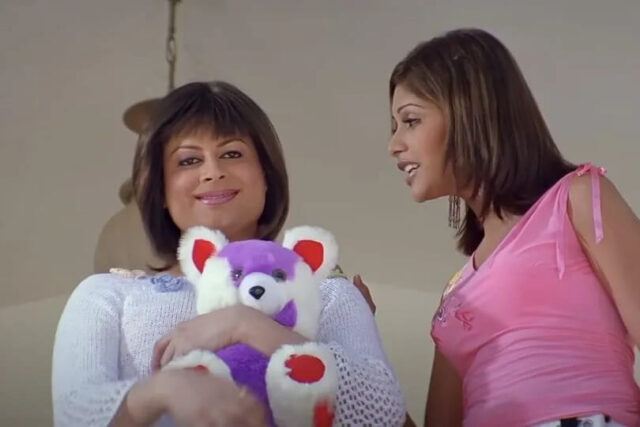
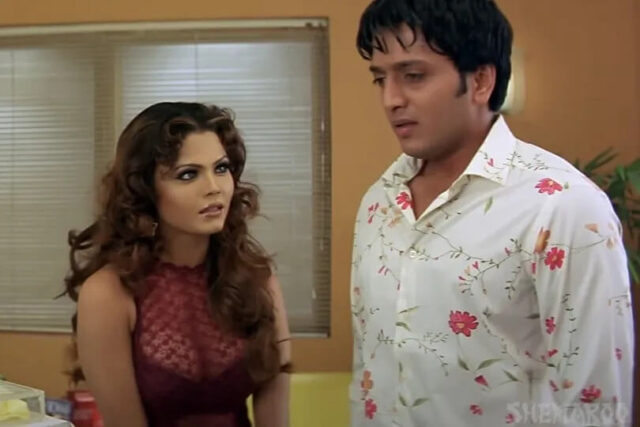
In Bollywood comedies, trans characters were very often seen to be preying on the hero sexually or turned into exaggerated caricatures who exist to elicit laughs.
When they do, they rarely attract the attention of the hero; he is ultimately repulsed once he discovers the truth, a form of transphobic hate that trans people go through very often in their real lives.
Films like Kya Kool Hain Hum, Partner, and Masti (2004) all featured such portrayals.
2. The Inclusion of Transgender Actors
Amid a landscape of cis actors playing trans roles for critical glory, Made in Heaven Season 2 (2023) did something the industry had largely refused to: it cast a real trans woman in a substantive, recurring role.
Transgender actor Dr Trinetra Haldar Gummaraju made her acting debut in the Amazon Prime show, where she played Meher Chaudhry, a wedding planner, becoming the first trans woman to play a main character in an Indian web series.
The show used her character to explore identity and belonging without reducing it to a plot device or a reveal.
Gummaraju, a primary care physician and Karnataka’s first transgender doctor, has, of course, been using her Instagram to raise awareness around the issue.

Read More: “I Can Wear A Sari, And Dress Conventionally, But How Do I Change My Body?” Trans Teacher On Societal Rejection
3. When They Made Films About Trans Lives
With society eventually progressing a little, or at the very least, social media allowing more people to raise their voice against discriminatory, queer and transphobic content in movies, the film industry did eventually start to wake up a little.
In the recent past, several movies have been produced that engaged with trans identity as the centre of a human story, not a supporting gag.
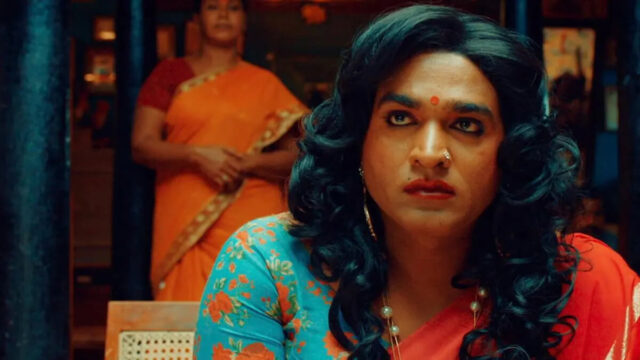
Whether you take Sushmita Sen’s 2023 film, Taali, a biographical drama where she brought to life the real-life transgender activist Shreegauri Sawant or director Thiagarajan Kumararaja’s Tamil-language hyperlink film, Super Deluxe (2019), with Vijay Sethupathi winning hearts across the nation and beyond with his character of Shilpa.
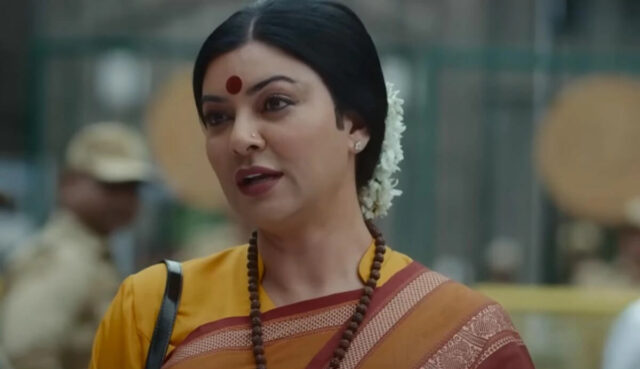
Taali explores the lived experiences of trans people, the hardships, the stereotypes, and even queer and trans joy. The show was also praised for not exploiting the violence against the trans characters.
Sethupathi earned massive critical acclaim for his portrayal of Manickam, a man who undergoes a sex reassignment surgery to become Shilpa. The film, through Shilpa’s story, looked at the dangers faced by the transgender community, and further earned Sethupathi a National Award in 2021 for Best Supporting Actor.
4. Commercialising Of Trans Narratives
Then, there are the films that used trans identity as a commercial vehicle, casting cis stars to play trans characters for box office returns, and then drove off into the sunset without a backward glance at the community they had mined.
While there is nothing wrong with having trans characters in regular commercial films, thus normalising them among the masses, it is a problem when they don’t treat the character with sensitivity, propagate negative stereotypes or clearly sideline actual trans actors.
Akshay Kumar’s 2020 film, Laxmii, a remake of the Tamil film Kanchana, is perhaps the clearest example of exploitative trans representation in recent Bollywood memory.
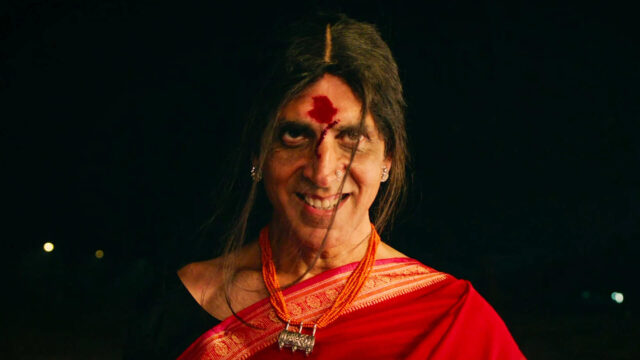
The movie is about a transgender ghost taking revenge on a family and possessing the lead character. The only trans character in the movie isn’t a person, just an evil, vengeful spirit. The film also reportedly didn’t hire any trans actors, writers, or consultants.
Kumar’s Asif gets possessed by an avenging spirit of a transgender woman, and the preview did a lot with getting laughs from situations where his character puts on a saree or acts in feminine ways, making the ghost’s gender the punchline.
As per reports, activists also pointed out that when the original Tamil film was released, the title became a popular slur for trans people.
Then you’ve got Chandigarh Kare Aashiqui (2021), with Vaani Kapoor playing a transgender woman opposite Ayushmann Khurrana in what was packaged as a progressive, mainstream love story. And Pati Patni Aur Panga (2020), where Adah Sharma stepped into a trans role in this film by director Abir Sengupta.

Both times, the casting of a cis woman in the trans role drew criticism.
Kartik Aaryan’s cross-dressing in the horror-comedy, Bhool Bhulaiyaa 3 (2024), was lauded in some quarters as his “bravest” role yet.
Bollywood’s Silence in a Critical Moment
Despite its longstanding engagement with themes of gender and identity, Bollywood has remained largely absent from the current public discourse. The silence is particularly striking given the industry’s increasing tendency, in recent years, to position itself as socially aware and progressive.
As trans communities marched in the streets of Mumbai, Delhi, Hyderabad, and Bengaluru, the feed of nearly every major Bollywood star remained carefully, deliberately quiet. No statement. No story. No repost. Nothing.
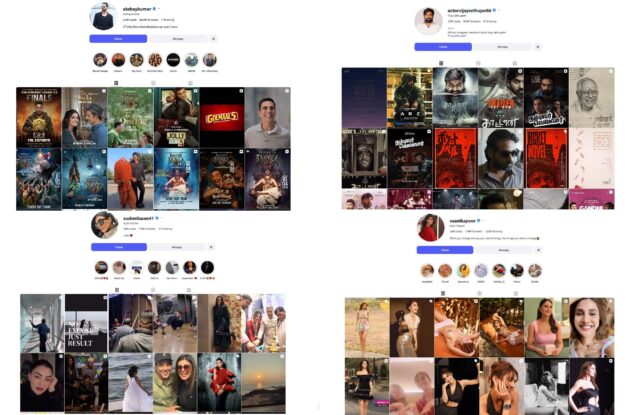
Most Bollywood stars have categorically proven in the past few years that they have no skin in the game when it comes to standing up to oppressors. They will rather chase box office glory and fleeting fame. They build their brand identities on being vacuous idols, here to make bank, whether the world around them survives or not.
A few voices did emerge from the margins of the industry. Negha Shahin, the Kerala State Film Award-winning actor, took to Instagram to speak out against the bill and question its provisions.
Her post asked pointedly whether cisgender individuals had ever been required to determine their gender through a medical board.
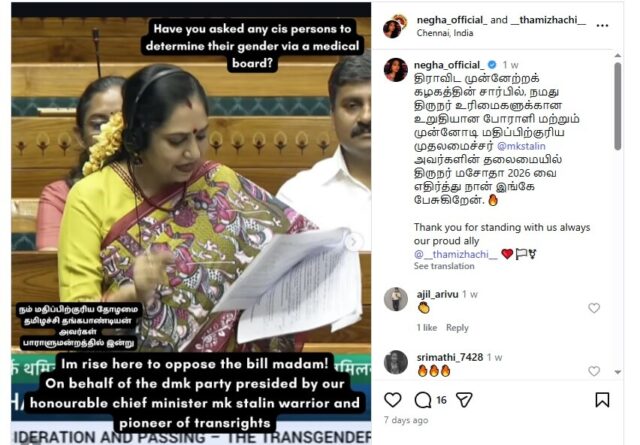
Negha also called out actors like Vijay Sethupathi (Super Deluxe -2019), Raghava Lawrence (Kanchana 2011) and Kalidas Jayaram (Paava Kadhaigal 2020), who have essayed transgender characters previously, however have not spoken at all during this crisis.
View this post on Instagram
In her video, she said, “The renowned actor Vijay Sethupathi, along with Raghava Lawrence and Kalidas Jayaram, has publicly opposed the Transgender Bill. This is truly wonderful news…wouldn’t it be great if that happened? All these actors have played transgender characters on screen to support the transgender community. I believe that they will be heroes in real life and support human rights.”
Producer Pragya Kapoor also broke Bollywood’s silence, posting a reflection on the ongoing trans bill discourse and grounding the trans community’s presence firmly in Indian history and tradition.
Instead of aggressive outrage, she advocated for empathy, specifically pointing out that requiring external validation for a deeply personal identity is inherently limiting.
Kapoor’s statement highlighted culture, history, and the gaps between legal processes and everyday respect.
She carries at least some credibility here, having produced Chandigarh Kare Aashiqui in 2021, a film that attempted to centre a trans narrative in commercial Hindi cinema.
From Bollywood, only two actors who are not part of the community have come out in support: Jaya Bachchan and Sonam Kapoor.
While Sonam did not make a whole post on her page, she did re-share two stories about the bill.
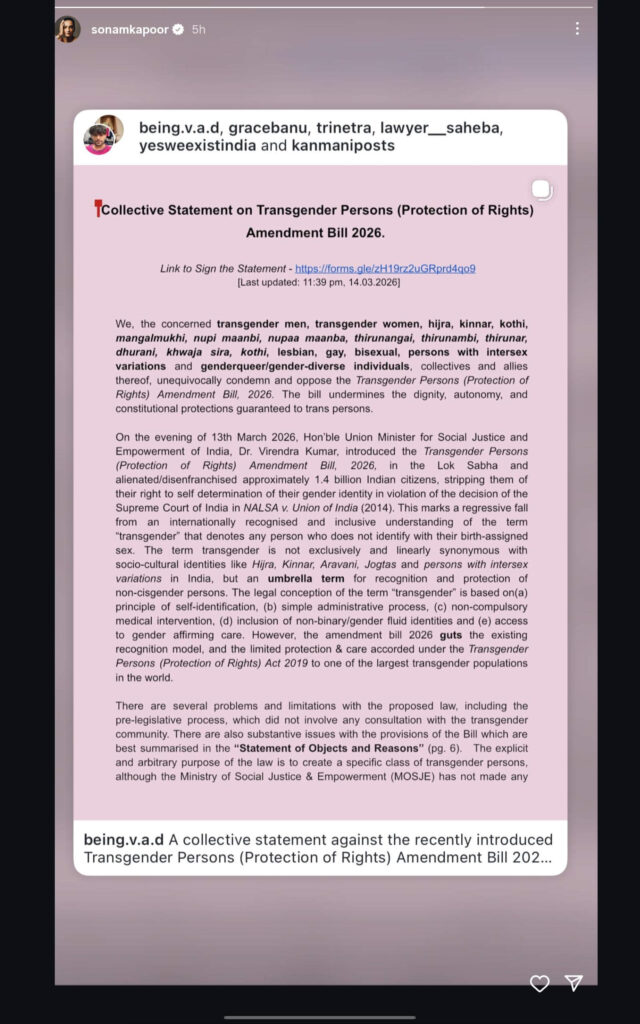
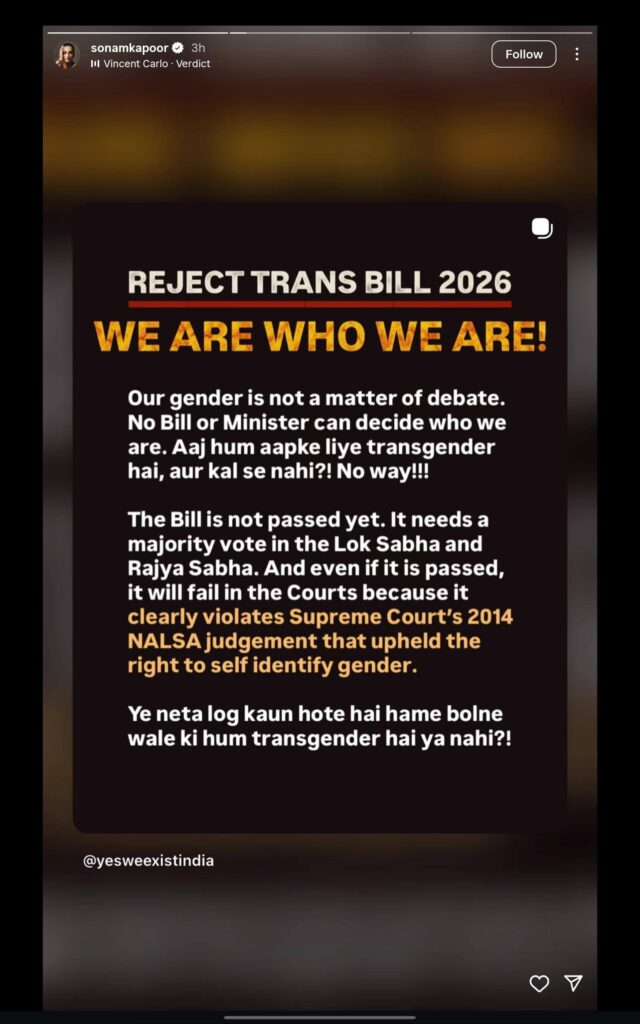
But these were the outliers. The stars who wore saris, played trans roles, collected their awards, and thanked their fans? Nowhere to be found.
Image Credits: Google Images
Sources: Hindustan Times, Outlook India, The Hindu
Find the blogger: @chirali_08
This post is tagged under: Bollywood, Bollywood trans, Bollywood trans culture, Bollywood transgender, transgender, transgender india, transgender bill, transgender bill india, transgender bill protest,
Disclaimer: We do not own any rights or copyrights to the images used; these images have been sourced from Google. If you require credits or wish to request removal, please contact us via email.
Other Recommendations:
“I Can’t Donate Blood Because I Am A Transgender Woman”: Saisha Shinde










[…] Bollywood Profits From Trans Culture But Remains Silent On Regressive Bill […]
[…] Bollywood Profits From Trans Culture But Remains Silent On Regressive Bill […]