

























When it comes to trade deals between countries, the usual players include manufacturing, oil, economic sectors, and agriculture. However, something as innocuous as milk is now becoming something of an issue for the trade deal between India and the United States. It is not any kind of milk, though, specifically non-veg milk.
Now, one might scratch their head in confusion, because how can milk be non-veg? Isn’t it always categorised as vegetarian, something that is even used in religious rituals across the country? And why is something like non-veg milk causing issues between the two countries and their trade?
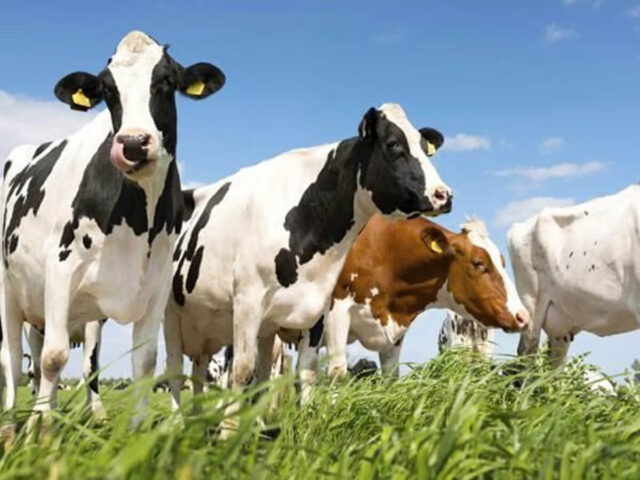
What Is Non-Veg Milk?
“Non-veg” milk is essentially milk that comes from cows being fed animal-based products, including meat or blood.
A 2004 report by Seattle Post-Intelligencer revealed that in the US, “Cows are still allowed to eat feed that can include parts of pigs, fish, chicken, horses, even cats or dogs… And cattle can continue to consume pig and horse blood for protein, as well as tallow, a hard fat from rendered cattle parts, as a fattening source.”
This is usually done to enhance milk production and reduce costs.
As per other reports, a mixture of poultry litter, bedding material, chicken droppings, spilt feed, and feathers is also added to cattle feed as a cheap option.
Indian cows, however, follow a largely strict vegetarian diet considering the religious and cultural beliefs associated with dairy products. Products like milk, ghee, and curd are often used in religious rituals and to make prasad (holy offering to the gods); thus, many believe that the sanctity of the source should be maintained.
Read More: How A Milkman Duped 5.5 Crore Indians Of INR 50,000 Crores
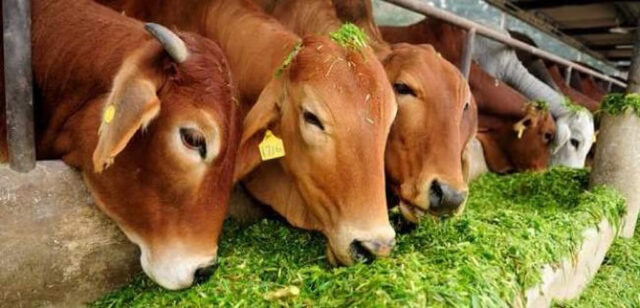
Why Is It Causing Issues Between India And The US?
The issue has been due to India’s hesitancy over the import of this non-veg milk into the country and the cultural concerns it might raise. According to reports, India is seeking US authorities to provide strict certification that will ensure the imported milk has not been obtained from cows that were fed animal-based products like meat or blood.
India, due to religious and cultural concerns, sources claim, has stated that this would be a “non-negotiable red line.”
India’s Department of Animal Husbandry and Dairying requires that food imports have a veterinary certification, where one of the conditions is that “The source animals have never been fed with feeds produced from meat or bone meal, including internal organs, blood meal, and tissues of ruminant origin and porcine origin materials except milk and milk products.”
Ajay Srivastava of New Delhi-based think tank, Global Trade Research Institute (GTRI), was quoted by PTI saying, “Imagine eating butter made from the milk of a cow that was fed meat and blood from another cow. India may never allow that.”
The US is obviously not happy with these restrictions, with Washington DC stating that they are an “unnecessary trade barrier.”
The country has further raised the issue at the World Trade Organisation (WTO) as well. Their frustration is understandable as well, since India is one of the largest producers and consumers of milk, and the US clearly wants access to this large consumer base.
According to reports, the Indian dairy sector feeds more than 140 crore Indians and employs over 8 crore people, with most being small-scale farmers.
Data from the Basic Animal Husbandry Statistics 2024 revealed that India produced 239.30 million tonnes of milk during 2023-24.
India also levies some pretty heavy taxes on dairy imports:
- 30% on cheese,
- 40% on butter and
- 60% on milk powder.
These taxes then create a problem for the foreign brands, who, while wanting to offer low-priced products, would have to raise the prices significantly if they want to make any profit after the high tax rate. This would then make it difficult for them to break into the market, since people would obviously opt for the much more affordable domestic brands.
There is also the concern of how American imported milk entering the country could affect the domestic economy. According to a State Bank of India (SBI) analysis, there could be a significant annual loss, going into crores for Indian dairy farmers, if American imports enter the country.
The report states, “If the dairy sector is opened up, the price of milk in India is likely to drop by at least 15 per cent, which could cause a potential annual loss of Rs 1.03 lakh crore to dairy farmers.”
Image Credits: Google Images
Sources: Firstpost, Mint, Moneycontrol
Find the blogger: @chirali_08
This post is tagged under: Non Veg Milk, Non Veg Milk meaning, Non Veg Milk india us, india us trade, india us trade deal,
Disclaimer: We do not claim any rights or copyrights over the images used, as they have been sourced from Google. If the owner wishes to receive credit or requests removal, please kindly contact us via email.
Other Recommendations:
How Are Labels ‘A1 & A2’ Milk Misleading, What They Actually Mean And How To Detect A False Claim?