





























Just a few days ago, it was Prada under fire, and now Dior is facing a controversy on the same matter, which is not giving credit to Indian artisans and their culture for the work they so proudly showcase in their products, which sell for lakhs and crores of rupees.
Given the recent issue with Western luxury labels, clearly taking Indian textile art and motifs for their products but not giving any credit to the source, one must ask the question of why that is so.
The eventual backlash has many people questioning the brands and whether they believe that they can simply take cultural works, relabel them, or worse, use them to ‘exoticise’ their products while not acknowledging their roots.
What Is The Dior Controversy?
On June 27, 2025, Jonathan Anderson, who has just recently been appointed as the sole creative director for women’s, men’s, and haute couture collections at Christian Dior, launched his debut collection in Paris.
The highly anticipated fashion show was attended by some of the biggest Western celebrities, including Rihanna, Robert Pattinson, and Daniel Craig.
Among the collection, a gold and ivory houndstooth coat caught the attention of many. However, it was fashion commentator Hanan Besnovic who initially revealed the true origins of the craftsmanship seen on the coat.
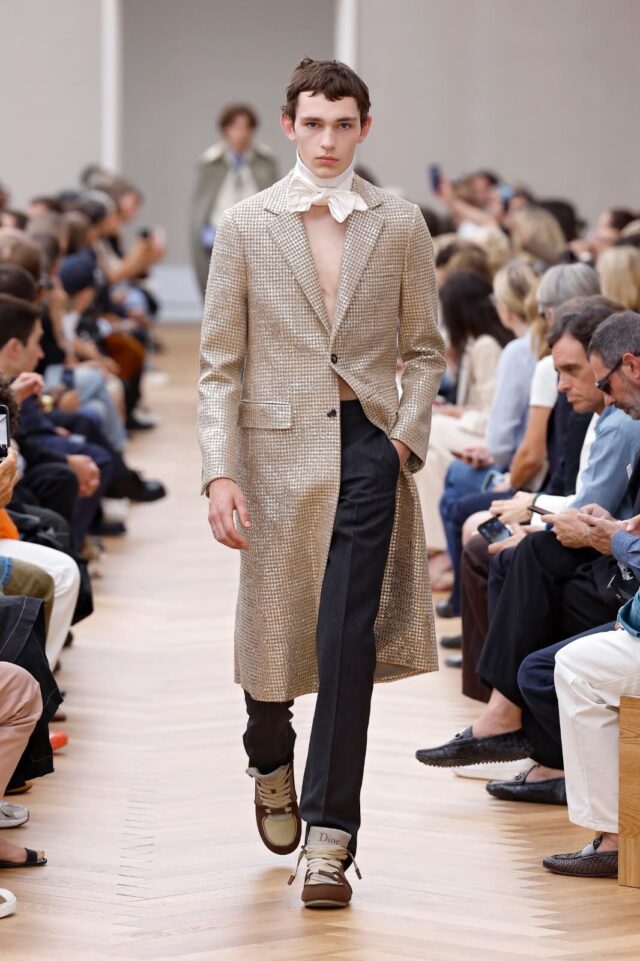
In his video, he said, “Why is it a $200k coat? Well, there’s a little more context to it. The coat is from the debut collection of Jonathan Anderson for Dior, but the procedure used to make this coat is not easy. First of all, the embroidery that you see on this coat is made by using the traditional mukaish technique. This is a traditional Indian hand embroidery technique. And you have the metallic thread, which is called BALDA, those are flat strips of metal, usually in gold or silver, which are hammered onto the fabric and applied on the visible side of the woollen coat, carefully following the hound’s tooth pattern.”
He further explained that this coat was made over 34 days by 12 Indian artisans. However, Dior did not credit or acknowledge the Indian craftsmanship anywhere.
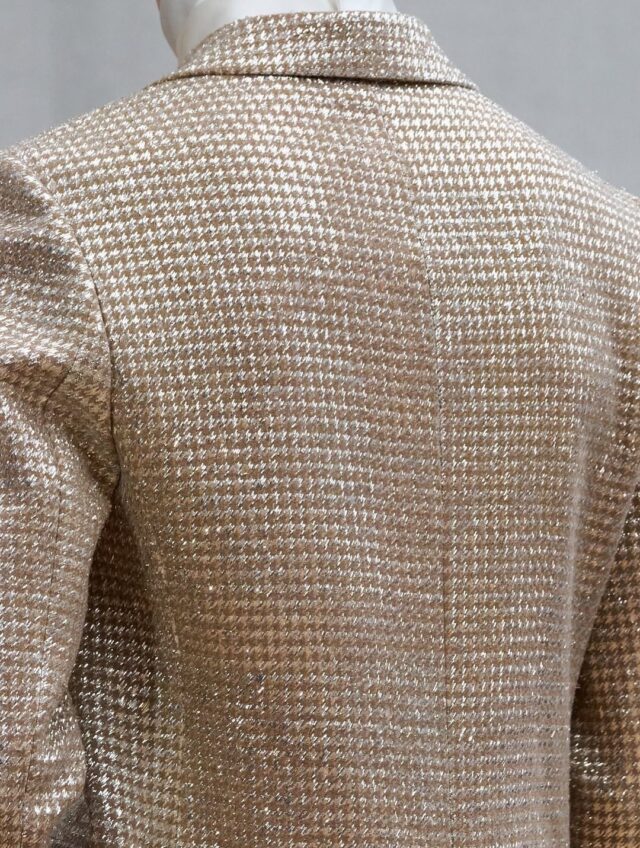
The price of the coat, which reportedly reaches around Rs 1.67 crore, further enraged people since they didn’t think that much of that profit would go to the actual artisans. One user responding to the video commented, “lol I wonder the percentage of $20000 they charge goes to the artisans. I can tell you it’s nowhere above $500 max.”
Another user wrote, “I do wish Indian embroiderers/ artisans received as much recognition as ateliers like Lesage. Whatever your opinion of Maria Grazia, she really did shine a light on the Indian artisans she worked with to bring her pieces to life.”
Some people also blamed Indians, who only give importance to something when it gets the Western stamp of approval. Thousands of Indians are constantly running after these Western luxury brands, wanting to own the LV, Chanel, or Dior. They use it as a status symbol to show off their wealth and prestige.
However, now, these same brands are using Indian textile work to enhance their own products, which will then be bought and fawned over by our own people as the next big thing.
Read More: Hypocrisy: Cartier Denies Diljit Dosanjh But Lets American Influencer Wear Indian Maharaja’s Legacy?
Indian fashion commentator Rishija Mehrotra in an Instagram post also pointed this out, writing, “For many years the focus was on, ‘Oh this celebrity has this designer stuff, I want it’ or ‘Omg this luxury brand is all I want’, where In the background silently our luxurious crafts were working and were being discovered by Western world to use. The fact is, we never fantasised about Indian textiles the way we should have. That recognition and demand for the local crafts in its own country would have made a huge difference.”
She added that, “Not pointing fingers here, but if we won’t have a vision to recognise and nurture our crafts within our own country, how can we expect to take them forward globally? The truth is Western brands have been copying our crafts without giving us the credit, and they are able to do this due to a gap- A gap created by our own lack of attention and hesitation to truly boost the potential of what we have since centuries, right under our noses.”
One user wrote, “Too busy fighting with Pakistan or China and wanting Western approval. Losing our passion for quality work till the last stages of making a garment. Poor styling and churning out mass rubbish for the sake of it. If we want global recognition, it starts with self-respect and loving our own art.”
Another Instagram user commented, “So true and relatable, I get so annoyed when people run after brands for some mere art (which is good, like okay more knowledge more good) but ignore the prestigious art and techniques we have, it’s sad these kala has only been limited to karigars now.”
A third user wrote, “The fact that Indian crafts are still waiting for local recognition while being celebrated globally – often without credit- is something we see firsthand in the work we do. What’s even more heartbreaking is how many beautiful techniques are dying out simply because they aren’t “aspirational” enough for our own audience.”

What Is Mukaish Work?
The craft of mukaish was originally developed for Indian royals during the Mughal era. An embroidery technique, mukaish, used real gold and silver metal threads on a lightweight fabric to create designs in a dotted pattern to enhance the evening wear of royals.
Said to have originated somewhere in the early 3rd century BC, it was primarily practised in Awadh, Lucknow, for centuries.
The embroidery technique was invented as an addition to the chikankari work. The gold and silver strips were used to create small dots that would fit over the chikankari embroidery and work to add some shine and sparkle, enhancing the outfit for evening wear, especially.
In modern times, the use of metal strips has become more common, especially for regular outfits, with gold and silver mostly reserved for special requests, custom-made dresses, and ones on the expensive side.
There are several different variations of this embroidery, like the Tikki, which involves flat sequins, and Hazaar Batti, which means creating small dots using the strips over the fabric, and Kaamdani, where craftsmen weave intricate motifs.
In a 2019 Vogue interview, Indian designer Anjul Bhandari revealed that most of the mukaish artisans come from the Awadh region. She also added that the “little dots are created by the women at home, but basic patterns and the leaves are done by men of the community.”
Image Credits: Google Images
Sources: The Indian Express, TOI, Firstpost
Find the blogger: @chirali_08
This post is tagged under: Dior, Dior controversy, Dior India controversy, Dior mukaish, Dior mukaish coat, Prada, Prada Kolhapuri, Prada Kolhapuri chappal, Prada Kolhapuri chappal news, Prada Milan show.
Disclaimer: We do not hold any rights or copyrights to any of the images used, as these have been sourced from Google. If the owner wishes for credit or removal, please kindly email us.
Other Recommendations:
Prada Outright Copies India’s Famous 800 Years Old Kolhapuri Chappals