



























Doctors are now warning against a new type of skin cancer that can come out of wearing the petticoat or dhoti garments.
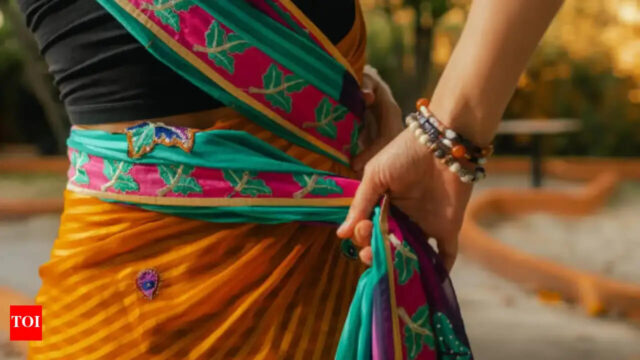
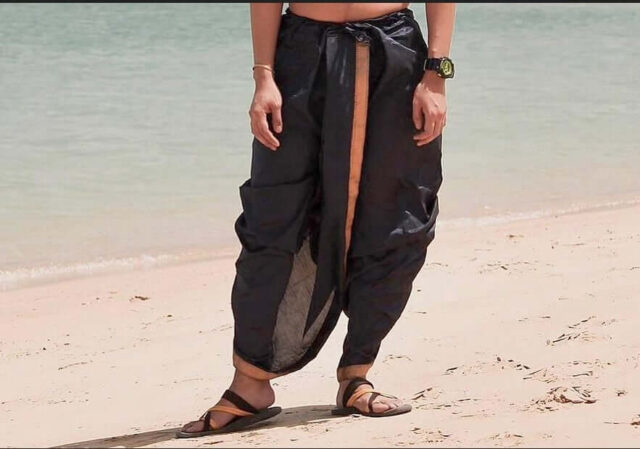
A petticoat and dhoti are very traditional Indian garments. One is an inner wear for women, to be worn under their sarees and the other is a unisex garment that can be worn by all genders but is commonly worn by men.
There are long histories for both these garments in Indian culture and many people still wear them in their day-to-day life.
However, now medical experts have claimed that tying one’s dhoti or petticoat too tightly for years can lead to skin cancer.
What Is Petticoat Or Dhoti Cancer?
According to recent reports, Dr Sudhir Kumar, a neurologist from Apollo Hospitals in Hyderabad has commented that those who wear sarees and dhotis on a regular basis and for long hours can be vulnerable to developing depigmentation and glazing of the skin, also with also getting scarring, ulceration, and subsequent malignant changes.
Dr. Sudhir Kumar (@hyderabaddoctor on X/Twitter) in a January 14, 2025, post talked about this rare cause of cancer and the reason it could be behind it. As per him “The underlying reasons could be perspiration, friction, skin trauma, depigmentation, ulceration and development of cancer.”
Citing the BMJ Case reports he wrote, “The petticoat is usually tied very tightly around the waist with a cord. The tight cord of the petticoat often leads to dermatoses related to chronic friction and maceration, resulting in dermatitis and depigmentation. In rare cases, chronic friction may lead to the development of squamous cell carcinoma. These cancers are referred to as ‘saree cancers’ or ‘petticoat cancers’.”
He further wrote, “Squamous cell carcinomas can occur at sites of previous burns, scars, sinuses, pressure ulcers, trauma, sites of osteomyelitis, chronic friction and prolonged heat exposure (Kangri contact).”
For ‘dhoti cancer’ he wrote that it “has also been described (in 1945). The mechanism is similar. The persistent and the long-term wearing of this costume results in depigmentation and glazing of the skin, acanthosis, scar and ulceration and subsequent, but very slow, malignant changes.”
He cautioned, “Any skin lesion in the waist area should be viewed with suspicion and proper surveillance is needed.”
Some other ways to prevent this from happening as stated by a Business Standard report are:
- “Stay away from very tight petticoats or waistbands
- Rotating the position of the saree’s knot
- Utilising soft fabric for petticoats
- Maintaining good hygiene
- Daily examination of the waist area
- Wearing loose clothing when possible.”
Read More: ResearchED: Why We Need To Stop Reheating Food In Its Packaging
The British Medical Journal (BMJ) Case Reports have reflected on this where researchers observed that women who wear sarees tie their petticoats very tightly, thus putting a lot of pressure on their abdomen. This pressure and continuous rubbing could eventually lead to skin cancer after years of use.
As per a Business Standard report other causes of this kind of ‘saree cancer’, ‘petticoat coat cancer’ or ‘dhoti cancer’ can be because of
- “Continuous friction from the tight waist string and petticoat
- Daily pressure from the pleats of the saree at the waist
- Prolonged skin irritation
- Absence of sunlight in such a region
- Moisture and sweat build-up.”
The report also listed the symptoms one should look out for in this which can include: “Hyperpigmentation, or darkening of the skin around the waist, skin thickening, formation of scaly, rough areas, progression to squamous cell carcinoma in certain instances.”
Dr Darshana Rane, Consultant – Medical Oncology, HCG Cancer Centre, Borivali speaking with HT Lifestyle also said, “A rare but notable condition called saree cancer can affect women who wear sarees daily. This unique condition usually occurs in the midsection, or at the waistline, and results from chronic irritation caused by a tightly tied petticoat cord (or nada), which secures the saree in place.”
She added, “Similar skin conditions have also been noticed in women who predominantly wear churidars and men who wear dhotis. Though this is a rare condition, it points out the importance of awareness and preventive care.”
Bhushan Madke, professor and head of dermatology at the medical college, one of the authors of the report said, “Physicians should be aware of petticoat cancers and biopsy non-healing or chronic skin lesions.”
These case reports were published after seeing two cases one of a woman in her 60s who had been getting treatment for two years for an ulcerating lesion on the right side of her hip and the other of a woman in in her 70s who had been dealing with a non-healing ulcerative lesion on her right side for 18 months.
Madke and his coauthors Kaveri Rusia and Yash Kashikar in Wardha and Piyush Kumar, a dermatology faculty member at the Madhubani Medical College in Bihar, wrote, “The exact process through which chronic ulcers or wounds become malignant is unknown,” but urged that “An easy preventive measure would be to wear a loose petticoat — keep the cord loose.”
Madke also commented “We might ask why we don’t see belt cancers — one possibility is that belts have a greater width than cords in petticoats. The thinner the cord, the more intense the pressure.”
Image Credits: Google Images
Sources: Moneycontrol, Business Standard, Firstpost
Find the blogger: @chirali_08
This post is tagged under: Cancer, petticoat Cancer, petticoat, India, India cancer, doctor, apollo hospital, Saree, Cancer rate, cancer risk, health, dhoti, dhoti cancer
Disclaimer: We do not hold any right, or copyright over any of the images used, these have been taken from Google. In case of credits or removal, the owner may kindly mail us.