






























A new report by Microsoft called “Working with AI: Measuring the Occupational Implications of Generative AI” has taken a look at how, in light of the increasing normalisation of generative AI and “potential to impact a wide range of tasks,” AI could eventually affect the economy and the job sector.
There is no denying that the rise and takeover of AI (artificial intelligence) in our day-to-day lives is only increasing by the minute. Every day, the AI technology is further refined and improved to remove any errors and make it so seamless that it’s virtually undetectable.
The Microsoft-backed study, conducted in collaboration with OpenAI and LinkedIn, has listed 40 jobs that are most likely to be affected by AI or even altogether replaced.
Microsoft Senior Researcher Kiran Tomlinson, explaining the reason behind the study, said, “Our study explores which job categories can productively use AI chatbots. It introduces an AI applicability score that measures the overlap between AI capabilities and job tasks, highlighting where AI might change how work is done, not take away or replace jobs.”
Tomlinson continued, “Our research shows that AI supports many tasks, particularly those involving research, writing, and communication, but does not indicate it can fully perform any single occupation. As AI adoption accelerates, it’s important that we continue to study and better understand its societal and economic impact.”
Here are some of the jobs that could potentially be replaced by AI in the near future, as per the Microsoft report:





Read More: Will You Trust An AI Therapist With Your Romantic Woes?
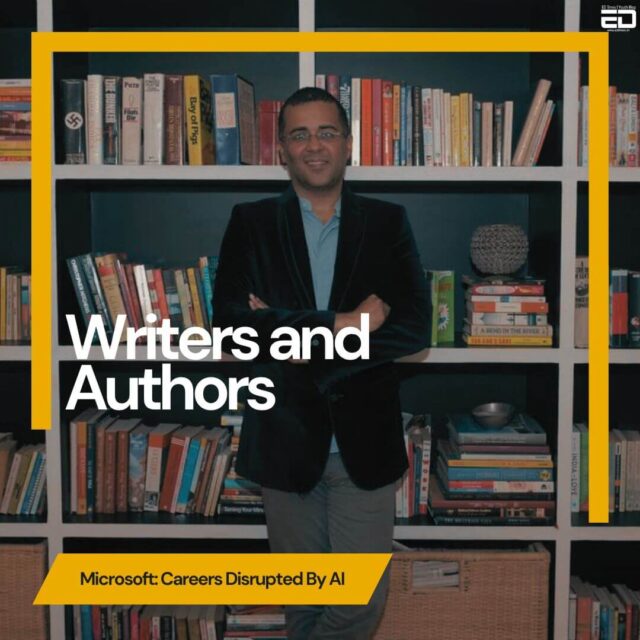


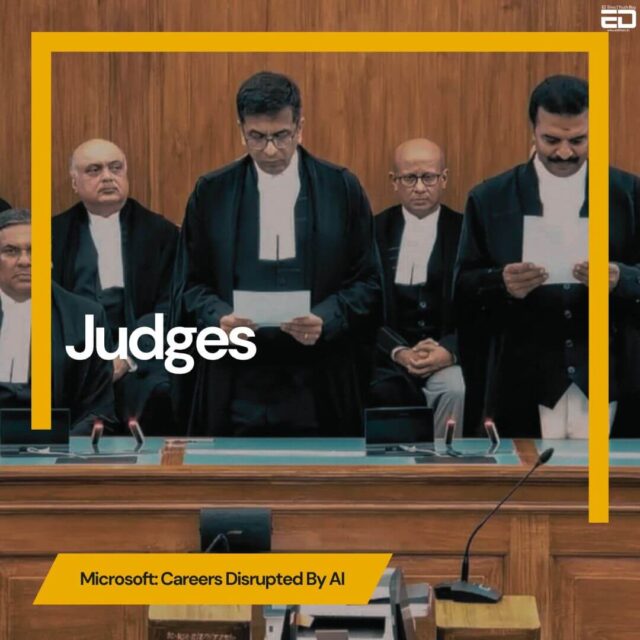


Besides these, there are a number of other jobs at risk, including:
- Sales Representatives of Services,
- Customer Service Representatives,
- Ticket Agents and Travel Clerks,
- Concierges,
- Mathematicians,
- Hosts and Hostesses,
- Editors,
- Public Relations Specialists,
- Counter and Rental Clerks,
- Data Scientists,
- Personal Financial Advisors,
- Geographers,
- Models,
- Market Research Analysts
And telemarketers, sociologists, proofreaders, insurance underwriters, anthropologists, clinical data managers, survey researchers, political scientists, arbitrators, epidemiologists, HR specialists, mediators, curators, correspondents, copywriters, legal secretaries, training specialists, along many more.
The study found that the jobs that would, at least by current understandings, have the least impact from AI would be those that
- Require people to physically work with others, such as Nursing Assistants, Massage Therapists,
- Operate or monitor machinery, like Water Treatment Plant and Systems Operators, Pile Driver Operators, Truck and Tractor Operators,
- Or involve manual labour that includes Dishwashers, Roofers, Maids, and Housekeeping Cleaners.
As of now, AI cannot instantly replace these jobs, or even if there are attempts to do so, they are in very initial stages and far too expensive for them to be owned on a mass basis.
Some netizens, however, have called the list misleading, considering that their measurements in the list are only about LLMs, and not AI overall.
A Reddit user also commented on a post about this list in r/ArtificialInteligence that “Also the authors state that their findings do not mean those jobs will be replaced they just checked how much of the work that is needed for these jobs exists in the training data of CoPilot.”
According to the study, “It is tempting to conclude that occupations that have high overlap with activities AI performs will be automated and thus experience job or wage loss, and that occupations with activities AI assists with will be augmented and raise wages. This would be a mistake, as our data do not include the downstream business impacts of new technology, which are very hard to predict and often counterintuitive.”
Image Credits: Google Images
Sources: Business Insider, Microsoft, New18
Find the blogger: @chirali_08
This post is tagged under: ai, ai jobs, ai, artificial intelligence, OpenAI, chatgpt, gemini, artificial intelligence jobs, job market, Microsoft, Microsoft study, Microsoft ai, Microsoft ai jobs
Disclaimer: We do not hold any rights or copyright over any of the images used; these have been taken from Google. In case of credits or removal, the owner may kindly email us.
Other Recommendations:
AI Is Learning To Turn Against Us By Lying, Threatening, And Blackmailing Users