


























The Indian Parliament’s decision to allocate a full ten hours to a special discussion on Vande Mataram, a song undoubtedly central to India’s national and cultural identity, has stirred debate about legislative priorities.
Honour and symbolism have their place, and commemorating the song’s 150-year legacy is meaningful. Yet, the scale of parliamentary time devoted to it raises questions about whether symbolic reflection should supersede urgent policy challenges faced by millions.
India stands at a critical juncture shaped by environmental stress, security shifts, economic transitions, and global competition.
These issues demand sustained and technically informed debate. Parliament, with limited sitting days and frequent disruptions, must therefore balance heritage with responsibility. Evaluating alternative priorities becomes essential for effective governance.
What Is Happening?
The ten-hour discussion was scheduled to commemorate 150 years of Vande Mataram, originally written by Bankim Chandra Chattopadhyay in 1875.
The government has positioned the debate as an opportunity to revisit the song’s historical significance in India’s freedom struggle, its role in mobilising resistance, and its emotional place in the nation’s collective consciousness.
Supporters argue that such reflections fortify cultural identity and foster national unity.
However, critics argue that while remembrance is important, Parliament’s foremost duty is addressing urgent national issues. Dedicating such extensive time to a symbolic subject, they say, risks sidelining policy debates that have immediate consequences—especially when Parliament already faces frequent disruptions and limited working hours.
Congress MP Priyanka Gandhi Vadra alleged during the Parliament session that this topic was being brought up due to the upcoming Assembly elections in West Bengal. She said, “There are two reasons for the debate on Vande Mataram in the House today. Elections are approaching in Bengal. In such a situation, our esteemed Prime Minister wishes to establish his role.”
She added, “Those who fought the freedom struggle, who made sacrifices for the country—this government seeks an opportunity to level new accusations against them. By doing so, the Modi government wishes to divert the country’s attention from the essential issues concerning the people.”
Gandhi further said, “You (BJP) are for the elections, we are for the country. No matter how many elections we lose, we will sit here and keep fighting you and your ideology. We will keep fighting for our country. You cannot stop us.”
Not saying that the song is not important to the country and a part of its history; however, in current times, there are also many more pressing issues that are more important and require immediate discussion.
1. Pollution and India’s Worsening Environmental Health Crisis
India consistently ranks among the most polluted countries globally. According to multiple scientific assessments, several Indian cities record PM2.5 levels far exceeding WHO guidelines.
Pollution contributes to millions of premature deaths annually, increases respiratory and cardiovascular diseases, and leads to extensive economic losses due to reduced productivity and healthcare burdens.
Water pollution, mismanagement of industrial waste, and declining soil quality compound these challenges.
2. National Security
National security remains a cornerstone issue. India continues to face challenges along the LAC with China, the LoC with Pakistan, expanding cybersecurity vulnerabilities, cross-border terrorism, drone infiltration, and internal radicalisation.
Evolving warfare and geopolitical shifts require modernisation of defence capabilities, intelligence coordination, cybersecurity frameworks, and diplomatic strategy.
Read More: Is India Losing Friends To Pakistan?
3. The Aviation Crisis
The recent crisis with Indigo has exposed some glaring holes in the Indian aviation sector, not only about the airline company itself, but also the sector itself and how the government has formed it so far.
There is an urgent need to overhaul the system and improve it so that not only is such a monopoly not possible, but the employment of pilots and crew is made more efficient.
This entire fiasco has not only caused widespread public frustration and exposed systemic weaknesses but has also highlighted the need for better oversight, passenger protection norms, crisis-management protocols, and stricter safety audits across airlines.
4. India’s Cleanliness and Civic Sense
Despite massive campaigns like Swachh Bharat, civic sense remains a significant societal gap. Littering, spitting, open urination, improper waste disposal, and lack of care for public spaces persist.
5. Strengthening Global Lobbying And Diplomatic Influence
The aftermath of the Pahalgam incident exposed weaknesses in India’s global lobbying efforts, especially in countering narratives and mobilising diplomatic support. Pakistan, by comparison, has often leveraged lobbying networks more effectively in key international forums.
6. Competing With China
China remains India’s primary strategic competitor: economically, technologically, militarily and geopolitically.
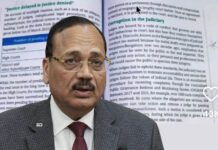
7. Judicial Backlogs
Over four crore cases remain pending in Indian courts. Reforms are needed in judge appointments, court digitisation, alternative dispute resolution, police reforms, and infrastructure.
8. Rising Unemployment
Unemployment is a rising concern in the country. Although recent reports do claim that there has been a slight decrease in the unemployment rate in the country, the numbers and reality might not completely match.
A Reuters report from July this year also brought up how “Over 70% of independent economists polled over the last month, 37 of 50, said the official unemployment rate, at 5.6% in June, is inaccurate.”
Pranab Bardhan, professor emeritus of economics at the University of California, Berkeley, was quoted by the report as saying, “The whole thing to me is really throwing dust in your eyes. You say this is the unemployment rate, the growth rate — quite often, they don’t make much sense. We have a massive employment problem and that is not reflected in the data.”
He added, “Most Indian workers are underemployed. If you are able-bodied and you did not work for any time, not even one hour in the last six months, unless you are rich, how did you feed yourself?… So you scrounge around and do something. And then you are employed. Now what does that employment mean?”
9. Urban Infrastructure
Indian cities face massive pressure from rapid urbanisation: traffic congestion, inadequate public transport, unsafe roads, poor planning, flooding, and housing shortages.
Furthermore, India is set to host the 2030 Commonwealth Games, with their bid getting approved in November, in Ahmedabad, Gujarat, India, in October 2030. India has also made a bid to be the host country for the 2036 Summer Olympics.
Clearly, there are big plans here, and they require a lot of discussion, particularly related to the infrastructure of the country.
10. Healthcare Access And Affordability
Despite progress under schemes like Ayushman Bharat Pradhan Mantri Jan Arogya Yojana, large parts of India still lack adequate access to quality health care, especially in rural or underserved regions.
Post-COVID public health demands, increased burden of non-communicable diseases, and rising health costs make this a critical area for parliamentary scrutiny and reform.
Image Credits: Google Images
Sources: Firstpost, Deccan Herald, The Indian Express
Find the blogger: @chirali_08
This post is tagged under: Vande Mataram, Vande Mataram song, Vande Mataram india, Vande Mataram parliament, parliament, Vande Mataram controversy, india issues, india national security, india lobbying, indigo, indigo cancellation, india aviation crisis
Disclaimer: We do not hold any rights or copyright over any of the images used; these have been taken from Google. In case of credits or removal, the owner may kindly email us.